


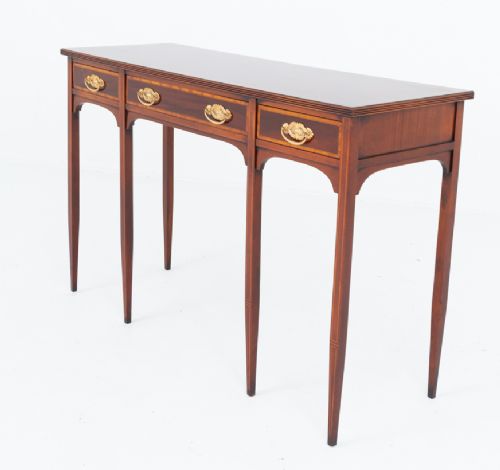


Narrow Sofa Side Table
These narrow sofa side table options provide slim surfaces and support varied rooms using historic timber and painted designs.
Narrow Sofa Side Table
A narrow sofa side table takes the form of console tables, occasional tables, and side tables designed to fit compact spaces. The selection spans Victorian, Edwardian, Georgian style, and French Provincial designs.
Makers shaped these items using mahogany, oak, pine, hardwood, birch, beech, and painted wood alongside marble tops. Pieces originate from periods such as the nineteenth century, 1860, 1880, 1890, 1900, 1910, and 1920.
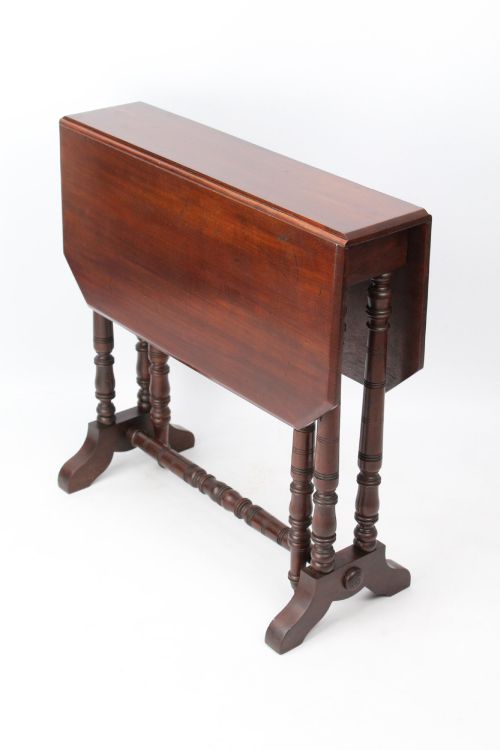
Drop-leaf mechanisms appear frequently, as seen in Sutherland tables and spider-leg Pembroke tables. Altar tables and campaign console tables offer alternative configurations for narrow footprints.
Materials and construction methods
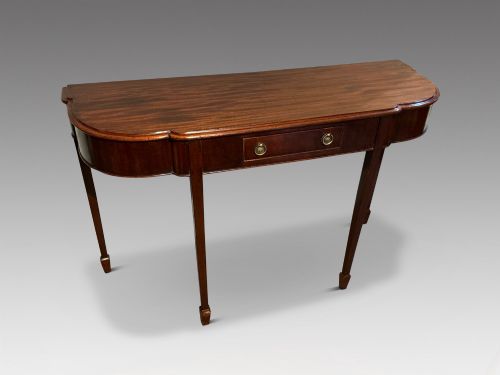
Cabinet makers utilised solid mahogany, oak, and pitch pine for structural stability in constrained dimensions. Inlaid veneers and carved elements decorate formal mahogany examples from the nineteenth and early twentieth centuries.
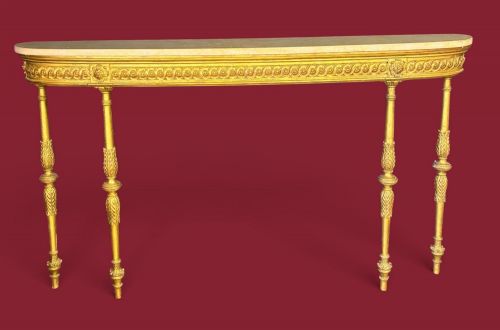
Painted finishes on beech, pine, and softwoods provide alternative surfaces alongside polished hardwood altar tables. Marble tops integrate into neoclassical giltwood and console table forms.
Drop-leaf hinges and folding actions allow tables to expand or contract according to domestic requirements. Trestle frames, potboard bases, and Gothic underframes support heavier timber tops.
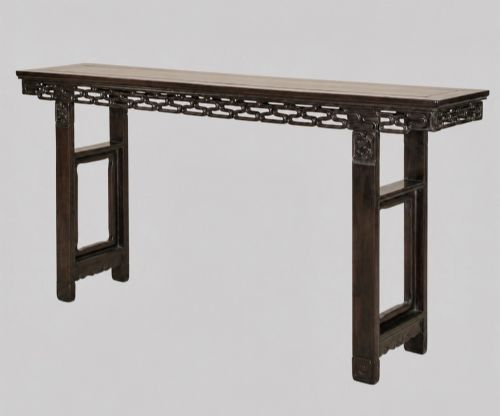
Listings incorporate nineteenth-century designs alongside 1920s oak and mahogany pieces, showcasing both British styles and Qing Dynasty altar tables.
Distinctions in construction and material standard
The choice of primary timber establishes the structural baseline, ranging from dense hardwoods like mahogany and oak down to softer pine and beech. Timber selection dictates how cleanly joints hold over decades of use.
Surface treatment marks the division between standard utility items and finer decorative examples. Applied giltwood, marble inserts, and precise inlaid details indicate higher workshop ambition.
Hardware integrity and mechanism execution separate basic tables from functional drop-leaf designs. Smooth movement in Sutherland and Pembroke folding leaves reflects precise joinery.
The Narrow Sofa Side Table Glossary
- Sutherland table
- A narrow drop-leaf table where both flaps fold down almost vertically. This form maximises floor space when folded.
- Console table
- A table designed to stand against a wall, frequently secured to vertical surfaces or balanced on brackets. These pieces offer display space without protruding far into a room.
- Altar table
- A rectangular ritual table originating from China, constructed from dense hardwoods. These tables feature elevated ends and clean lines.
- Pembroke table
- A small rectangular table with hinged flaps on either side. The design includes delicate legs such as spider-leg configurations.
- Giltwood
- Wood coated with gold leaf or a gold-coloured metallic finish. This material appears on decorative neoclassical console tables.
Narrow Sofa Side Table: Frequently Asked Questions
How do I place a narrow sofa side table?
Position these slim tables directly behind seating furniture or against perimeter walls to save floor space while maintaining a surface for lamps or drinks.
Choose drop-leaf versions if you need flexibility to expand the surface area when hosting guests.
What periods do these tables come from?
The selection includes pieces spanning the nineteenth century through to the 1920s, encompassing Victorian, Edwardian, and Georgian style revivals.
Earlier examples often utilise solid mahogany, whereas twentieth-century pieces introduce birch and painted beech constructions.
How do Sutherland tables work?
Sutherland tables feature exceptionally narrow central fixed tops supported by wide, hinged drop leaves on both sides. The legs fold outward on a gateleg action to support the extended leaves.
When dropped, the table collapses into a very slim profile that stores easily against a wall.
Are painted console tables authentic?
Painted finishes appear across multiple historical periods, including Edwardian and early twentieth-century English and provincial pieces. Beech and pine formed the primary bases for painted decorative furniture.
These surfaces offer an alternative to dark polished mahogany or oak.