
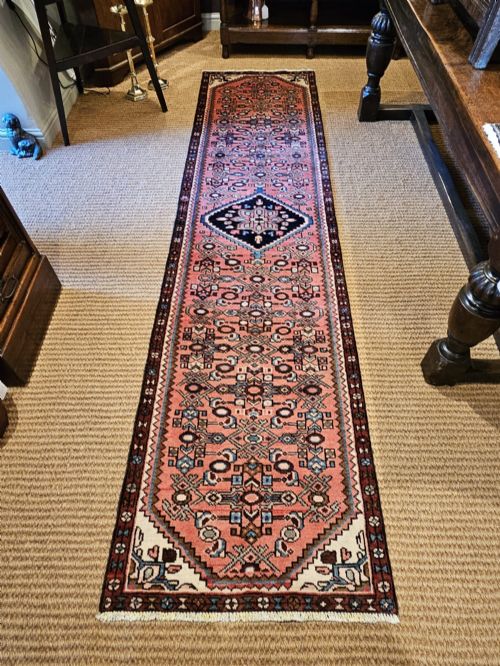
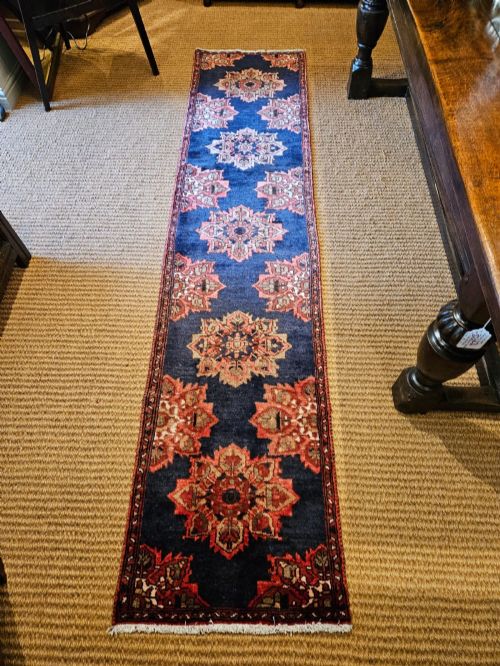


Narrow Rug Runner
A narrow rug runner brings linear warmth to hallways and corridors, combining practical floor protection with traditional woven artistry.
Narrow Rug Runner
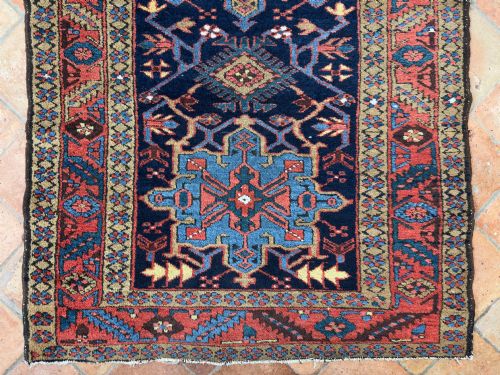
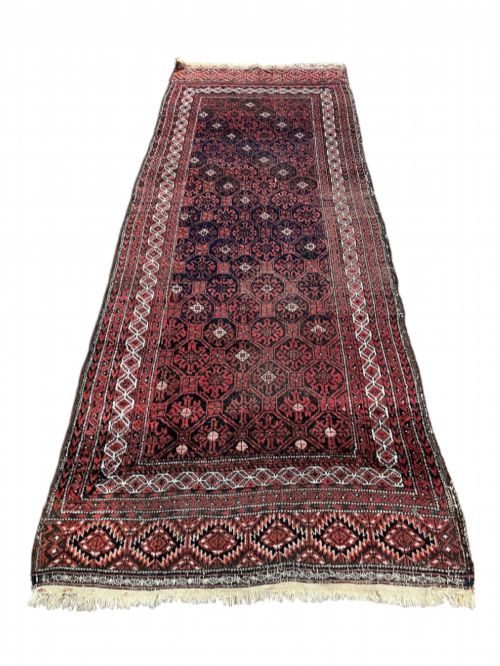
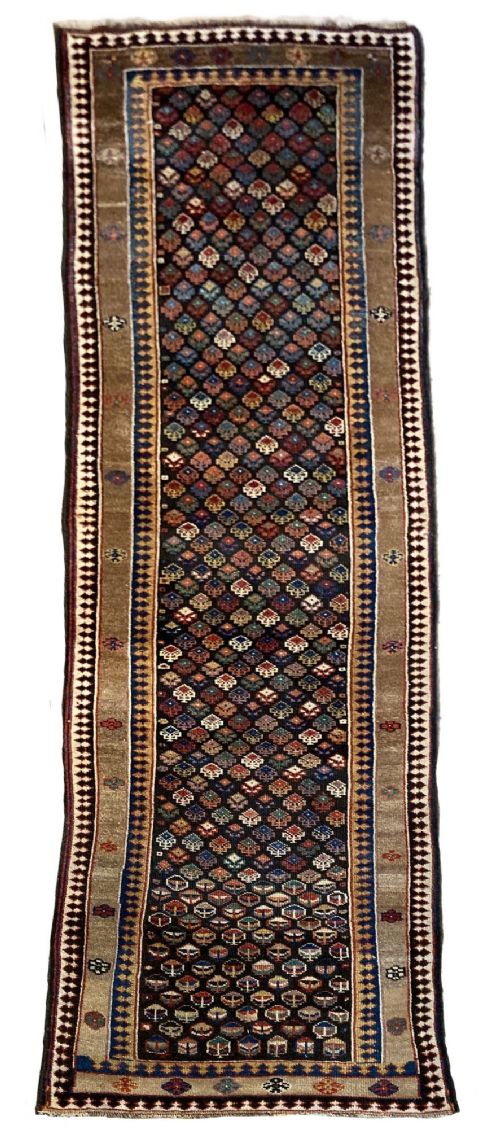
A narrow rug runner is an elongated floor covering designed specifically for corridors, landings, and narrow hallways. These pieces fulfill a functional role by protecting high-traffic wooden or tiled floors while visually connecting different rooms in a home.
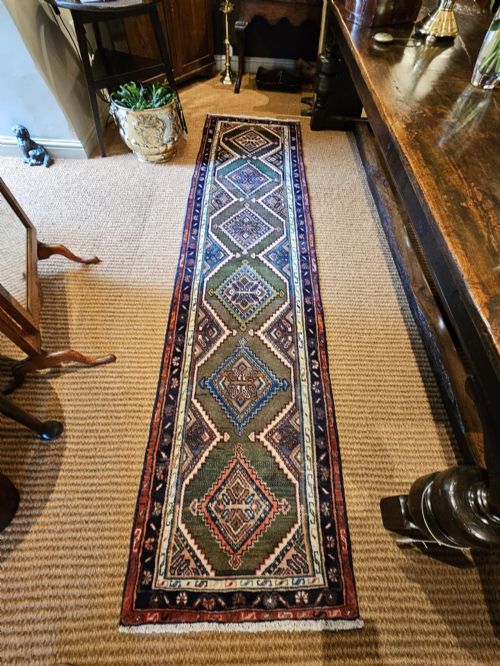
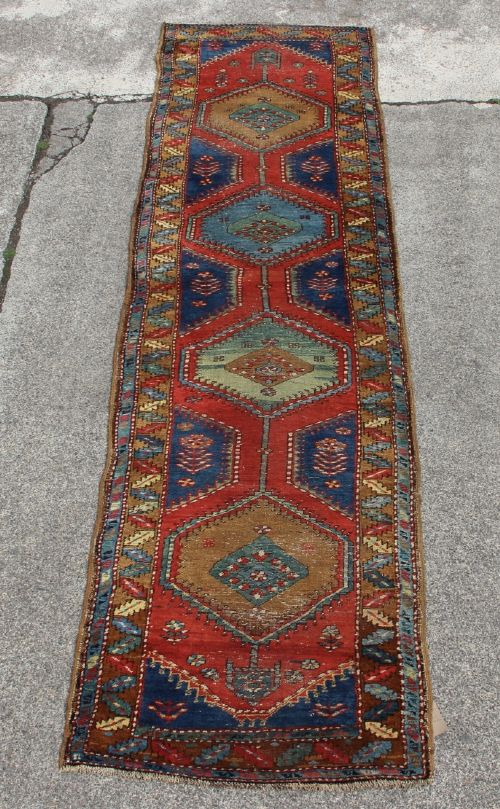
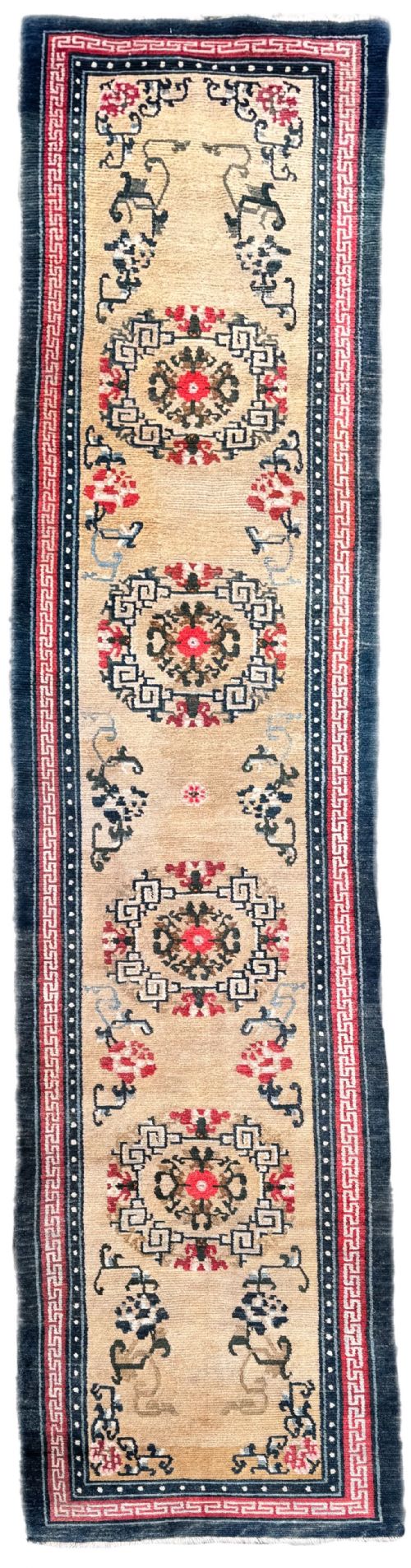
The pieces seen on this page span from the late nineteenth century through to the mid-twentieth century. Persian styles dominate the selection, alongside Turkish, Moroccan, and Tibetan examples.
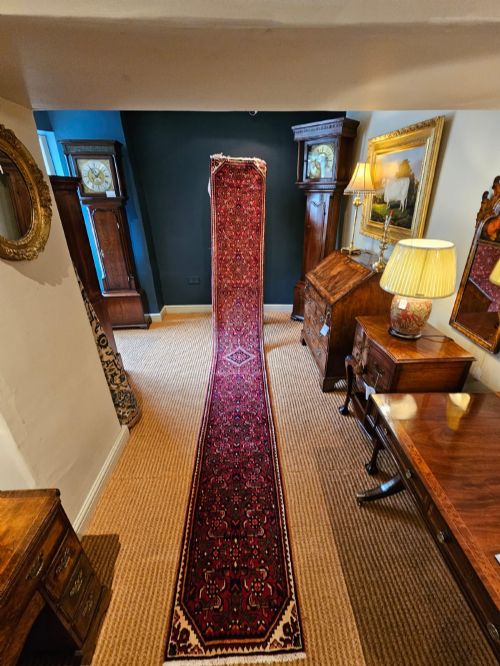
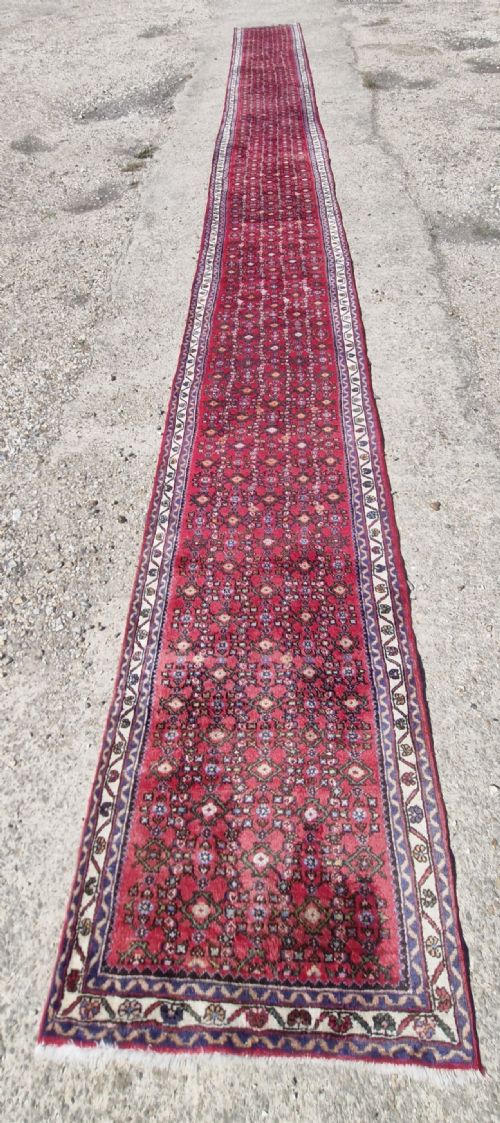
Origins heavily reflect traditional weaving centres such as Heriz, Hamadan, and Sarouk. Buyers encounter formats stretching from modest six-foot lengths up to dramatic thirty-two-foot hallways.
Materials and construction
Construction relies primarily on natural fibres, with pure wool and hand-spun wool providing the durable pile necessary for heavy footfall. Cotton frequently appears as a foundational warp and weft material, offering structural stability to the woven piece.
Camel hair is also utilised in specific tribal examples, contributing natural colour variation and resilience. Weaving techniques range from dense knotted piles to flat-woven kilim structures, depending on the regional workshop origins.
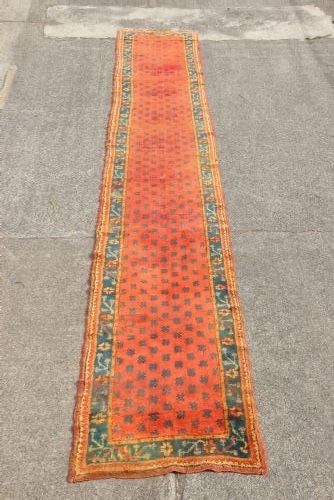
Some runners stretch to an astonishing thirty-two feet, ready for the grandest Victorian hallway or a very determined dachshund.
Factors of distinction
Quality in a narrow rug runner rests upon the tightness of the knotting and the integrity of the foundational materials. Tighter weaves allow for crisper geometric or floral medallion details that remain distinct over decades of use.
The depth and permanence of natural dye colours separate superior examples from ordinary ones. Well-balanced proportions and crisp execution of traditional tribal motifs indicate the hand of a skilled weaver.
The Narrow Rug Runner Glossary
- Pile
- The upright yarn loops or cut ends that form the surface texture of the rug. Pure wool provides a resilient pile for daily traffic.
- Warp
- The vertical lengthwise threads stretched across a loom that form the structural skeleton of the woven piece. Cotton is a common material for this foundation.
- Kilim
- A flat-woven carpet or runner produced without a raised pile. These pieces rely entirely on interlocking warp and weft threads to form patterns.
- Medallion
- A large central decorative motif often placed in the middle field of Persian and Turkish designs. It acts as the visual anchor for the entire composition.
Narrow Rug Runner: Frequently Asked Questions
Where should I place a narrow rug runner?
These pieces suit long corridors, entrance halls, and narrow landings where floor protection is necessary. They soften footsteps and introduce warmth to transitional spaces.
Measure your hallway carefully, leaving a uniform border of exposed flooring on all sides to achieve a balanced look.
How do I care for a wool runner?
Regular gentle vacuuming without a rotating brush roll keeps dust from settling deep into the wool pile. Professional cleaning every few years preserves the lanolin and colours.
Rotate the runner periodically to ensure even wear patterns across high-traffic sections of the hallway.
Are these runners made of pure wool?
Many examples utilise pure wool or hand-spun wool for the surface pile. Cotton often forms the underlying structural foundation.
Some tribal pieces incorporate camel hair or other regional animal fibres into the weave for added texture.
How can I tell different regional styles apart?
Persian pieces often feature intricate floral medallions and Heriz geometric patterns. Turkish and Kurdish runners typically display bold tribal motifs and earthy tones.
Moroccan Berber examples are recognisable through their simpler, high-pile geometric designs in natural wool shades.