



Narrow Persian Rug
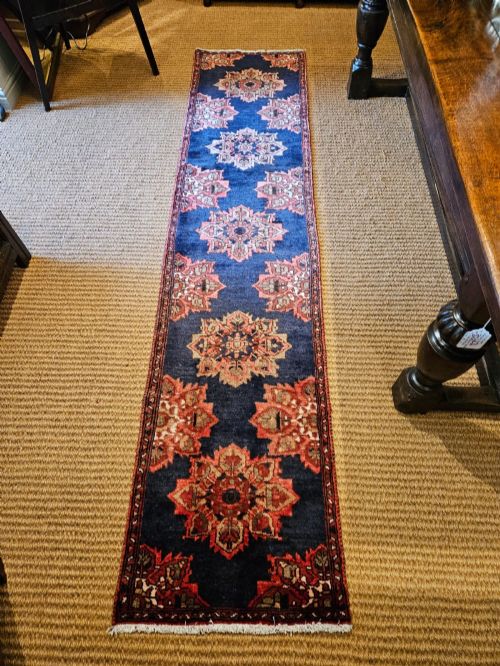
A narrow persian rug brings warmth and linear rhythm to a long hallway or landing.
Narrow Persian Rug
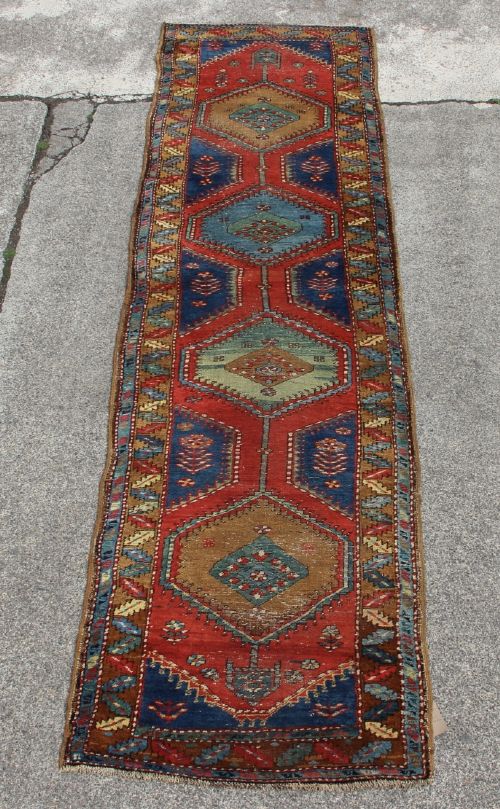
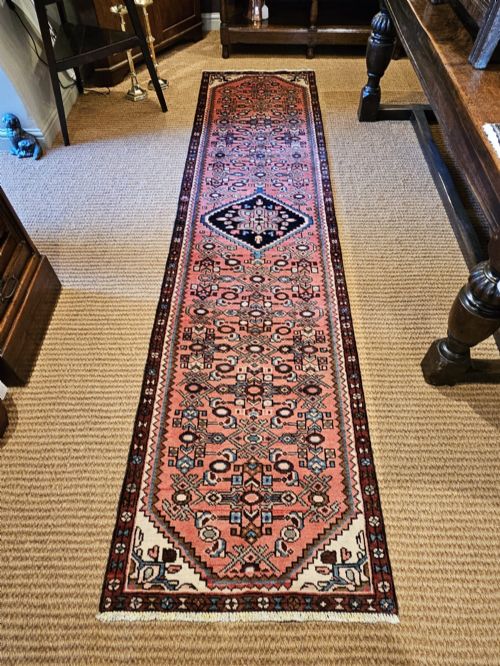
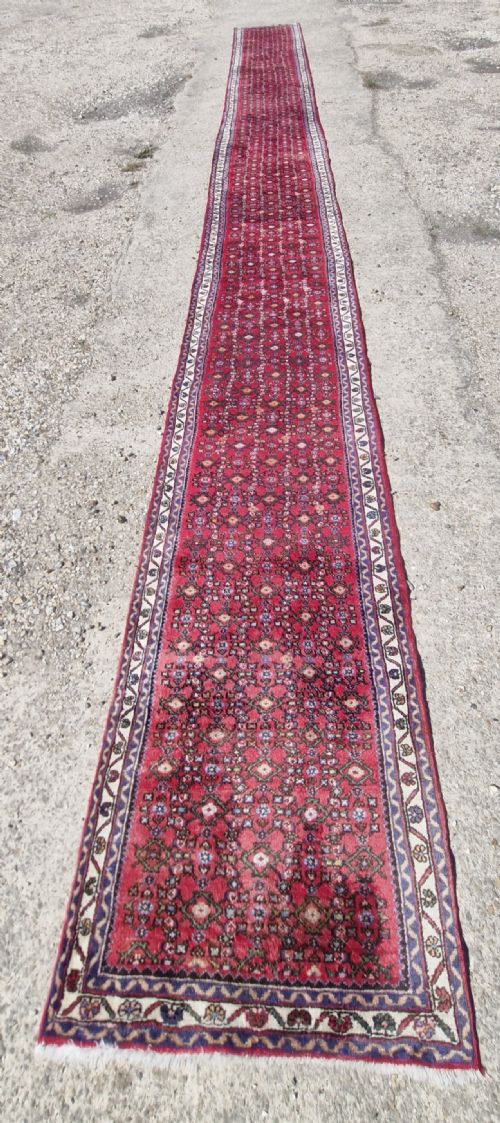
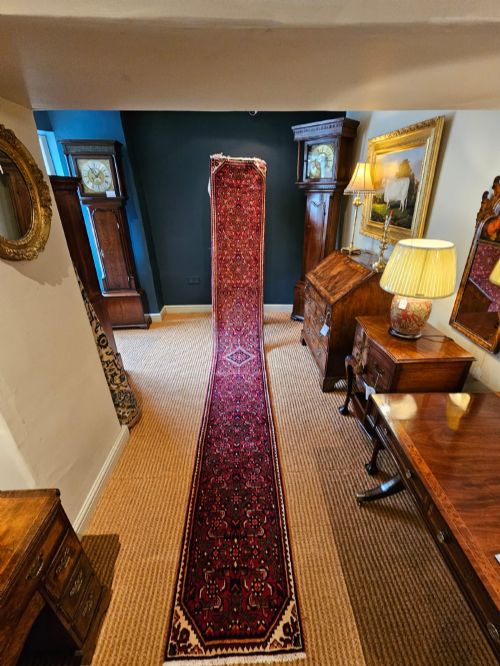
A narrow persian rug functions primarily as a runner for hallways, landings and long corridors, taking forms such as runner rugs and hallway runners. These elongated floor coverings measure significantly longer than they are wide, designed to fit restricted spaces without overwhelming the floor plan.
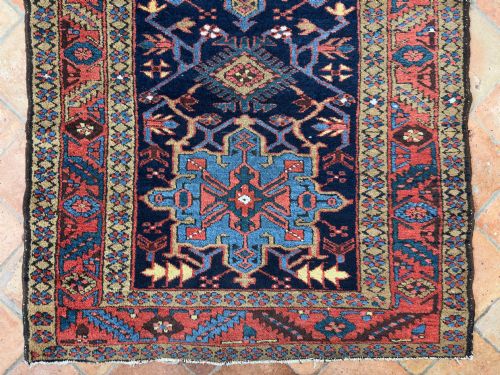
The pieces available originate largely from the late nineteenth century and the early decades of the twentieth century. Common regional types encountered include Heriz, Hamadan, Kurdish, and Ferahan, alongside pieces designated simply as North West Persian.
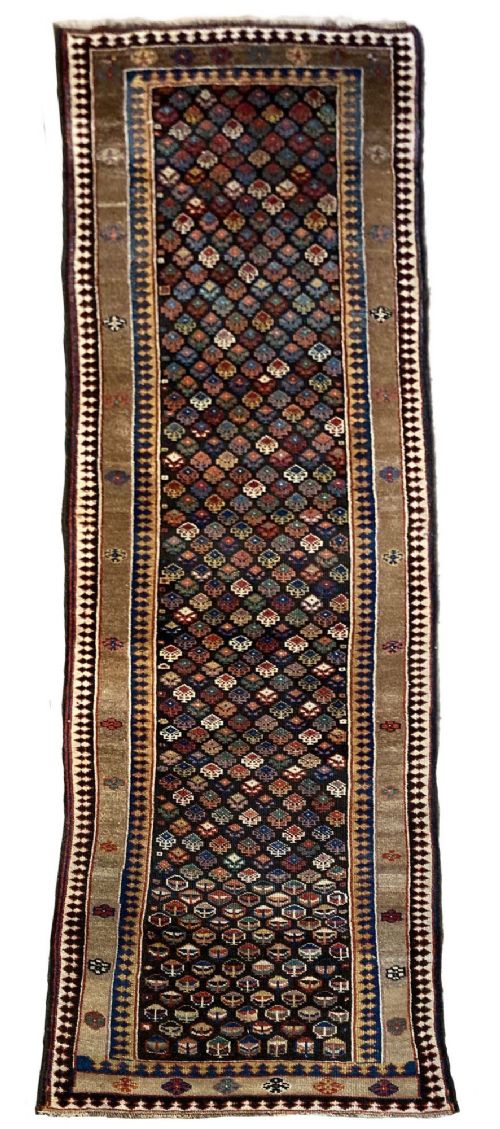
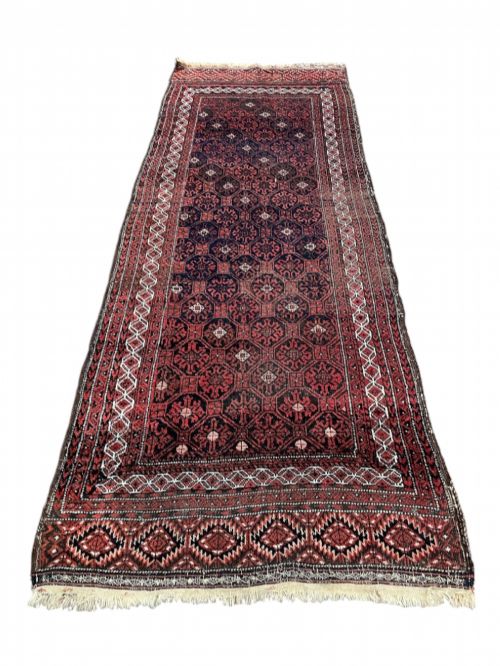
Makers ranged from village weavers working independently to tribal groups producing traditional floor coverings. They utilised local designs passed down through generations, resulting in distinctive repeated motifs and geometric patterns suited to elongated formats.
Materials and construction
Construction relies heavily on wool and hand-spun wool for the pile, providing resilience under foot traffic. Cotton foundations frequently support the structure, adding dimensional stability to the elongated format.
Natural materials extend to camel hair in certain pieces, contributing to the tonal palette without artificial dyeing. Dyes derived from local plants and minerals create mellow colours that age gracefully over decades.
Narrow Persian Rug Retail Price Guide 2026
Typical asking prices for narrow persian rug among the pieces listed under this phrase on Sellingantiques today, from the lower quarter to the upper quarter. They describe what is for sale here now, not the wider market.
Pieces originate across several decades, spanning the late nineteenth century to the nineteen-thirties.
Assessing quality
Quality separates pieces by the tightness of the knotting and the precision of the geometric or floral layout. A finer weave allows for sharper definition in complex border patterns and central medallions.
The integrity of the foundation and the uniformity of the width along the entire span dictate overall durability. Well-maintained edges and intact selvedges reflect superior original craftsmanship and careful subsequent preservation.
The Narrow Persian Rug Glossary
- Runner
- A long, narrow carpet designed specifically for hallways, corridors and stairs. These pieces guide movement through a building while protecting wooden floorboards.
- Selvedge
- The bound or reinforced edge running along the long sides of a carpet. This finishing technique prevents the weft threads from unravelling.
- Medallion
- A central ornamental motif set into the field of a rug. It forms the primary focal point of the composition.
- Pile
- The upright yarn loops or cut ends that form the soft surface of a woven rug. Pile density contributes directly to how a piece absorbs wear.
- Weft
- The horizontal threads passed back and forth across the warp during weaving. They lock the knots tightly into place.
Narrow Persian Rug: Frequently Asked Questions
Where should I place a narrow persian rug?
These runners suit narrow hallways, long landings, and galley kitchens where floor space is restricted. Their elongated proportions guide the eye and soften wooden or tiled surfaces.
They also work effectively alongside beds or in transition spaces between larger rooms, adding warmth and colour to otherwise plain corridors.
How do I care for wool pile runners?
Regular gentle vacuuming without a rotating brush roll helps remove embedded dust and grit from the wool pile. This prevents abrasive particles from wearing down the fibres over time.
Professional cleaning suited to antique textiles remains advisable when deeper attention is required. Keeping them out of direct, harsh sunlight preserves the natural dyes.
What periods do these runners date from?
The examples available generally span from the late nineteenth century through to the early decades of the twentieth century. Pieces from the eighteen-eighties and eighteen-nineties sit alongside productions from nineteen-hundred to the nineteen-thirties.
Each period reflects traditional weaving methods handed down through generations of village and tribal artisans in Persia and surrounding regions.
How do I identify different regional styles?
Regional types often display characteristic colour palettes and geometric or floral motifs unique to their origin. For instance, Heriz runners typically feature bold, architectural designs, while Hamadan pieces display varied village patterns.
Examining the weave structure, fringe construction, and wool quality helps connect a runner to its specific weaving tradition.