


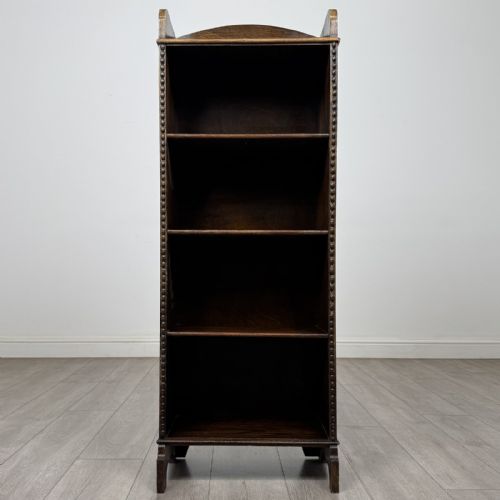
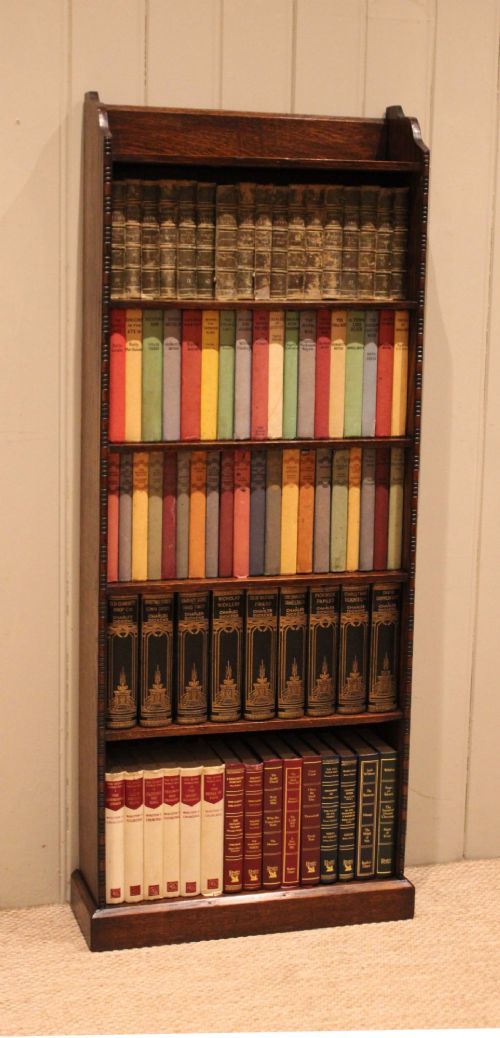
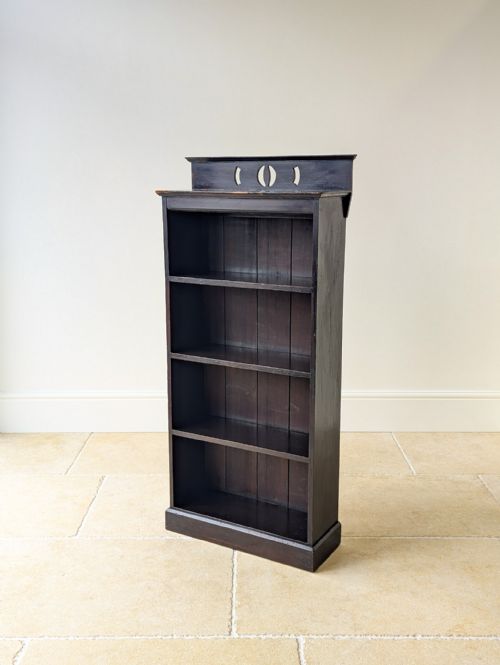

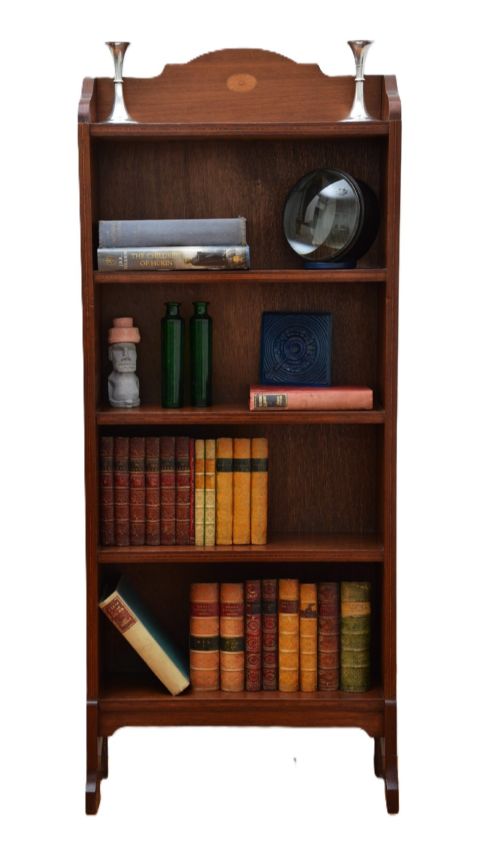
Narrow Open Shelving Unit
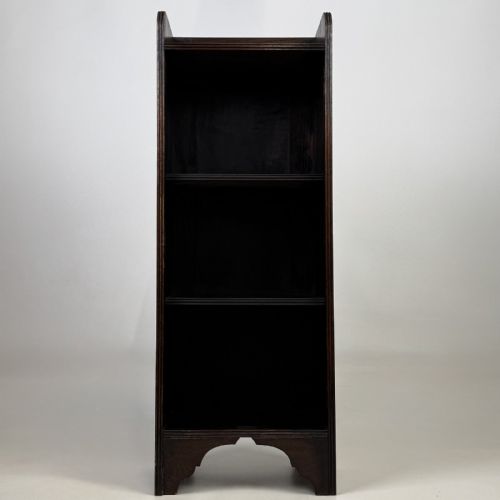
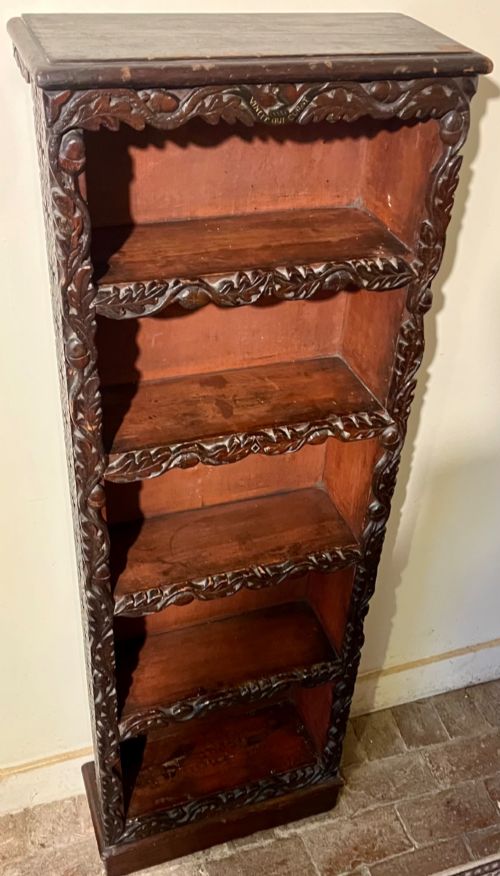
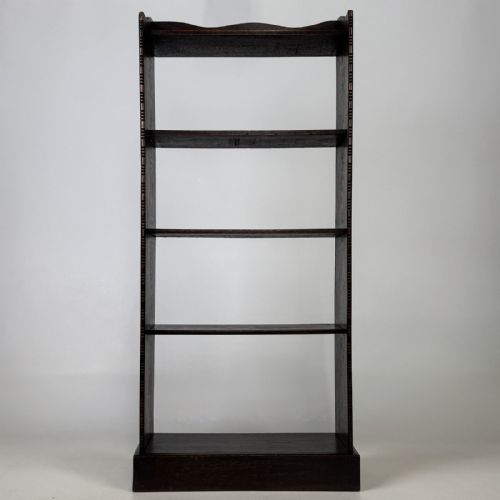
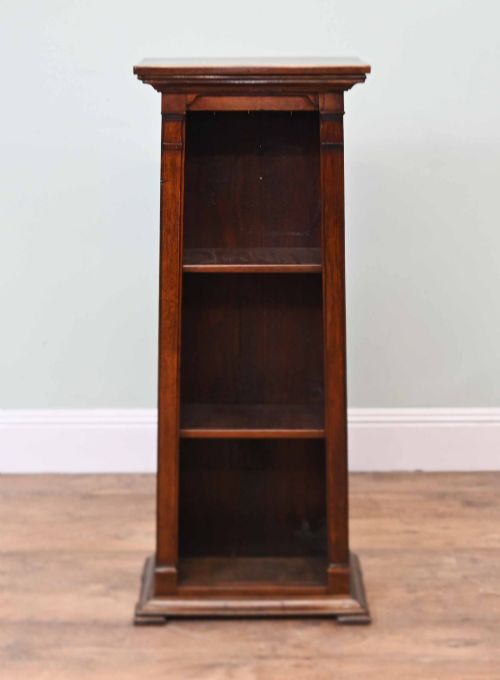
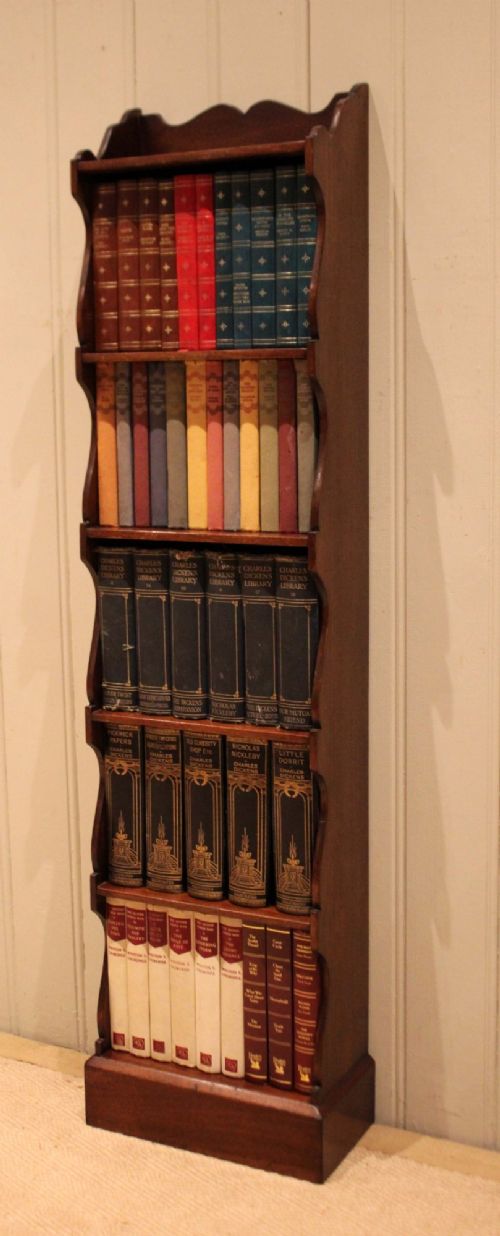
A narrow open shelving unit offers practical vertical storage for books and display without dominating the floor space of a room.
Narrow Open Shelving Unit
A narrow open shelving unit is designed to fit compact spaces while providing accessible tiers for storage and display. The selection spans the Victorian and Edwardian eras, alongside pieces from the 1880s through to the 1930s.
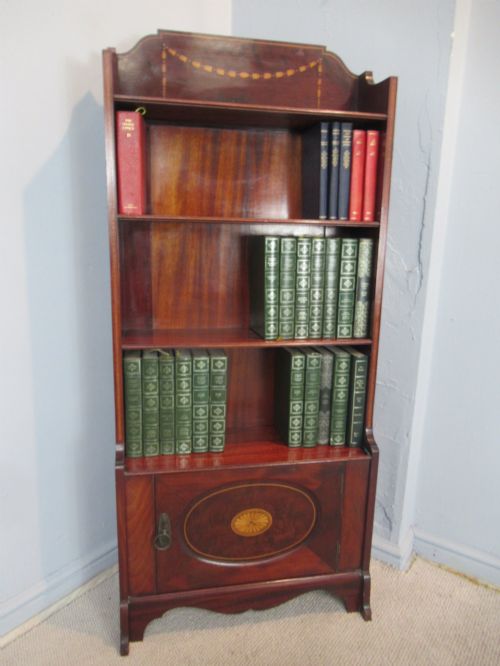
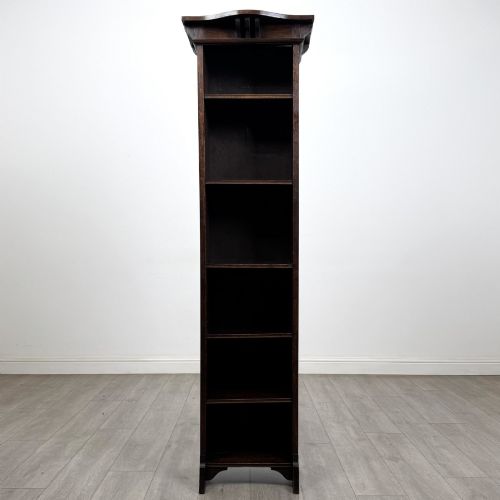
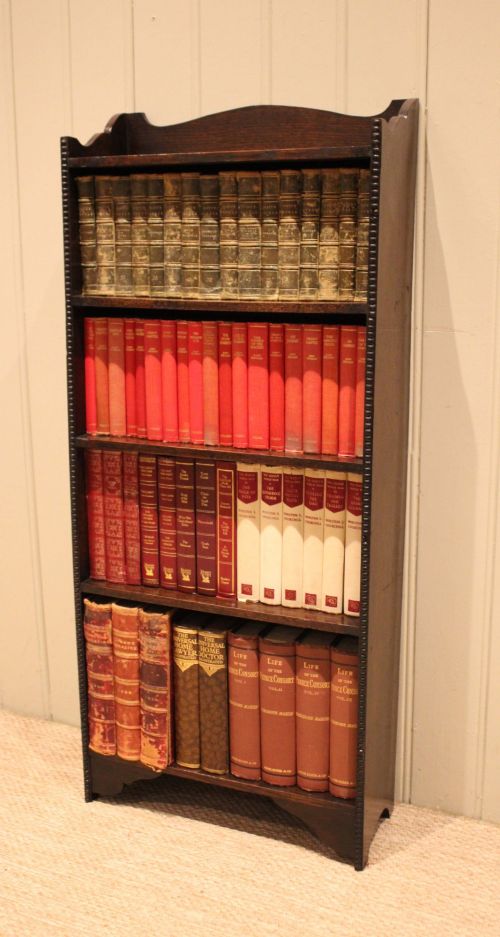
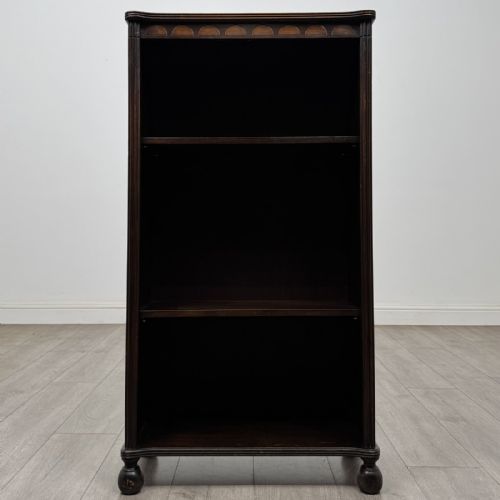
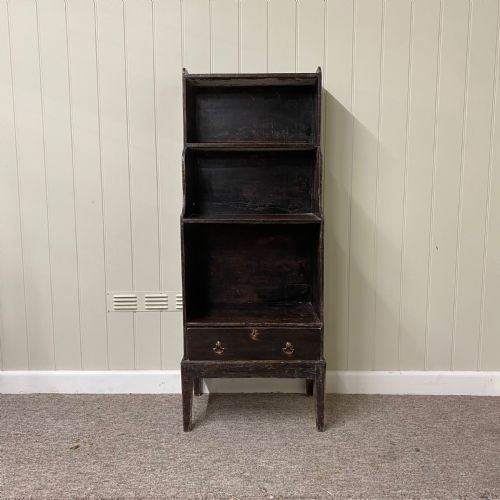
Most examples take the form of bookcases, etageres, whatnots, and waterfall bookcases. These configurations appear in styles ranging from Arts and Crafts and Art Deco to Jacobean Revival and Regency Revival.
Oak and mahogany dominate the materials, accompanied by satinwood, rosewood, pine, yew wood, and brass details. Buyers will find both freestanding vertical shelves and designs incorporating lower cupboards or drawers.
Materials and Construction
Cabinet makers built these units predominantly from hardwoods such as oak and mahogany, utilising solid timbers alongside figured veneers like burr walnut and satinwood. Secondary timbers include pine, while metal and brass hardware provide functional support.
Construction methods include adjustable shelving tracks, beaded edges, decorative cut-outs, and inlaid banding. Painted finishes and ebonised details also appear across the nineteenth and twentieth-century examples.
Narrow Open Shelving Unit Retail Price Guide 2026
Typical asking prices for narrow open shelving unit among the pieces listed under this phrase on Sellingantiques today, from the lower quarter to the upper quarter. They describe what is for sale here now, not the wider market.
Listings feature pieces spanning from the 18th Century and Victorian era through Edwardian designs to the 1930s Art Deco period.
Design and Execution
Quality rests upon the selection of timber and the precision of decorative elements such as inlaid stringing, carved mouldings, and pierced cut-outs. Superior examples display balanced proportions and refined proportions across narrow footprints.
The integration of secondary functions, including drawers or enclosed lower cupboards, distinguishes more ambitious cabinet work from standard utility shelving.
Gillows·Waring and Gillows·Wylie Lochhead·E.A. Taylor
The Narrow Open Shelving Unit Glossary
- Etagere
- A set of open shelves for displaying small objects or books. This tiered furniture form became popular during the nineteenth century.
- Whatnot
- A piece of furniture consisting of a series of open shelves placed one above the other for displaying ornaments. It typically sits on slender supports.
- Waterfall bookcase
- A set of open shelves where each tier steps back progressively from the one below it. The sideboards often follow this cascading profile.
- Inlay
- A technique where pieces of contrasting timber, brass, or shell are inserted into the surface to form decorative patterns. This embellishment is common in mahogany and satinwood pieces.
Narrow Open Shelving Unit: Frequently Asked Questions
What is a narrow open shelving unit used for?
These pieces provide vertical storage in confined areas where floor space is limited. They hold books, decorative objects, and collections while keeping items easily accessible.
Their open structure allows them to function in studies, living rooms, and hallways without blocking light or making a room feel cramped.
How do I date an antique bookcase?
Dating relies on identifying the prevailing style, construction timber, and hardware associated with specific periods like the Victorian era or Edwardian decades. Details such as adjustable wooden shelving tracks and specific revival styles offer further clues.
Makers' marks or stamps, where present, provide definitive attribution to workshops and firms active in the nineteenth and twentieth centuries.
Are these units stable enough for heavy books?
Solid timber construction in oak and mahogany provides the structural rigidity needed to support heavy volumes. Many period examples include sturdy backboards or wall-fixing points for added safety.
Shorter waterfall bookcases and narrow etageres are generally suited to mixed displays of books and smaller decorative items.
What is the difference between a whatnot and an etagere?
A whatnot traditionally refers to a multi-tiered open display stand featuring slender vertical supports, often designed for corner or wall placement. An etagere shares a similar tiered shelving format but typically serves a broader display function.
Both forms overlap significantly in period design, sharing the open access characteristic of narrow shelving units.