
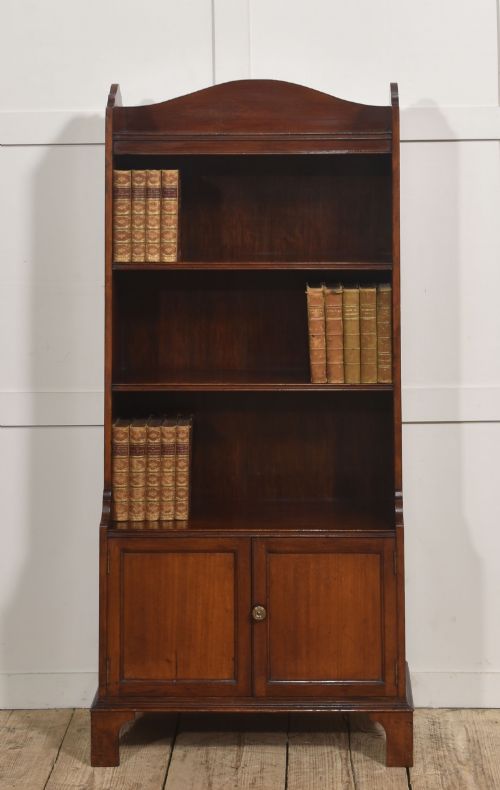
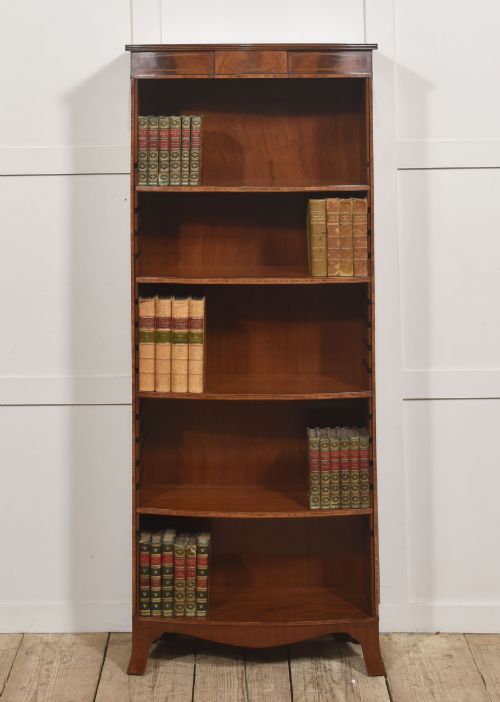


Narrow Open Bookshelf Cabinet
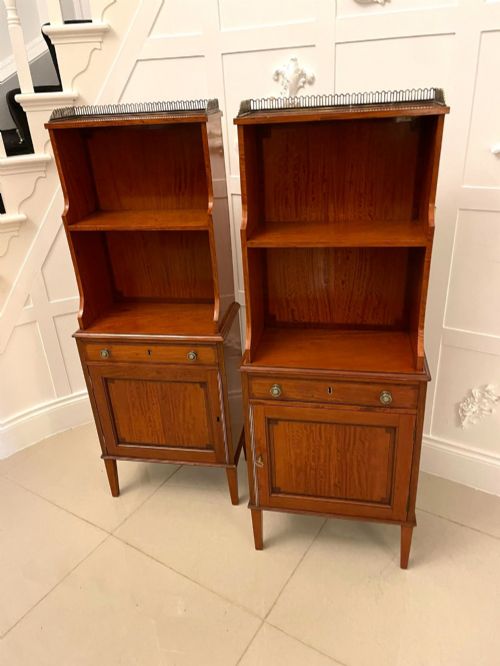
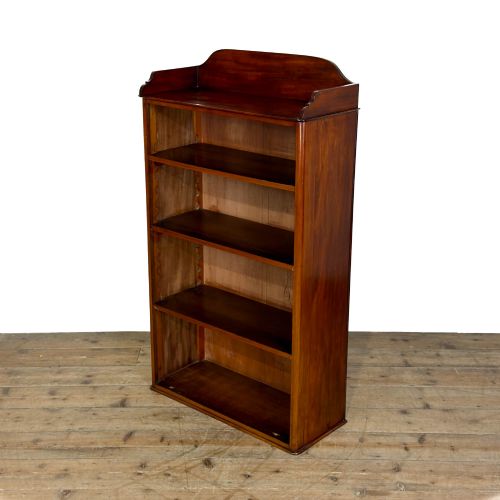
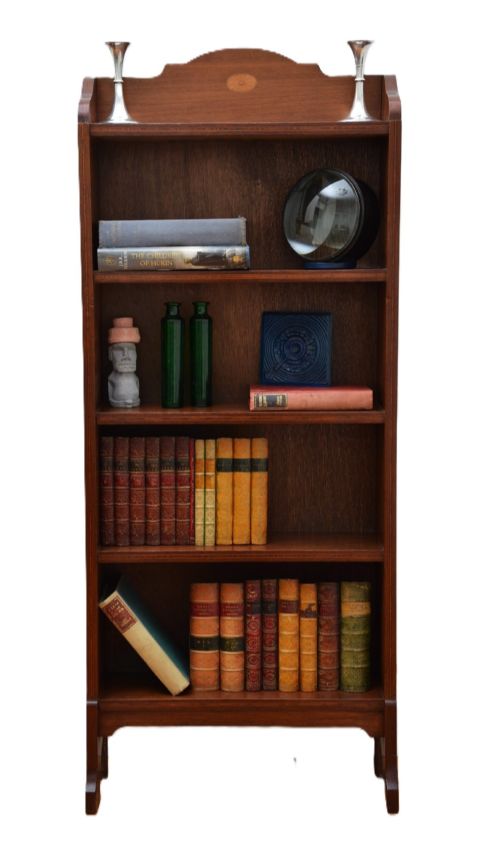
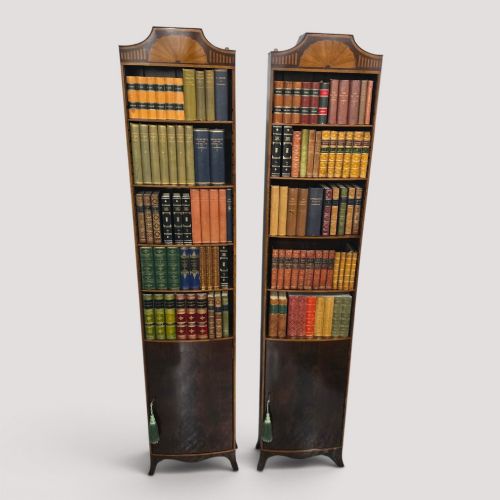
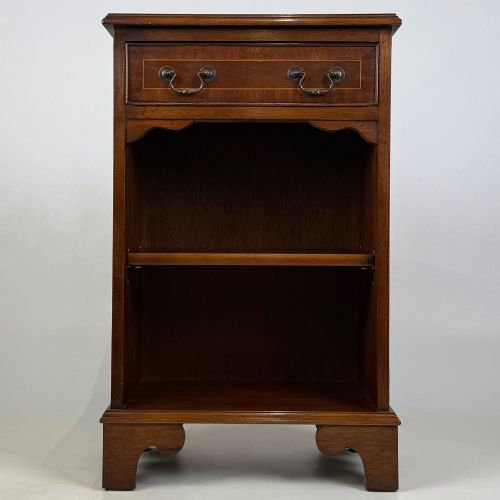
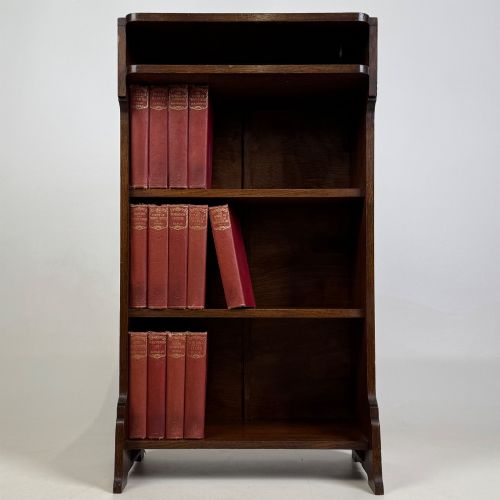
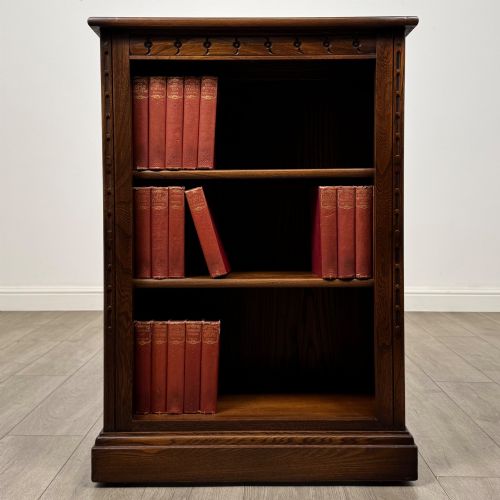
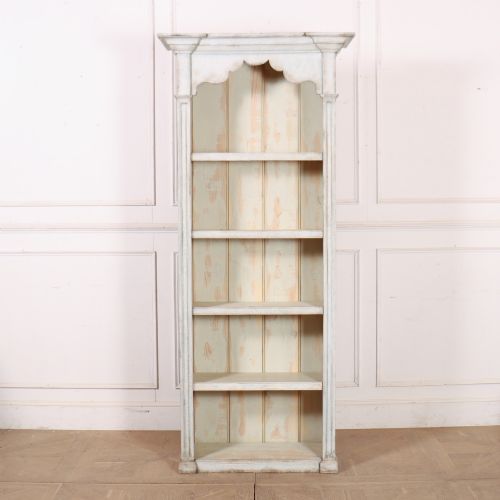
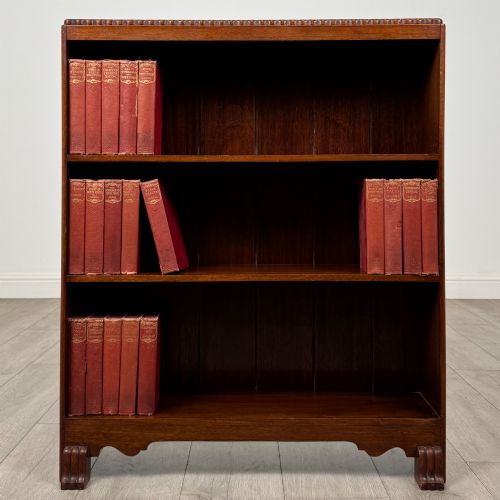
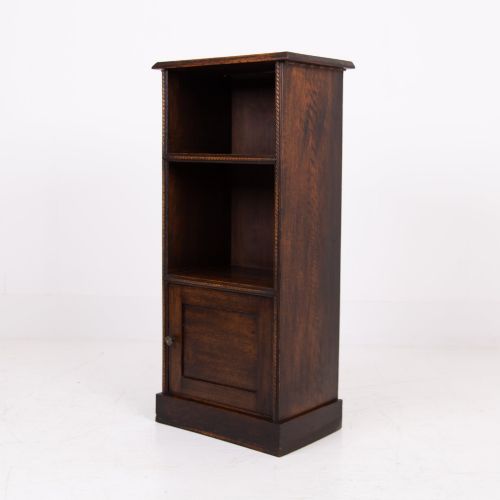
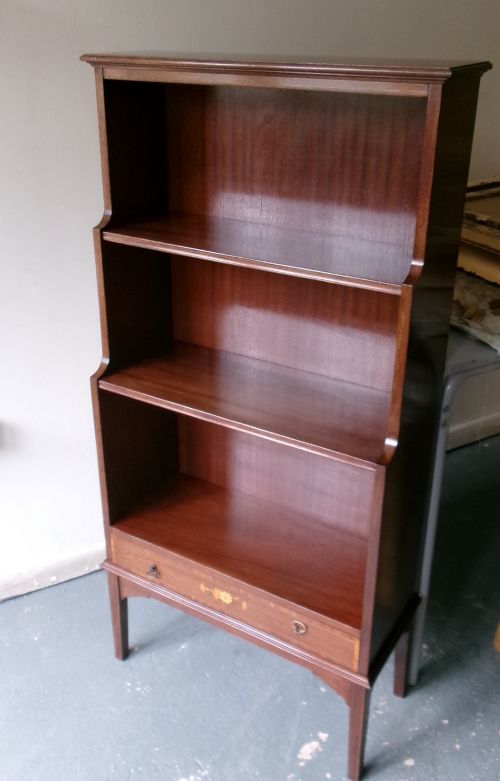
These narrow open bookshelf cabinet pieces offer compact upright storage, combining display shelving with enclosed base cupboards in period timber.
Narrow Open Bookshelf Cabinet
A narrow open bookshelf cabinet provides vertical storage suited to compact rooms, pairing open upper shelves with lower cupboard space. These functional items span late Victorian, Edwardian, and early twentieth-century periods.
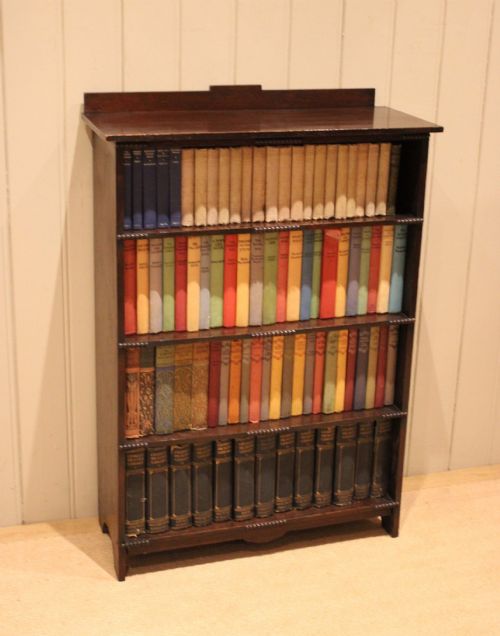
The versions met most often on this page take the form of small mahogany or oak bookcases, occasionally featuring waterfall tiers, beaded edges, or lower cupboards for concealed storage.
How they were made
Cabinet makers utilised dense hardwoods including mahogany, oak, satinwood, and yew wood, often applying linear inlay, ebonised details, or painted finishes to the exterior surfaces.
Structural embellishments relied on applied brass hardware, beaded timber edges, and occasional ormolu mounts to accent the upright frames.
Materials recorded across the inventory include brass, paint, satinwood, and yew wood alongside standard hardwoods.
What varies in quality
Proportion and timber selection drive the distinction between standard workshops and exceptional cabinet makers, with finer pieces employing carefully figured satinwood or mahogany veneers.
Detailing such as refined string inlay, integrated cupboard doors, and balanced waterfall tiers elevate the construction standard beyond utilitarian storage.
Gillows
The Narrow Open Bookshelf Cabinet Glossary
- Waterfall bookcase
- A set of open shelves that step back progressively from bottom to top, creating a cascading profile popular in Edwardian furniture.
- Inlay
- A decorative technique where contrasting timbers or materials are set flush into the primary wood surface to form linear patterns.
- Beaded edge
- A narrow, rounded decorative moulding applied along shelf borders or frame edges to add subtle relief.
- Ormolu
- Gilded bronze mounts cast in decorative scroll or leaf patterns, applied as ornamental hardware on select nineteenth-century cabinetry.
- Ebonised
- Timber treated with a dark finish to imitate expensive ebony, frequently used for contrasting stringing or turnings.
Narrow Open Bookshelf Cabinet: Frequently Asked Questions
Where should I place a narrow open bookshelf cabinet?
These compact upright cabinets fit comfortably in alcoves, hallways, or smaller studies where floor space is limited. Their narrow footprint allows them to hold substantial book collections without dominating the room.
Keep them away from direct heat sources and strong sunlight to protect the polish and prevent timber movement over time.
How do I distinguish Edwardian bookcases from Victorian ones?
Victorian examples often feature darker timbers, heavier mouldings, and deeper cornices reflecting nineteenth-century taste. Edwardian pieces tend to show lighter mahogany or oak construction with simpler lines and delicate inlay.
Examining the internal drawer construction and backboards helps confirm the period of manufacture alongside the external style.
Can these cabinets support heavy volumes?
Solid hardwood shelves in oak or mahogany easily support standard book collections and everyday items. The fixed or adjustable shelving is built to handle typical reading loads without sagging.
Distribute heavier volumes evenly across the lower shelves to maintain overall stability.
What maintenance do these timber bookcases require?
Regular dusting with a dry, soft cloth prevents the accumulation of grit in carved details and inlay. Occasional application of quality beeswax preserves the sheen of the timber.
Avoid silicone-based polishes, which can build up on antique finishes and attract dust.