


Narrow Oak Shelving Unit
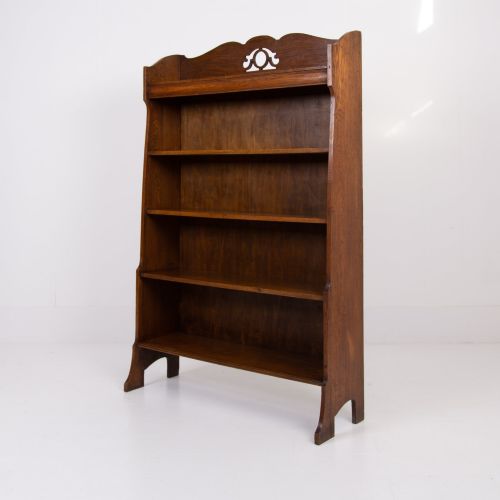
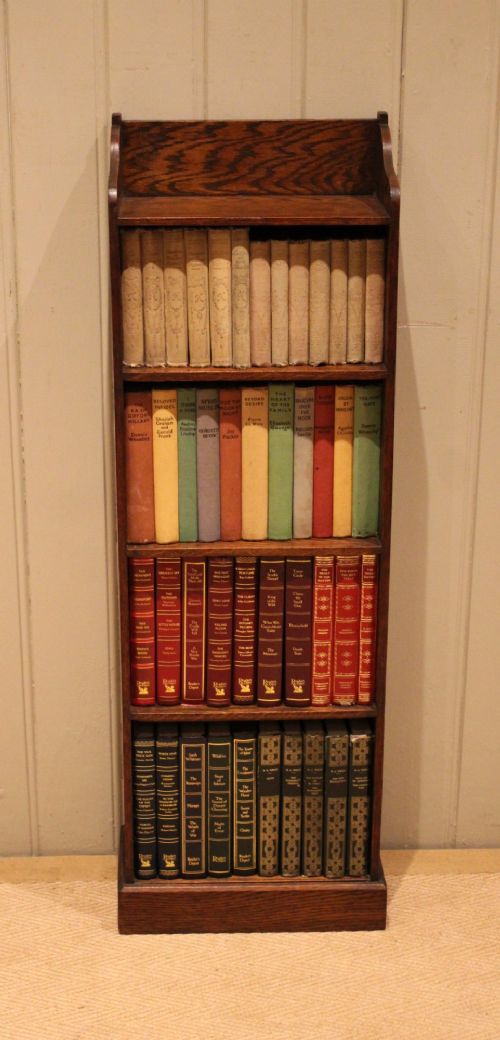
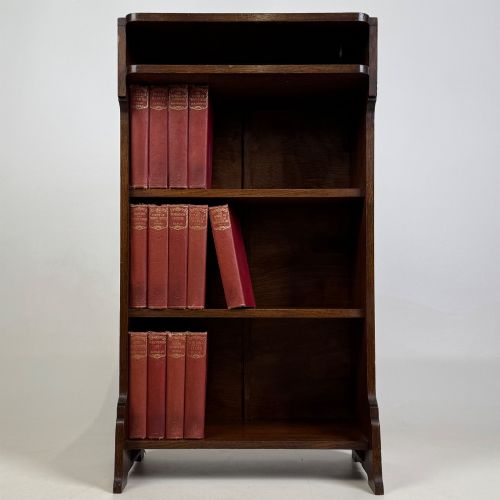
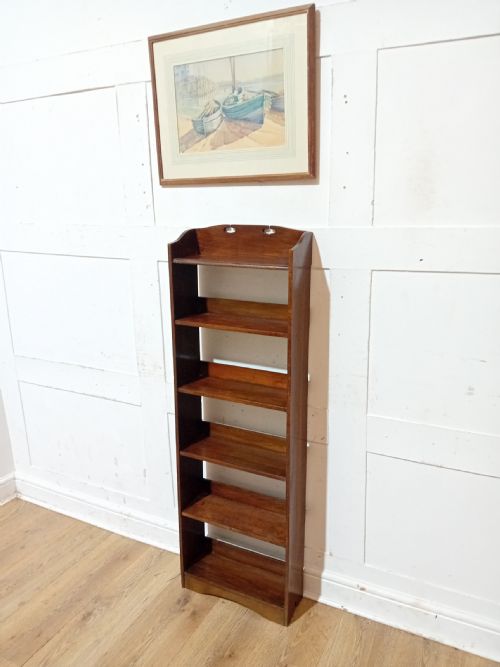
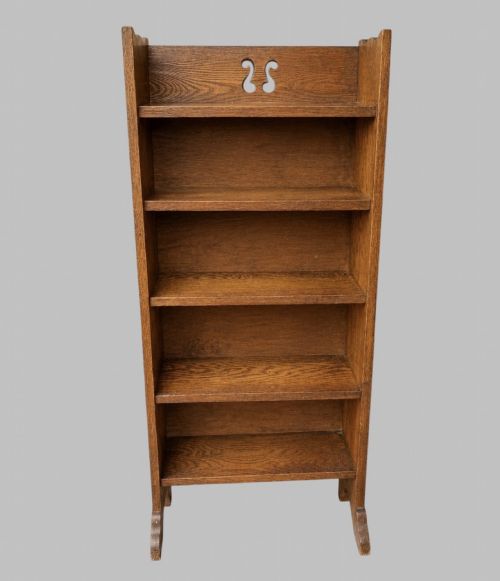
A narrow oak shelving unit offers compact utility for tight corners, combining sturdy timbers with practical, tiered book storage.

Narrow Oak Shelving Unit
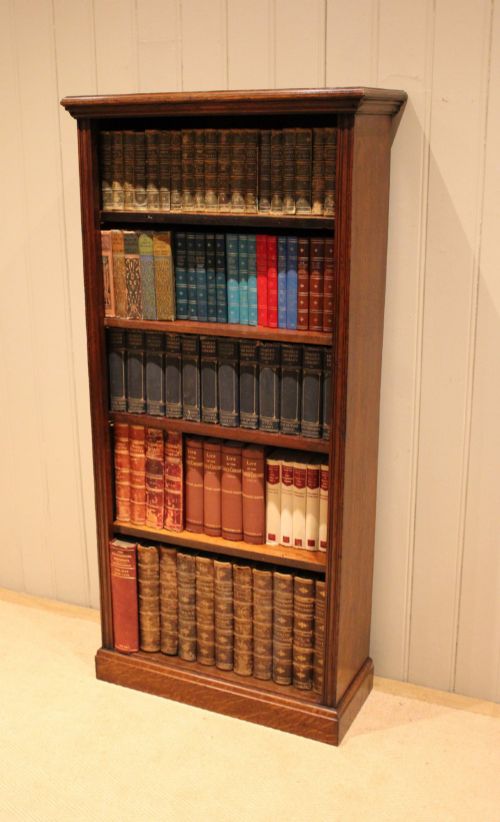
A narrow oak shelving unit serves as a practical bookcase for smaller spaces, appearing frequently in open forms across this selection. These pieces date predominantly from the Edwardian period through to the 1930s, spanning Late Victorian to Art Deco aesthetics.
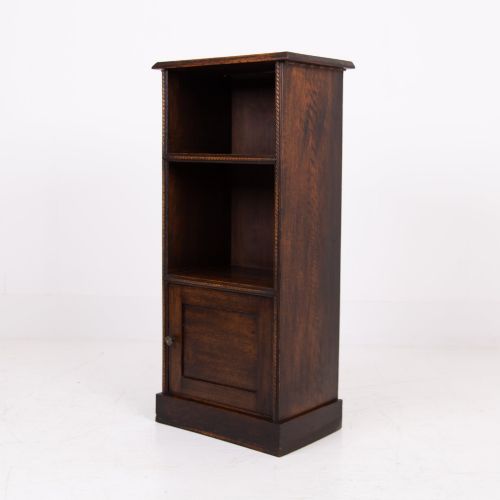
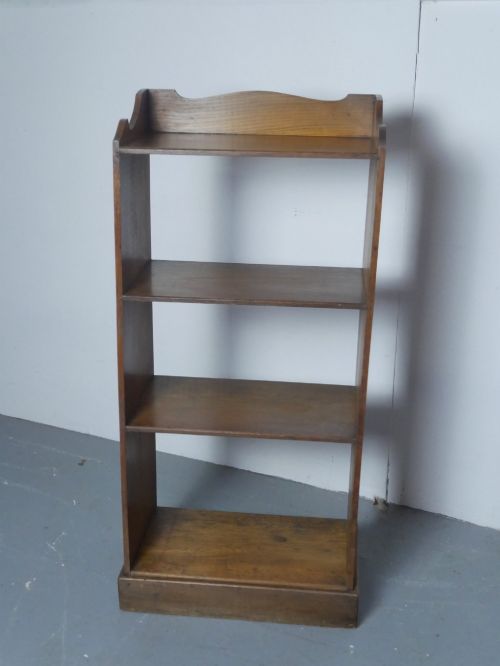
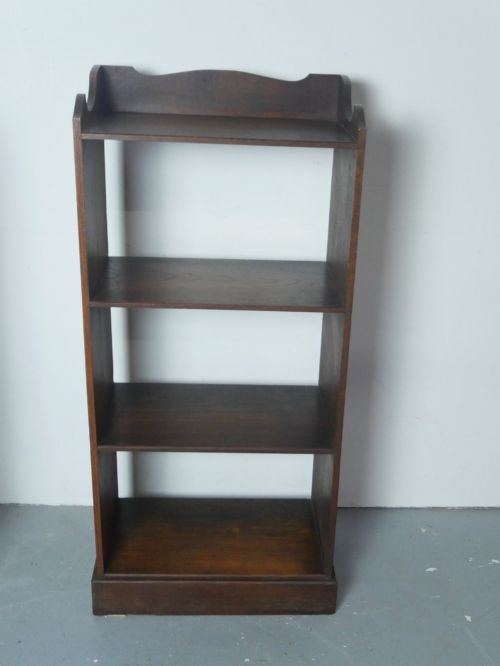
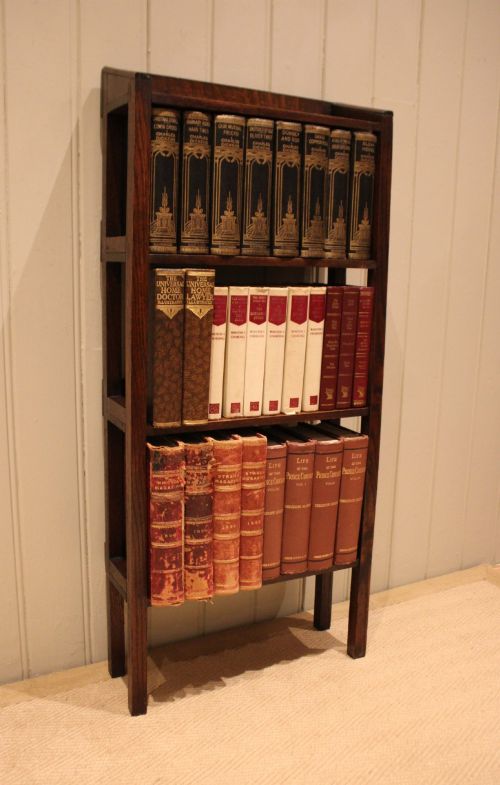
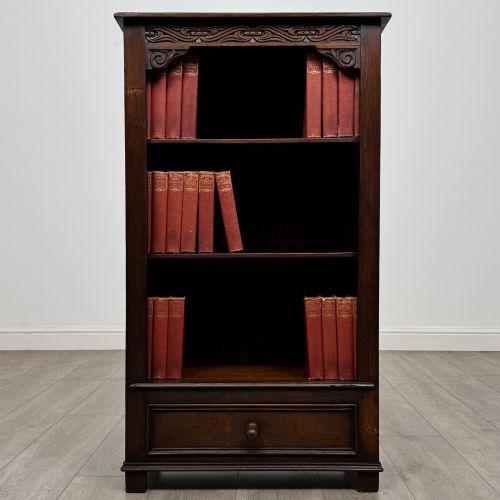
Most examples take the form of open bookcases or standing open shelving, occasionally incorporating cupboards below or adjustable shelves. The proportions remain slim and neat, making them well-suited to alcoves and compact rooms.
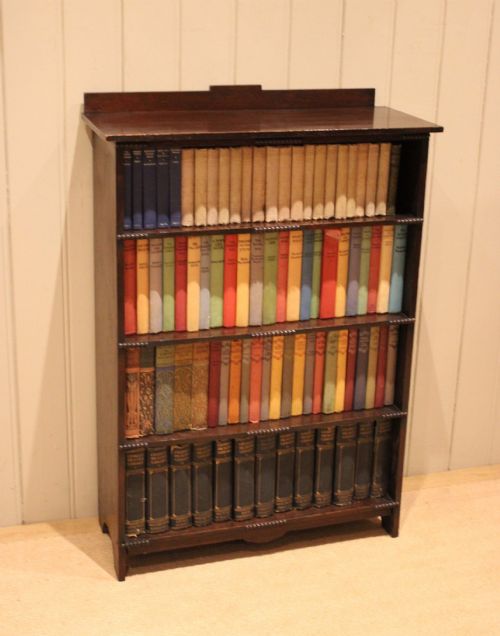
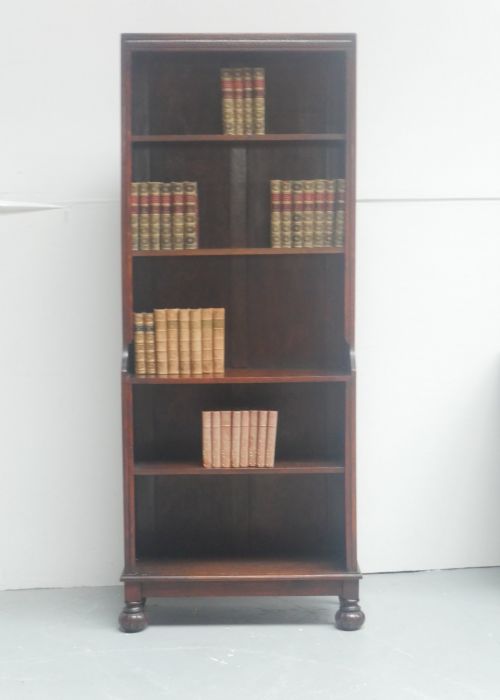
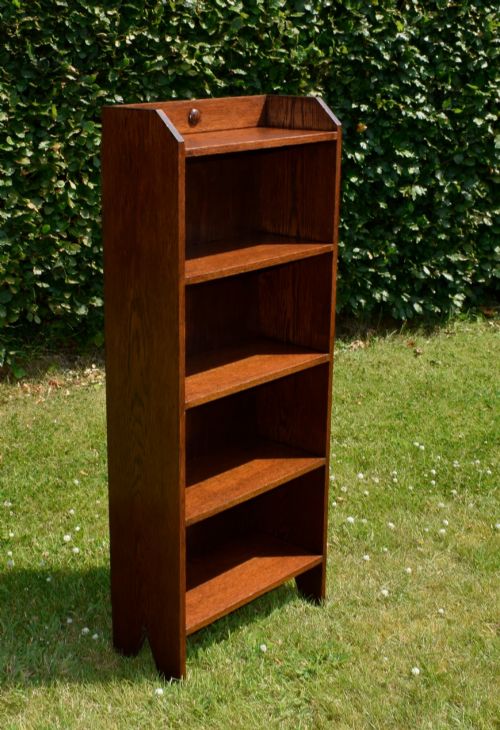
Stylistic influences range from plain English Country and Arts and Crafts designs to Jacobean Revival and waterfall configurations. Buyers encounter varied decorative details such as beaded edges, cut-outs, and front mouldings.
Materials and construction
The construction relies heavily on oak, including dark oak and solid oak variants, supported by supplementary elements in brass, iron, and general wood. Cabinetmakers utilised these sturdy timbers to build durable shelving units capable of bearing heavy volumes.
Joinery methods reflect the prevailing styles of the late nineteenth and early twentieth centuries, from clean Arts and Crafts framing to traditional panel work. Selected pieces integrate decorative cut-outs and edge beadings to add visual refinement to the upright boards.
The listings here span the Edwardian era, 1900, 1910, 1920, and 1930, constructed primarily from oak, dark oak, solid oak, and wood.
Judging the quality
Quality reveals itself in the selection of the timber and the integrity of the joinery rather than surface ornamentation alone. Solid oak builds with thoughtful proportions and clean lines stand apart from simpler utilitarian pieces.
Finer examples often display considered period details, such as integrated mouldings, adjustable shelving mechanisms, or distinct Arts and Crafts stylistic touches. The harmony between the slim vertical proportions and the weight of the timber determines the overall success of the piece.
Wylie Lochhead of Glasgow·E.A. Taylor
The Narrow Oak Shelving Unit Glossary
- Open bookcase
- A piece of furniture consisting of horizontal shelves supported by vertical sides without enclosing doors. This format defines the majority of the shelving units on this page.
- Arts and Crafts
- A design movement valuing handcraftsmanship, simple forms, and honest use of materials. Pieces from this tradition often feature exposed joinery and subtle decorative cut-outs.
- Waterfall bookcase
- A tiered shelving unit where each lower shelf steps forward from the one above, creating a cascading profile. This style appears in several Edwardian and early twentieth-century examples.
- Beaded edge
- A narrow rounded moulding carved along the corner or border of a wooden board. It provides a quiet textural accent to the uprights of the bookcase.
Narrow Oak Shelving Unit: Frequently Asked Questions
Where do narrow oak shelving units fit best?
Their compact dimensions make them ideal for narrow alcoves, small hallways, or tight spaces beside a fireplace where standard furniture would overwhelm the room.
They provide vertical storage without demanding significant floor space, accommodating books or display items efficiently.
How do I distinguish Edwardian oak from later pieces?
Edwardian examples often display lighter oak tones and subtle traditional detailing, whereas 1920s and 1930s pieces lean towards darker finishes or simpler geometric forms.
Art Deco and later interwar variants introduce bolder front mouldings and streamlined silhouettes typical of the period.
Are the shelves adjustable on these bookcases?
Certain taller or later models include adjustable shelving mechanisms, allowing you to alter the shelf heights to suit varying book sizes.
Many period open bookcases feature fixed shelves integrated directly into the structural side panels for maximum stability.