

Narrow Oak Shelves
Narrow oak shelves solve tight corners by holding books and small pieces without crowding the room.
Narrow Oak Shelves
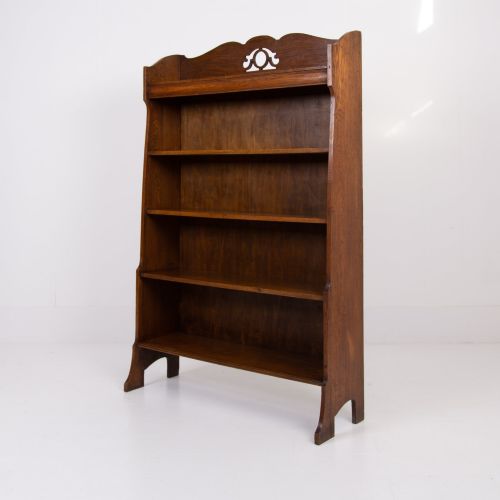
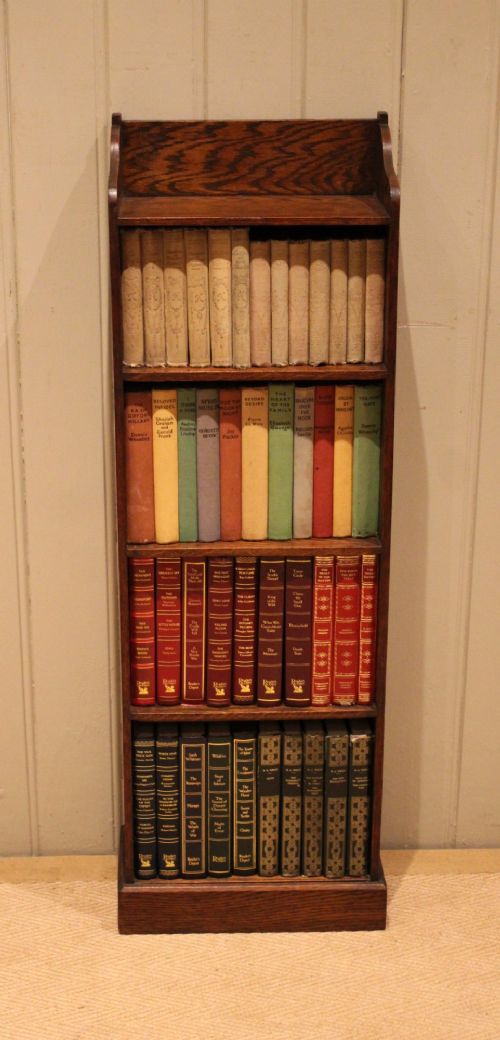
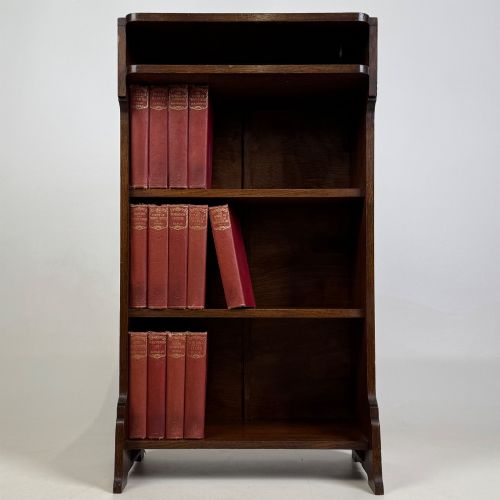
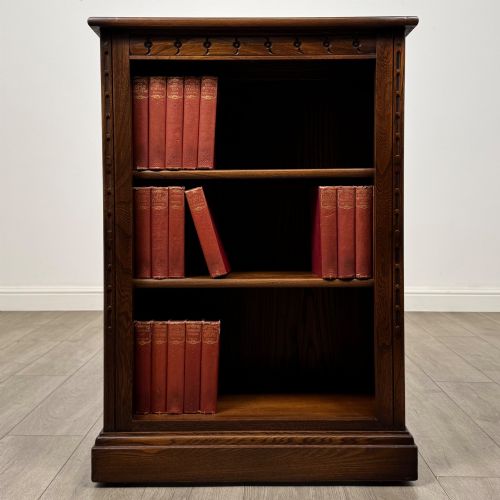
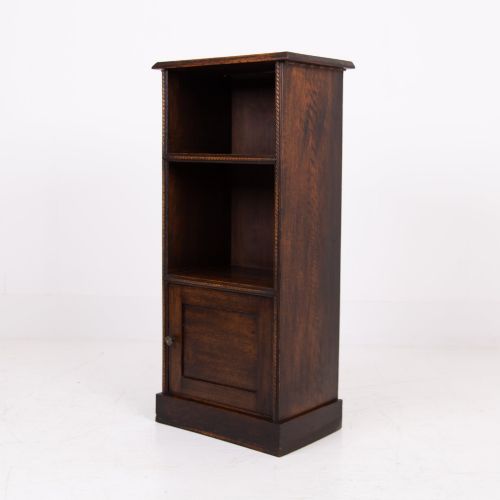
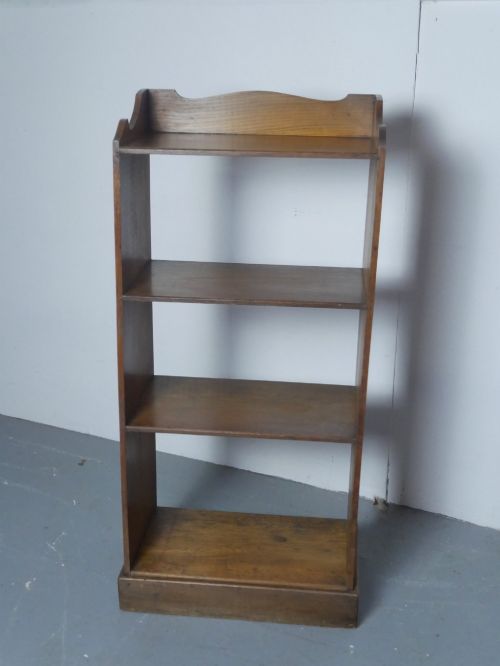
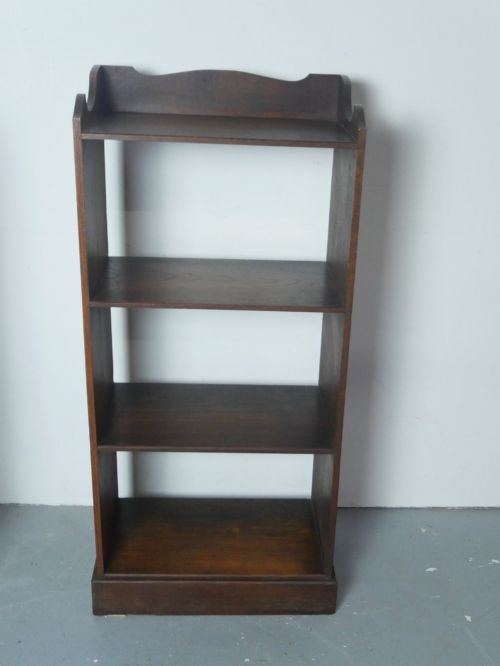
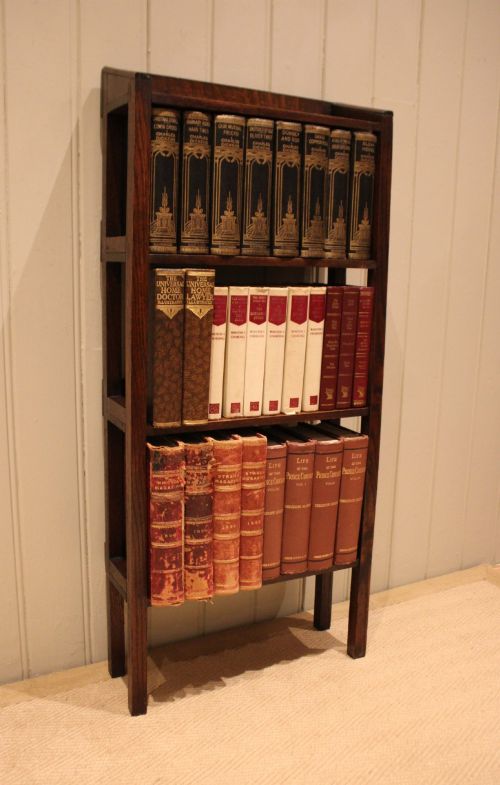
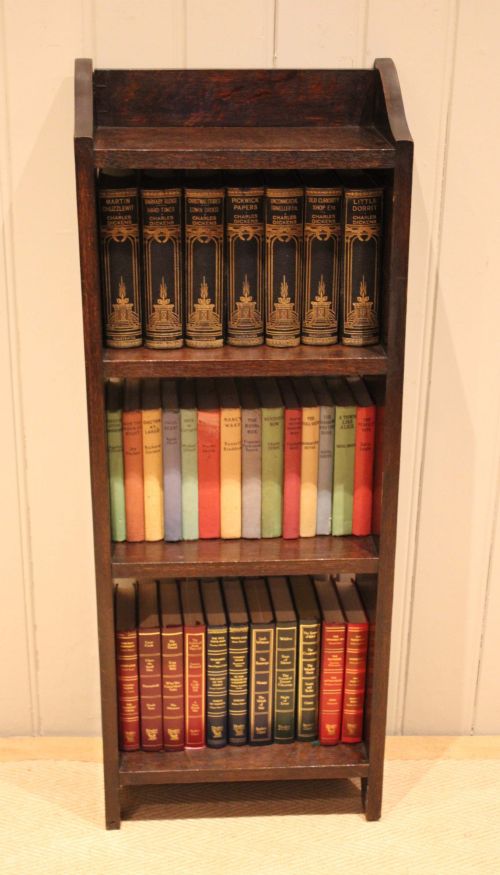
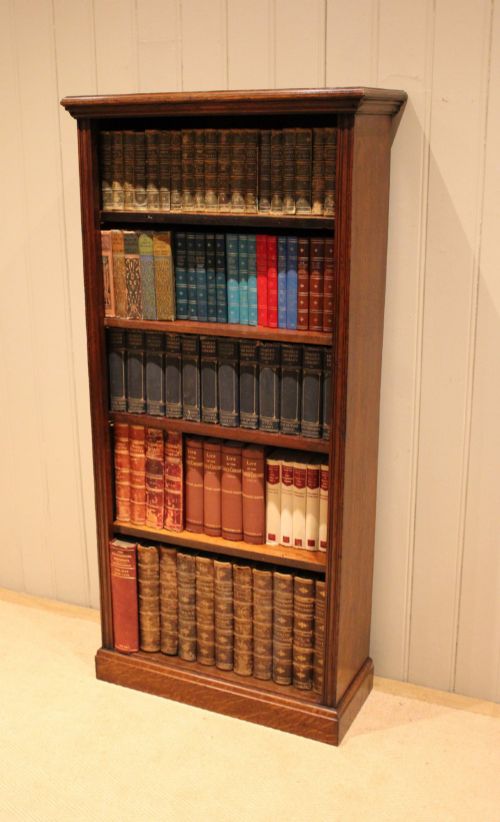
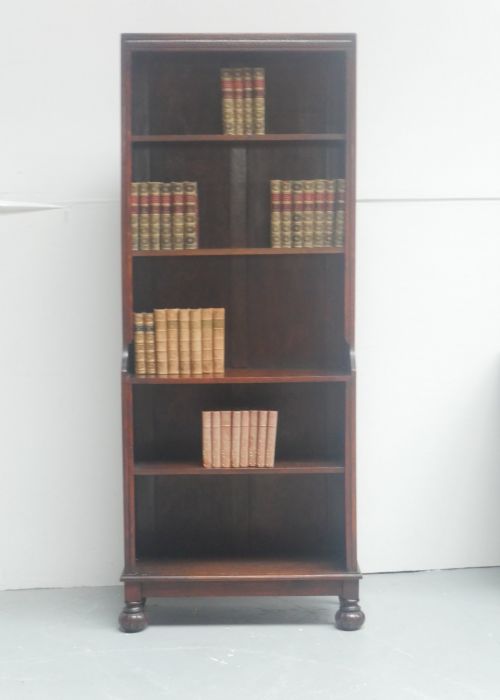
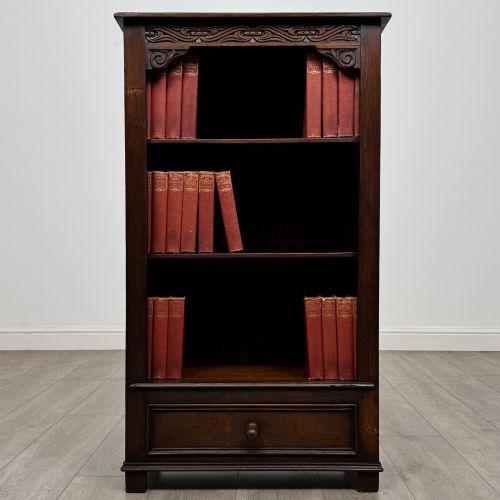
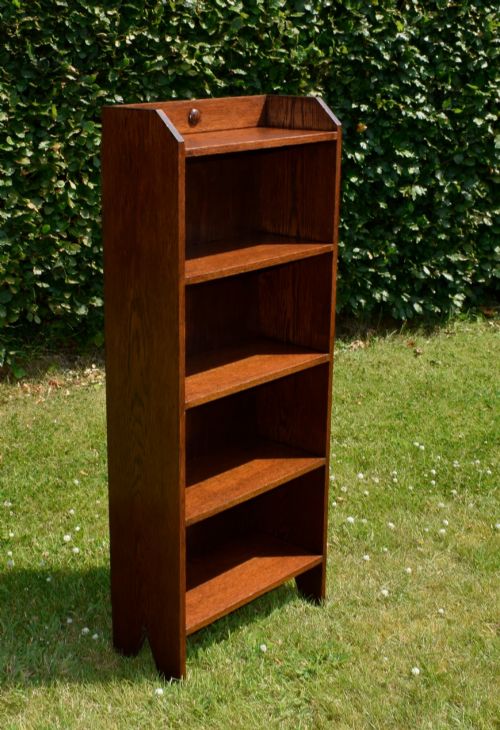
Narrow oak shelves appear on this page as compact open bookcases, dressers, and small desks spanning the Victorian, Edwardian, and twentieth-century periods. These vertical pieces accommodate limited floor space while providing sturdy storage for volumes and decorative objects.
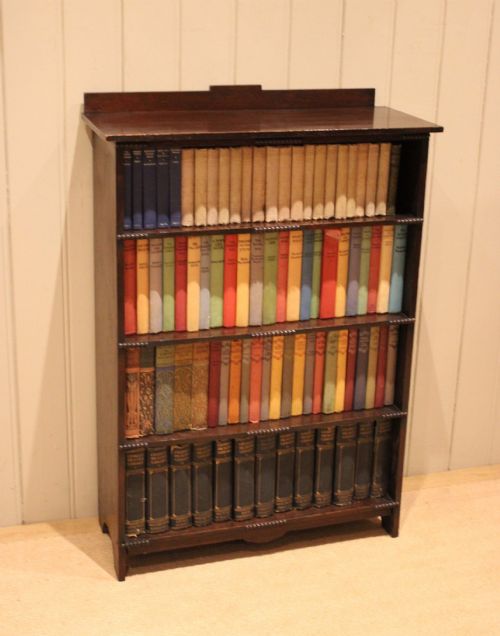
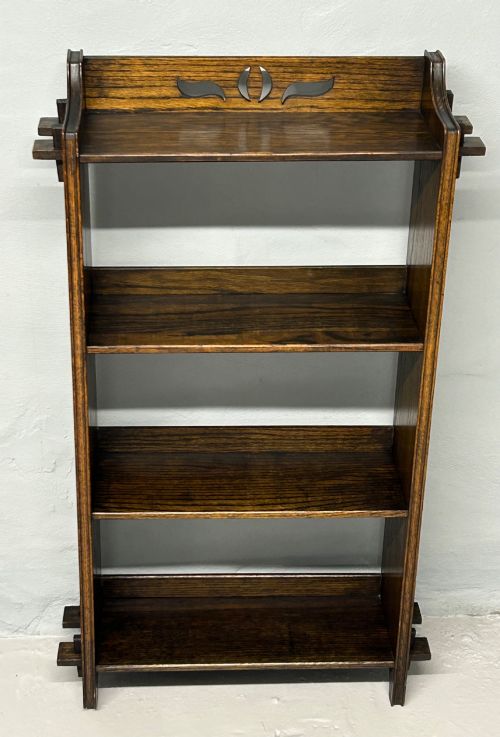
The selection ranges from simple beaded-edge designs to decorative Arts and Crafts models featuring cut-outs or glazed lower cupboards. Most examples utilise plain timber or dark oak finishes suited to both traditional studies and modern interiors.
Materials and construction
Makers built these pieces primarily from solid oak and dark oak, sometimes incorporating brass or iron hardware and fittings. Construction methods rely on traditional joinery to support upright vertical frames and adjustable or fixed shelving.
Surfaces often receive simple polished or waxed finishes that highlight the natural grain of the timber. Details such as moulded edges, decorative cut-outs, and carved panels appear across Victorian and Arts and Crafts examples.
Some narrow bookcases feature deliberate cut-outs shaped like hearts or clovers.
Judging quality
Quality rests upon the selection of the timber and the crispness of the joinery rather than ornate decoration. Pieces constructed from solid oak with carefully fitted joints maintain structural integrity over decades of daily use.
The refinement of secondary details, such as clean edge mouldings, well-fitted back panels, and functional adjustable shelf brackets, separates standard utilitarian items from finer workshop pieces.
Wylie Lochhead of Glasgow·E.A. Taylor
The Narrow Oak Shelves Glossary
- Arts and Crafts
- A design movement prioritising traditional craftsmanship, plain materials, and simple utility over excessive factory ornamentation. This style heavily influences many early twentieth-century pieces.
- Waterfall bookcase
- A tiered shelving unit where each successive shelf steps back from the one below it, creating a cascading profile. These pieces were popular during the Edwardian era.
- Beaded edge
- A narrow rounded moulding run along the edge of a shelf or upright frame to soften the corner. This detail appears frequently on twentieth-century oak bookcases.
- Standing bookcase
- A floor-mounted shelving unit designed to remain upright without requiring wall attachment. They range from low small proportions to tall narrow formats.
Narrow Oak Shelves: Frequently Asked Questions
Where do narrow oak shelves fit best?
These compact pieces fit easily into alcoves, hallways, and small studies where standard furniture proves too wide. Their slender proportions utilise vertical wall space effectively.
They pair well with existing wooden furniture while keeping book collections accessible in restricted floor areas.
How do I care for antique oak?
Maintain the timber by applying a microcrystalline wax polish occasionally to nourish the grain and protect the surface from drying out. Avoid placing pieces near direct heat sources or strong sunlight.
Dust regularly with a dry cloth to prevent dirt accumulation within carved details and moulded edges.
Are the shelves adjustable?
Many taller examples feature adjustable shelving supported by wooden ratchets or metal pins, allowing owners to alter shelf heights for varying book sizes. Simpler versions rely on fixed shelves secured permanently into the frame.
Checking the specific listing details reveals whether a particular piece offers movable shelf positioning.
What periods do these pieces span?
The selection covers items made from the late nineteenth century through the Edwardian period and into the nineteen-twenties and thirties. This timeframe includes Victorian craftsmanship alongside later Arts and Crafts and Art Deco designs.
Design characteristics naturally shift from heavier carved Victorian styles toward cleaner twentieth-century forms.