





Narrow Floor Carpet
A narrow floor carpet brings linear elegance to corridors and halls, offering enduring warmth underfoot through traditional wool and cotton construction.
Narrow Floor Carpet
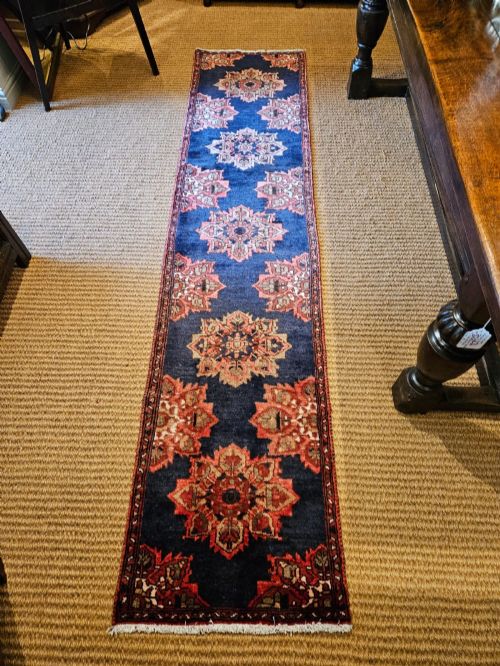
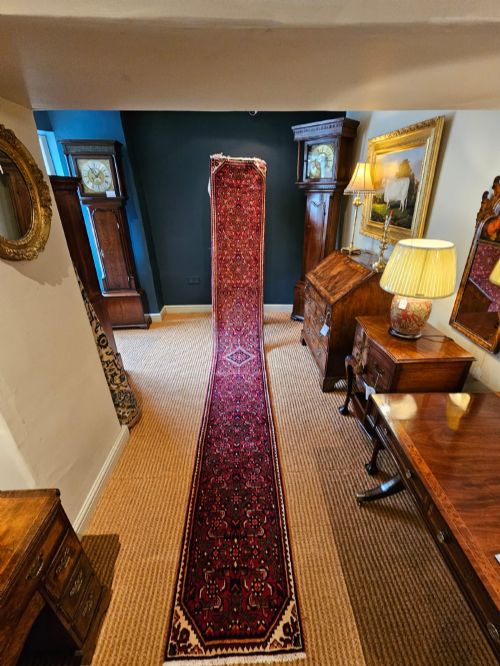
A narrow floor carpet is typically encountered as a long, slender runner rug designed specifically for hallways and corridors. The pieces on this page span several decades from the late nineteenth century through to the early twentieth century, showing substantial variety in length and proportion.
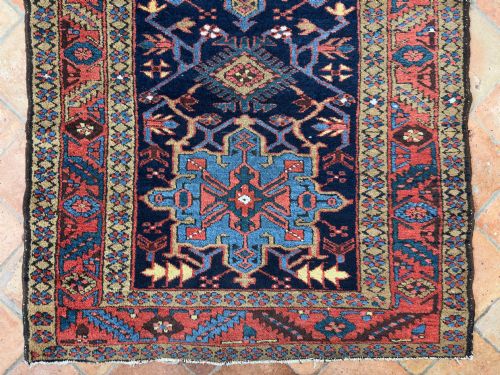
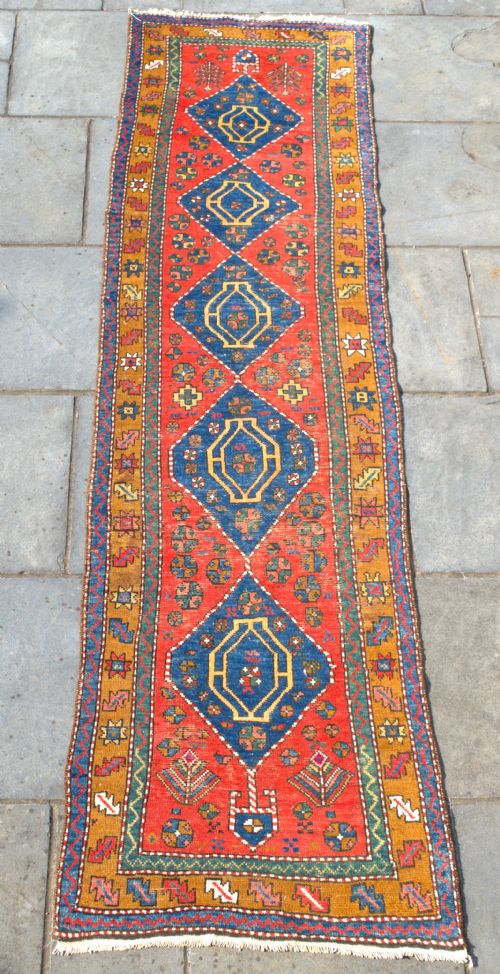
Originating from traditional weaving centres including Persian regions like Heriz, Karaja, Bidjar, and Hamadan, as well as Caucasian and Moroccan traditions, these runners display distinct regional patterns. Buyers most frequently meet Heriz, Kurdish, and Shirvan examples featuring elongated formats suited to domestic walkways.
The materials are consistently practical, utilising wool for the pile and cotton for the structural foundation. This combination provides the resilience needed for heavy foot traffic while maintaining supple drape and rich colouration.
Distinctions in quality
Quality rests in the density of the knotting and the precision of the linear geometry along the extended length of the runner. Tighter construction yields crisper tribal motifs and superior structural integrity over centuries.
The harmony and saturation of the wool dye contribute significantly to visual success. Subtle shifts in colour tone indicate artisanal dyeing methods that elevate standard room dividers into sophisticated decorative elements.
Narrow Floor Carpet Retail Price Guide 2026
Typical asking prices for narrow floor carpet among the pieces listed under this phrase on Sellingantiques today, from the lower quarter to the upper quarter. They describe what is for sale here now, not the wider market.
Listings span periods from 1870 to 1930, utilising wool and cotton materials across Persian, Caucasian, and Moroccan traditions.
The Narrow Floor Carpet Glossary
- Runner
- A long, narrow carpet format designed primarily for hallways, stairs, and corridors. This shape dictates the characteristic proportions seen across these antique listings.
- Pile
- The upright yarn loop or cut ends forming the usable surface of the carpet. Wool pile provides cushioning and insulative properties.
- Warp
- The stationary longitudinal threads stretched on a loom before weaving begins. Cotton warp threads support the entire weight of the knotted carpet.
- Heriz
- A stylistic origin from north-west Persia known for geometric medallion designs and robust wool construction. These runners often feature bold, rectilinear drawing.
- Bidjar
- A Persian weaving origin renowned for tightly packed knots and heavy, rigid foundations. Carpets from this region achieve exceptional durability.
Narrow Floor Carpet: Frequently Asked Questions
Where should I place a narrow runner?
These linear carpets suit long hallways, narrow corridors, and transitional spaces where floor warmth and protection are required.
Their elongated proportions guide movement through a home while softening hard timber or stone flooring.
How do I identify a Heriz runner?
Heriz runners display bold geometric medallions and rectilinear floral patterns woven with robust wool.
They originate from north-west Persia and typically exhibit sturdy proportions suited to heavy domestic traffic.
Are these carpets made of wool?
The pile consists of durable wool knotted onto a cotton foundation structure.
This traditional material combination provides both underfoot comfort and long-term resilience for busy thoroughfares.
What dates are typical for these rugs?
The examples span from the late nineteenth century through the early decades of the twentieth century.
Production dates cluster around Victorian and Edwardian periods, reflecting traditional village and tribal weaving output.