


Narrow Corridor Carpet
A narrow corridor carpet bridges long domestic passageways with dense patterns woven in wool and cotton across the late nineteenth and early twentieth centuries.
Narrow Corridor Carpet
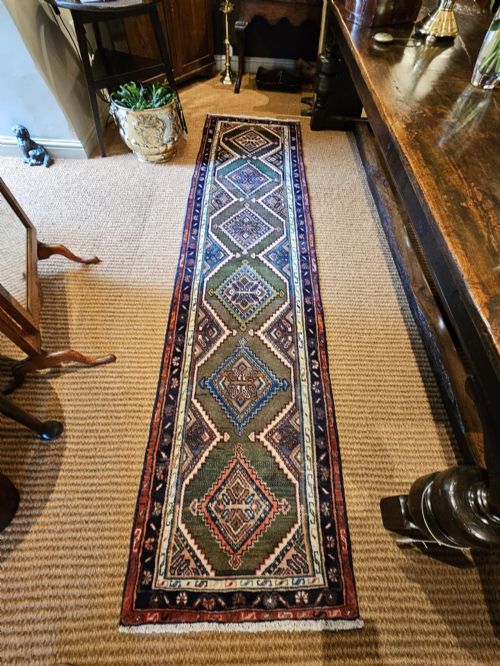
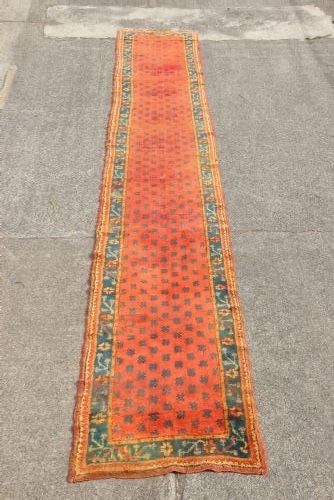
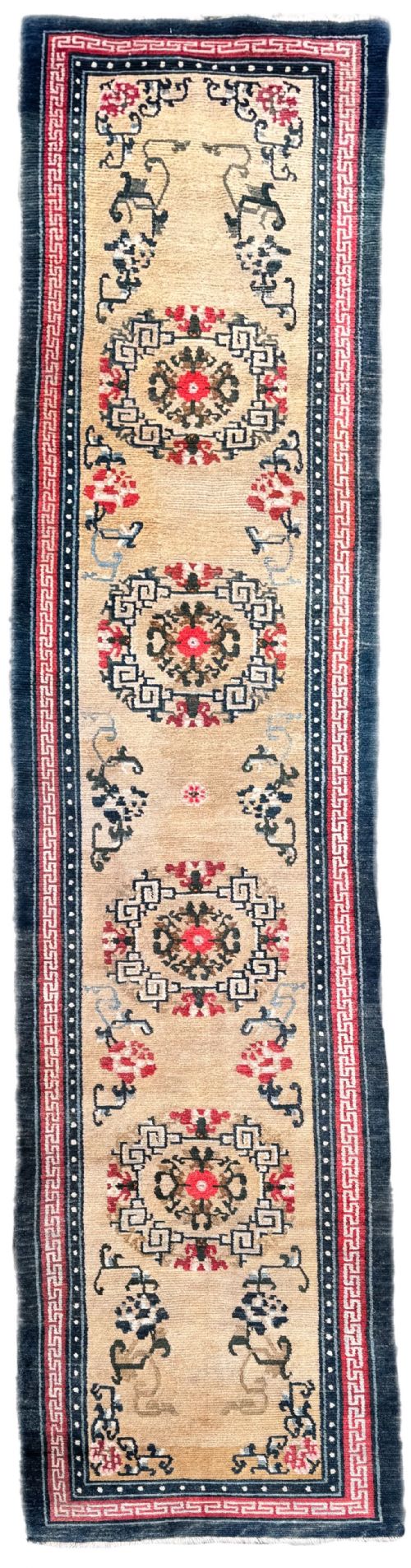
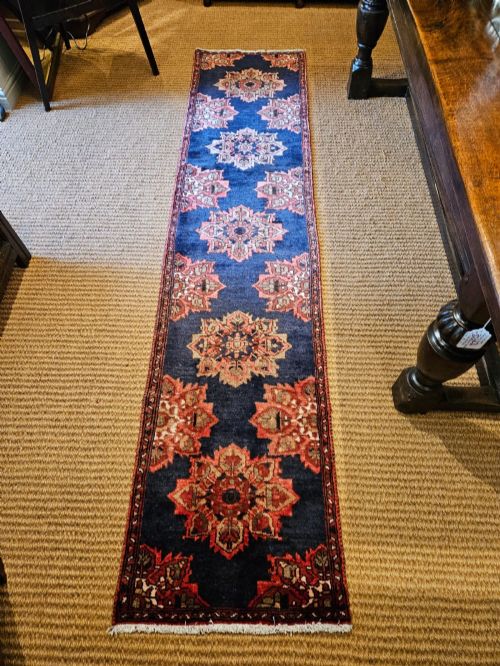
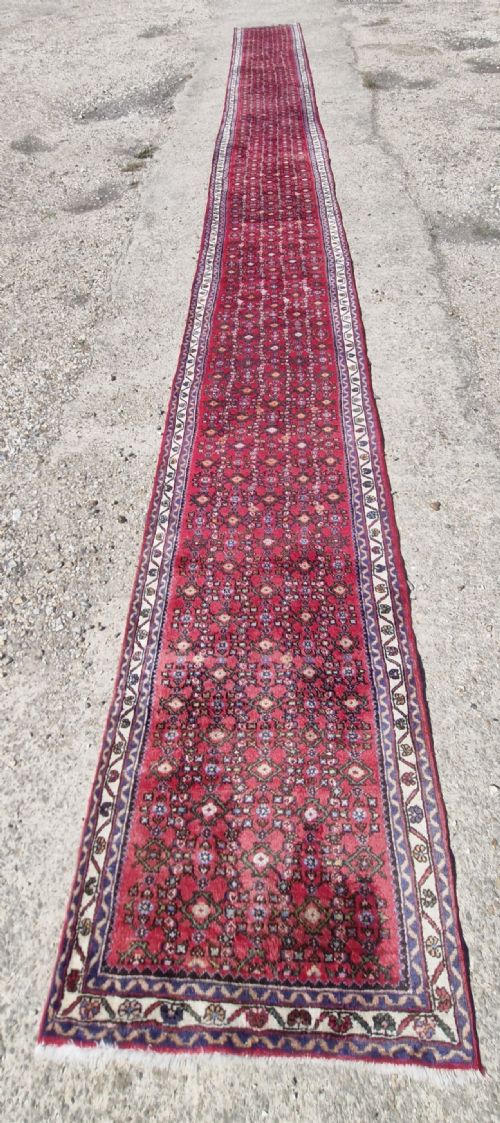
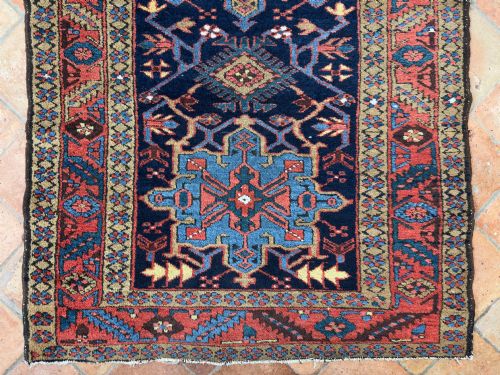
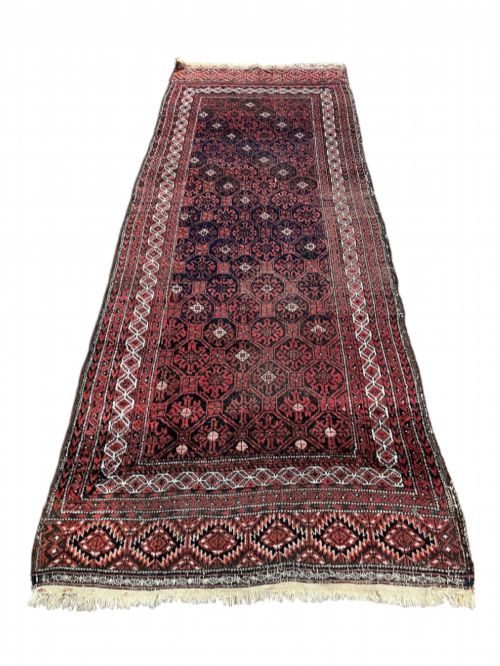
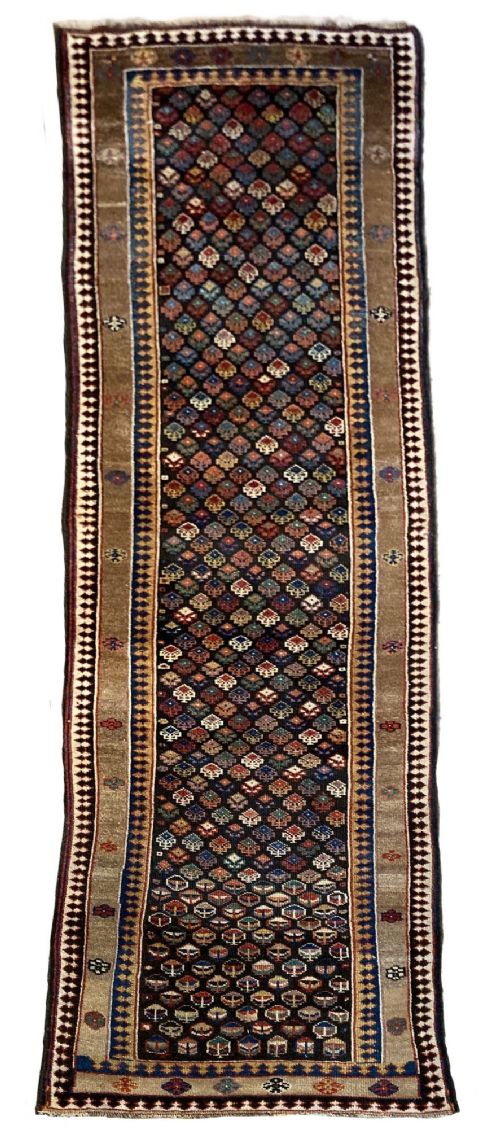
A narrow corridor carpet is a long, linear floor covering designed specifically for hallways, landings, and extended passageways. The selections span Persian tribal origins, Kurdish village pieces, Turkish Oushak and Heriz weaves, alongside Moroccan Berber productions.
Most examples found in this category date from the late nineteenth century through to the mid-twentieth century, capturing traditional village and nomadic craftsmanship. These textiles range from compact formats under three metres to expansive runners exceeding five or even ten metres in length.
Makers utilised restricted widths to fit tight architectural spaces while maintaining elaborate geometric and floral medallions along the central axis. The typology encompasses flatwoven kilims as well as piled pile carpets constructed for high-traffic corridors.
Materials and construction methods
Weavers constructed these runners primarily using wool for the pile and pattern work, combined with cotton foundations for stability and strength. Hand-spun wool and occasional camel hair appear within tribal specimens, providing natural texture and resilient durability underfoot.
Traditional looms supported the knotting or flatweaving processes employed across Persian, Caucasian, and Anatolian workshops. Vegetable and early aniline dyes imparted the deep navy blues, olive greens, and mellow hues characteristic of the period.
Some Kurdish runners hide tiny birds perched on trees right beneath your feet.
Evaluating weave and design execution
Knot density and structural integrity dictate the distinction between standard village output and finer workshop productions. Tighter foundations ensure the pile remains upright and uniform over decades of corridor footfall.
Design clarity and the deliberate pacing of medallions along a stretched format separate exceptional pieces from ordinary ones. The rhythm of repeat motifs requires skilled proportioning so the narrow field feels balanced rather than cramped.
The Narrow Corridor Carpet Glossary
- Runner
- A long, narrow carpet format designed to fit hallways, stairs, and corridors. These pieces measure significantly longer than they are wide.
- Kilim
- A flatwoven carpet produced without a pile by tightly interweaving warp and weft threads. This technique creates a lightweight, reversible textile with sharp geometric patterns.
- Warp
- The vertical foundation threads stretched lengthwise on the loom before weaving begins. All knots and wefts are tied around these stationary structural elements.
- Weft
- The horizontal threads passed back and forth across the warp to bind the knots in place. Together with the warp, they form the sturdy grid of the carpet backing.
- Medallion
- A central ornamental design motif placed symmetrically within the field of the carpet. Village weavers often used repeated geometric medallions to guide the eye along narrow formats.
Narrow Corridor Carpet: Frequently Asked Questions
How do I measure for a hallway runner?
Measure the clear floor space of your corridor, leaving an equal margin of exposed wood or stone around the edges. Ensure doors can swing freely over the thickness of the chosen pile.
Account for any radiators, baseboards, or awkward corners that might obstruct a straight linear run.
Are these carpets durable enough for heavy traffic?
Traditional village and tribal carpets were constructed using sturdy wool and cotton foundations designed to endure daily household use. Their dense natural fibres handle passageway footfall effectively when paired with a quality underlay.
Routine care and correct placement protect the antique pile from premature wear in busy zones.
How do I clean an antique wool runner?
Vacuum gently across the grain using suction only, avoiding any rotating beater bars that can catch vintage knots. Professional specialist cleaning remains essential for deep maintenance.
Promptly blot liquid spills with a dry white cloth without rubbing the wool fibres.
How can I tell Persian village runners apart?
Regional styles reveal themselves through specific palette choices, border configurations, and knotting structures. Kurdish and Heriz pieces often feature bold geometric framing, whereas Ferahan or Senneh weaves display finer floral detailing.
Examining the selvedges and backing provides further clues to the specific tribal origin.