


Napoleon III Table Lamps
Napoleon iii table lamps combine heavy historic metalwork and converted oil forms to anchor a French interior.
Napoleon III Table Lamps
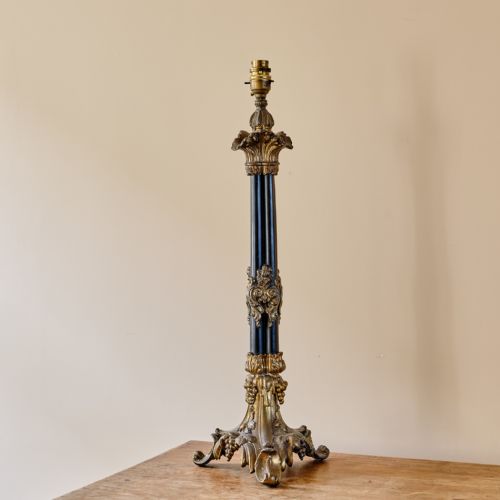
Napoleon iii table lamps encompass robust nineteenth-century lighting, often born from the conversion of period oil lamps and chandeliers. These pieces emerge predominantly in nineteenth-century French contexts, displaying the weighty forms typical of the era.
The selection frequently includes converted oil lamps in bronze, copper, and brass, alongside examples featuring Sevres porcelain bodies and crystal drops. Buyers will encounter both single statement lamps and matched pairs carrying significant visual presence.
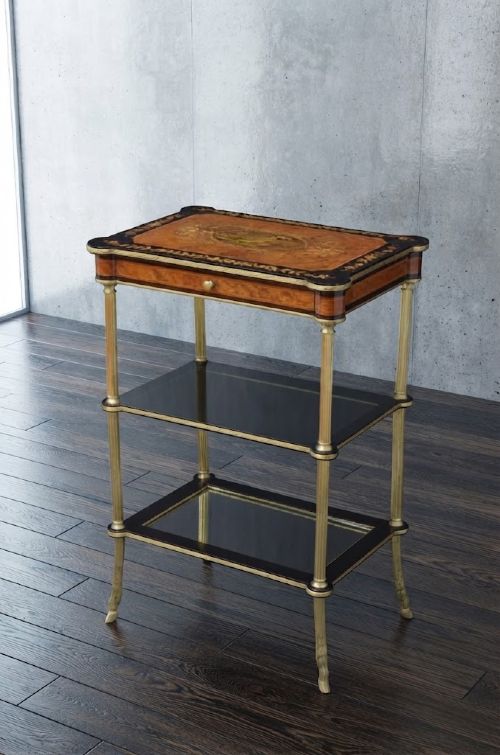
Alongside dedicated desk and table lamps, the listings merge side tables and lamp tables due to their shared nineteenth-century French origins and use. Walnut, rosewood, and ebonised timber form the structural backbone for these supporting surfaces.
How they were made
Foundry casting defines the metal elements, utilising bronze, brass, copper, and ormolu to build sculptural bases and mounts. Chasing and gilding often finish the metal surfaces, creating rich textural contrast.
Cabinetmakers constructed the wooden tables and stands using rosewood, walnut, and ebonised wood, frequently incorporating brass stringing and marble tops. Ceramic elements such as Sevres porcelain and faience introduce colour and painted detail to the lamp bodies.
A brass cherub orchestra provides the musical accompaniment for one particularly spirited nineteenth-century oil lamp.
What varies in quality
Finishing in the metalwork sets the standard, separating sharp, hand-chased bronze or ormolu mounts from softer, simpler castings. The weight and depth of the materials dictate the overall substance of the piece.
Intricacy in secondary components, such as crystal drops, ceramic hand-painting, and precise wood inlay, elevates individual items. The integrity of the original proportions governs how successfully a converted oil lamp holds its presence.
The Napoleon III Table Lamps Glossary
- Ormolu
- Gilt bronze produced through a mercury gilding process or electroplating on a bronze base. This technique creates a rich golden finish found on mounts and decorative details.
- Sevres
- Porcelain originating from the famous French factory, known for distinctive coloured grounds and hand-painted decoration. These ceramic bodies frequently form the central columns of lamps.
- Ebonised
- Timber treated to imitate ebony, giving a deep black finish common in nineteenth-century furniture and lamp bases. It provides a dark contrast against gilt or polished metal.
- Faience
- Tin-glazed earthenware decorated with opaque colours, often seen in nineteenth-century lamp bodies. This ceramic technique yields a smooth, glossy surface.
- Console lamp
- A lighting fixture designed to sit narrow against a wall or on a slender surface. These pieces utilise compact footprints while retaining decorative metal casting.
Napoleon III Table Lamps: Frequently Asked Questions
What is a converted oil lamp?
A converted oil lamp is an antique lighting piece originally designed to burn oil that has been adapted for modern electrical wiring. This process allows historic metal and ceramic bodies to function safely with contemporary bulbs.
These conversions preserve the decorative burners, reservoirs, and sculptural columns of the nineteenth century. They offer a direct link to period domestic interiors while meeting current utility needs.
How do I identify Napoleon III style?
Napoleon iii style draws heavily on eclectic revivals of earlier French reigns, particularly Louis XV and Louis XVI. It favours dense ornamentation, rich materials, and symmetrical bronze mounts.
Look for heavy casting, dark ebonised woods, and contrasting gilt highlights. The overall aesthetic prioritises opulent decoration and substantial forms over austere lines.
Where should I place a lamp table?
A lamp table functions beside seating or against a wall to support a table lamp or decorative object. Their compact surface areas suit resting small items rather than heavy dining.
Matched with wood or marble tops and brass mounts, they complement the materials found in period lamps. Positioning them in reception rooms helps anchor the lighting scheme.
Are these lamps sold as pairs?
Many nineteenth-century lighting pieces survive as matched pairs, particularly those intended for mantelpieces or larger sideboards. Pairs provide symmetrical balance for formal interior arrangements.
Single lamps also appear frequently, often functioning as standalone desk or accent lighting. The survival of matched pairs depends on their original domestic context.