







Napoleon III Garniture
These pieces of napoleon iii garniture are decorative mantel sets combining clocks and urns in metal and stone, bringing distinct French Second Empire grandeur to a room.
Napoleon III Garniture
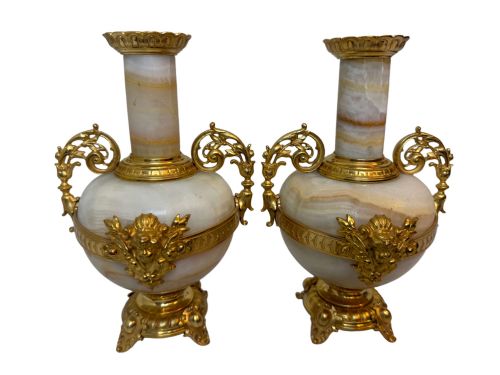
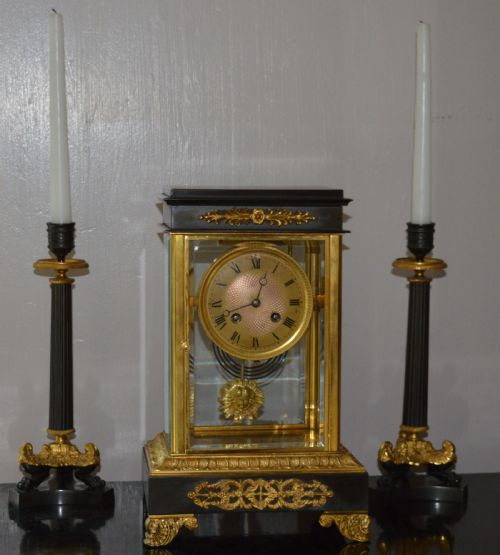
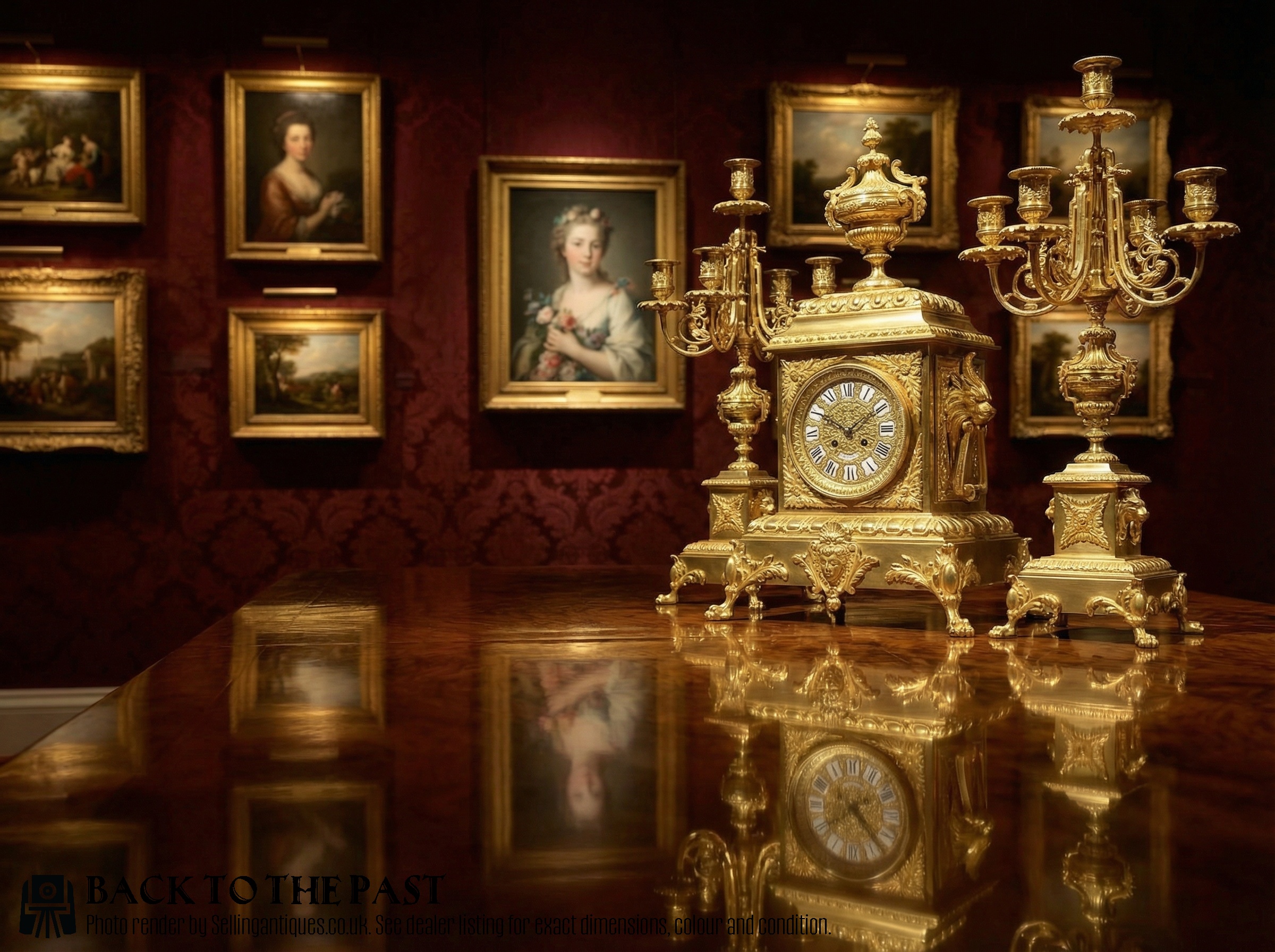
A napoleon iii garniture typically comprises a central mantel clock accompanied by a matching pair of vases, urns, cassolettes or candlesticks designed to balance a chimneypiece. The version most frequently encountered on this page pairs a gilt bronze or ormolu-mounted clock with white onyx, siena marble or porcelain vessels.
The objects originate from the nineteenth century, drawing upon French Rococo Revival, Louis XVI style and French Empire design vocabulary. Makers of the period produced these three-piece sets to anchor the decorative scheme of grand nineteenth-century interiors.
Form follows a symmetrical arrangement where the central timekeeper dictates the stylistic theme of the flanking decorative pieces. Matching sets often incorporate enamel dials, glass domes or bronze mounts that unify the grouping.
Materials and Construction
Metalwork relies heavily on cast gilt bronze and ormolu, providing the ornate surface detailing characteristic of the period. Artisans combined these gilded metals with turned white onyx, siena marble and glass to create contrasting textures and tones.
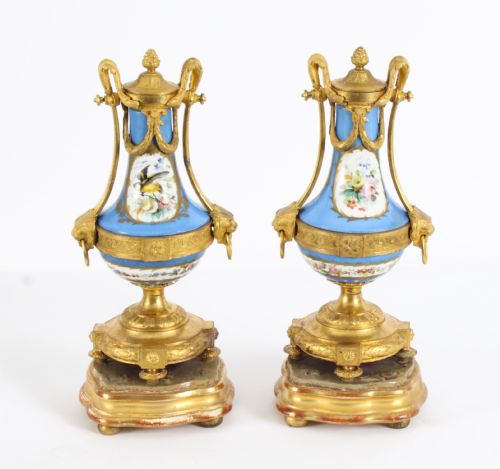
Ceramic elements utilise porcelain in Sevres styles, often painted in bleu celeste or decorated with enamelled motifs. Metal mounts are securely fixed to stone or ceramic bodies using traditional mechanical fasteners.
Clock movements of the era operate on eight-day striking systems housed within the primary bronze or marble housing. Glass domes occasionally accompany these sets to protect delicate dial faces and gilded surfaces from dust.
Napoleon III Garniture Retail Price Guide 2026
Typical asking prices for napoleon iii garniture among the pieces listed under this phrase on Sellingantiques today, from the lower quarter to the upper quarter. They describe what is for sale here now, not the wider market.
Some cassolette lids flip upside down, turning a dignified decorative urn into a practical candleholder before dinner.
Judging Quality
Quality depends upon the crispness of the bronze casting and the depth of the gilding across the ormolu surfaces. Finer examples display sharp chisel work on the metal mounts and carefully turned stone bodies without structural compromise.
The harmony between the central clock and its flanking pieces determines the cohesion of the garniture set. Superior sets feature matched patination and integrated stylistic details that indicate they were conceived together in the workshop.
Ferdinand Barbedienne
The Napoleon III Garniture Glossary
- Garniture
- A set of decorative objects designed to be displayed together, most commonly a clock flanked by two vases or urns. They traditionally sit upon a mantelpiece to create a balanced focal point.
- Ormolu
- Gilded bronze produced by applying a mercury and gold amalgam to a bronze base and heating it. This technique creates the durable golden finish seen on nineteenth-century French metalwork.
- Cassolette
- A dual-purpose decorative vase featuring a reversible lid that transforms the piece from an urn into a candlestick. They appear frequently in paired decorative sets.
- Bleu Celeste
- A bright sky-blue enamel or porcelain ground colour popular in Sevres style ceramics. It provides a vibrant backdrop for gilt bronze mounts.
- Onyx
- A banded variety of chalcedony used for the bodies of nineteenth-century clocks and urns. White onyx provides a smooth, pale stone surface that contrasts with bright ormolu.
Napoleon III Garniture: Frequently Asked Questions
What is a garniture set?
A garniture set is a matched group of decorative objects designed for display together on a mantelpiece or sideboard.
The arrangement typically consists of a central clock flanked by two matching vases, urns or cassolettes to create visual symmetry.
How do you style a garniture?
These sets work best placed centrally on a mantelpiece where the flanking urns or candlesticks balance the main clock.
Ensure the surface is deep and stable enough to support the weight of the marble and bronze components.
What periods do these pieces date from?
The pieces available here date predominantly from the nineteenth century, encompassing Victorian and Napoleon III production periods.
Designs draw inspiration from earlier French court styles including Louis XVI and the Second Empire.
Are the clocks still working?
Many nineteenth-century sets retain their original eight-day striking mechanical movements designed to keep time and sound the hours.
Exact running conditions vary across individual pieces, so checking specific listing details is recommended.