




Naive School Painting
These naive school painting works capture unfiltered charm and direct observation, offering character and history for your walls.
Naive School Painting
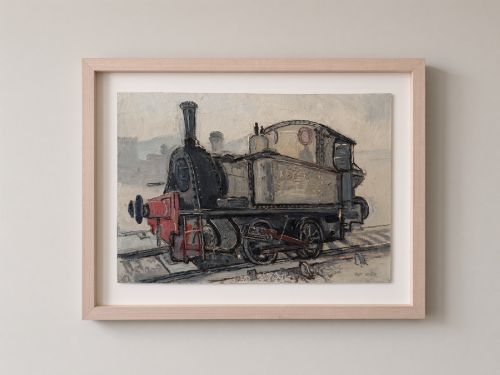
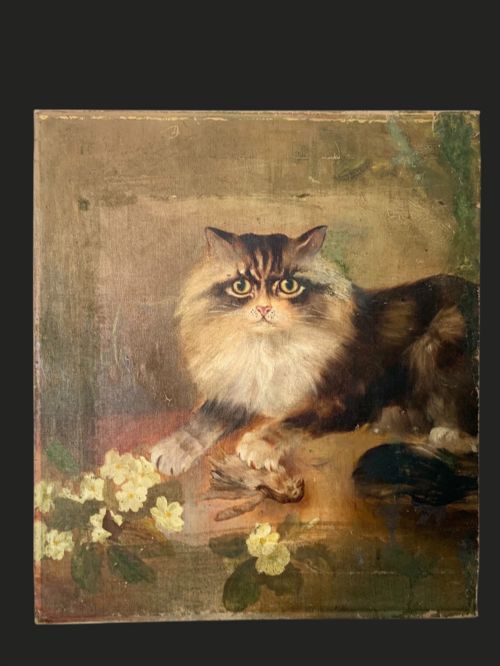
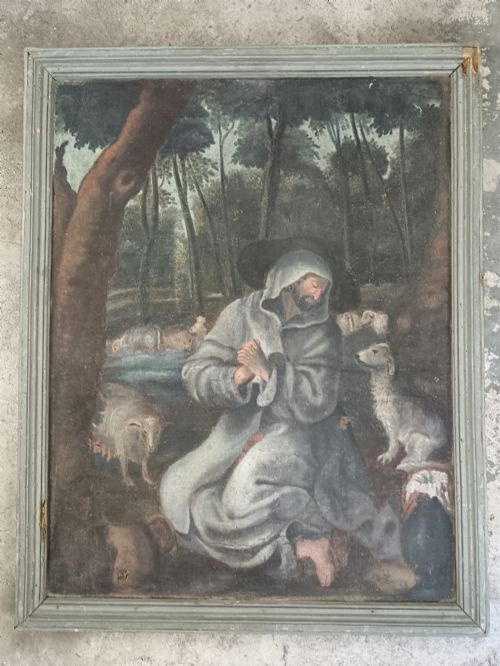
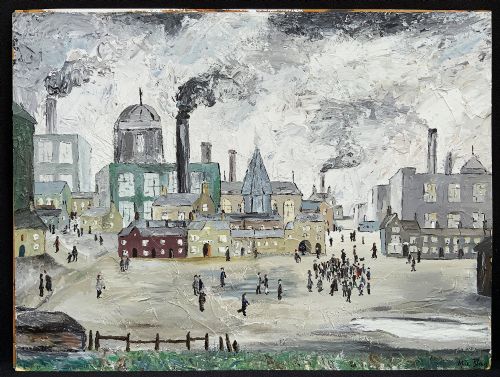
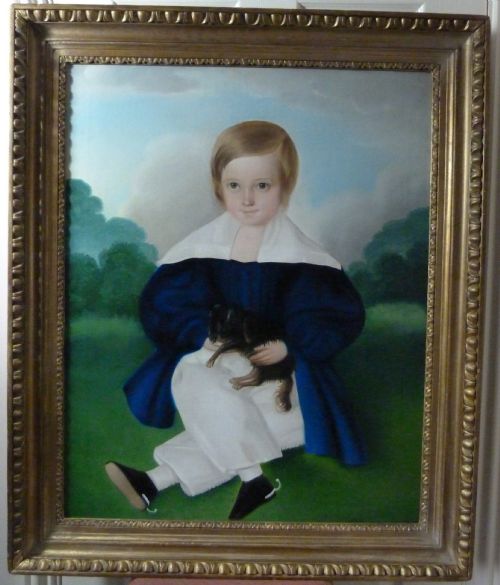
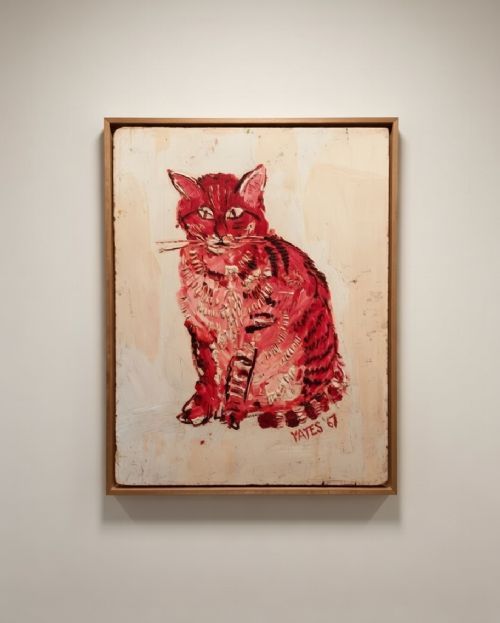
A naive school painting presents direct, unvarnished imagery created outside formal academic traditions, often focusing on portraits of people and animals, townscapes, and rural landscapes. You will most frequently encounter nineteenth-century English examples alongside mid-century works, featuring subjects like domestic pets, horses, and gentlemen.
The compositions often bypass strict academic perspective in favour of expressive clarity and bold presentation. Pieces range from intimate portraits on panel and canvas to larger landscapes depicting industrial towns and farming scenes.
How they were made
Makers applied oil paint onto traditional supports including canvas, wooden panels, board, and occasionally tinplate. Many examples retain their original framing, frequently utilising gilt wood to complement the imagery.
Artists relied on straightforward brushwork rather than complex layering, using oil on canvas or oil on board to achieve durable surface textures that survive across the centuries.
Naive School Painting Retail Price Guide 2026
Typical asking prices for naive school painting among the pieces listed under this phrase on Sellingantiques today, from the lower quarter to the upper quarter. They describe what is for sale here now, not the wider market.
Materials in this selection include oil paint, canvas, wood, paper, and tinplate across the eighteenth, nineteenth, and twentieth centuries.
What varies in quality
Quality rests upon the strength of character captured in the subject and the confidence of the brushwork, distinguishing spirited individual works from formulaic productions. The handling of light and the preservation of the original surface paint layers determine the visual impact of each piece.
A successful composition maintains an engaging presence through proportion and colour harmony, even when working outside conventional artistic rules.
Fred Yates
The Naive School Painting Glossary
- Oil Paint
- A slow-drying paint made by combining pigment particles with a drying oil such as linseed, frequently used across these works on canvas and panel.
- Canvas
- A heavy woven fabric stretched across a wooden frame to serve as a durable painting surface.
- Gilt Wood
- Wood treated with gold leaf or a gold-coloured finish to adorn picture frames.
- Pentimento
- An alteration in a painting, evidenced by previous strokes visible beneath the surface layers, showing the artist's changes during creation.
- Folk Art
- Artistic work created within a cultural tradition by untrained or self-taught makers.
Naive School Painting: Frequently Asked Questions
What is a naive school painting?
It is an artwork created outside traditional academic training, known for its direct perspective and honest charm.
These works frequently depict everyday subjects such as portraits, animals, and landscapes with unpretentious execution.
How do I date these paintings?
Dating relies on costume, materials, and stylistic markers recorded within the composition and physical support.
Nineteenth-century pieces often feature specific clothing styles and stretcher construction typical of the period.
Where were these pieces produced?
Production spans various regions, with English, French, Italian, Scandinavian, and American examples appearing in the record.
Local materials and regional portrait styles often hint at the geographic origin of each work.
How should I display them?
These paintings suit domestic spaces where their direct character can be appreciated up close.
Pairing them with period frames enhances their visual presence on the wall.