



Mythological Marble Statue
A mythological marble statue brings classical sculpture into a room, carved from solid stone to capture ancient deities and literary figures.

Mythological Marble Statue
A mythological marble statue depicts classical figures, deities, and legendary narratives drawn from antiquity and later literary traditions. These pieces range from substantial garden statues and groups to cabinet-scale carvings.
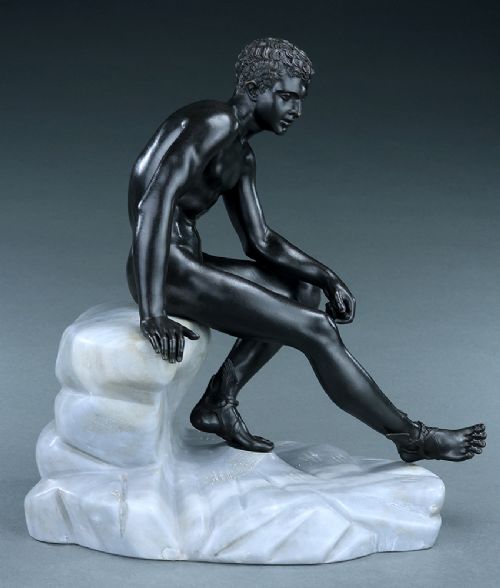
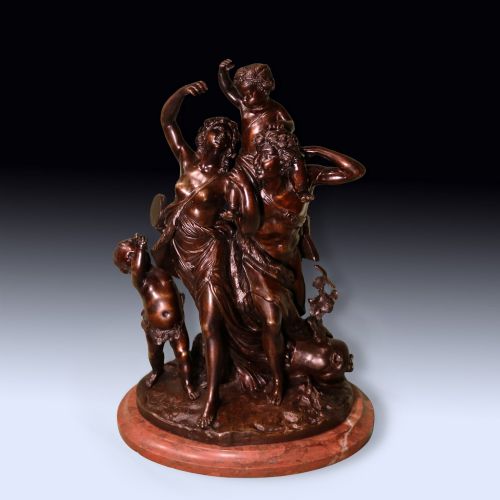
The versions most commonly met on this page date from the nineteenth century, including Grand Tour souvenirs and Italian carvings after antique models. Subjects extend from Bacchus and Ariadne to figures like Una and the Lion and Arjuna.
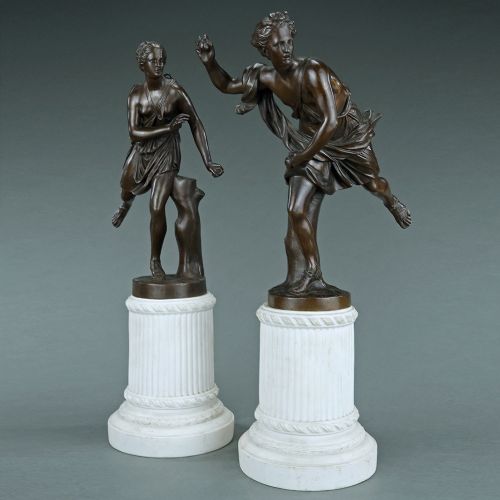
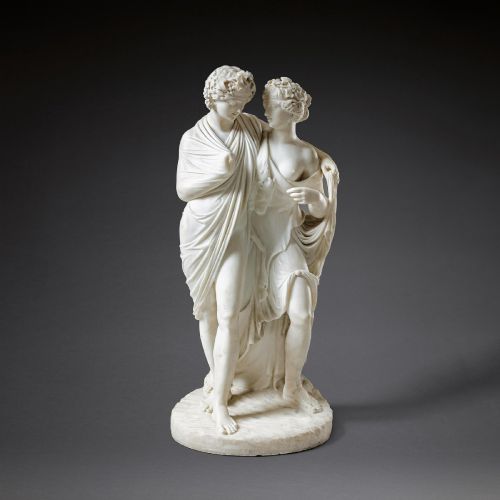
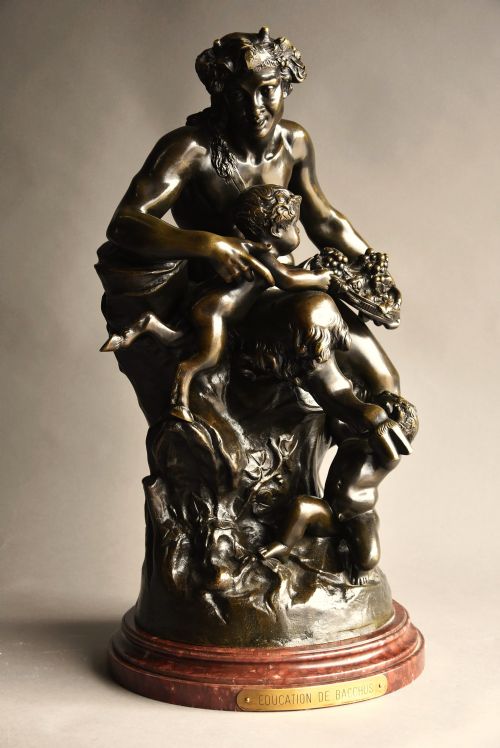
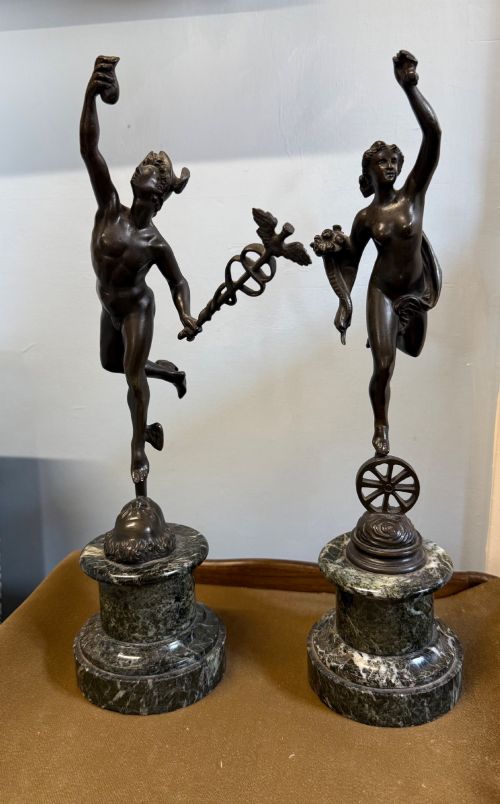
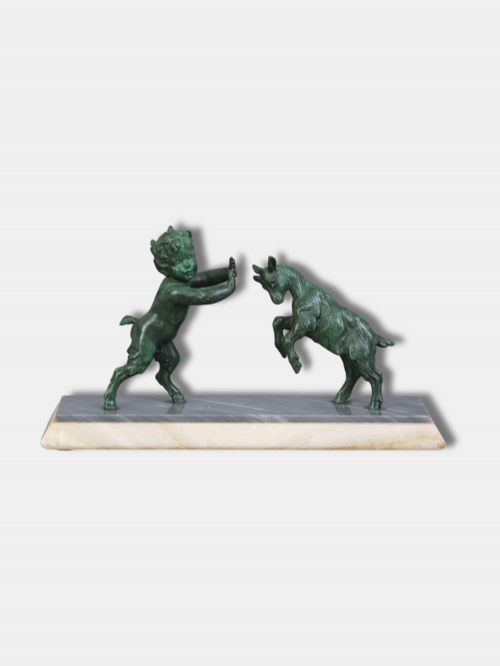
Works appear in solid white marble, Carrara marble, green marble, and rouge marble, frequently mounted upon contrasting marble bases. Sculptors often executed these pieces after celebrated classical precedents.
Judging quality
Quality rests in the anatomical precision and the fluidity of the carving, particularly in the rendering of drapery, hair, and musculature. Finer examples display subtle transitions and deep undercut details that animate the stone.
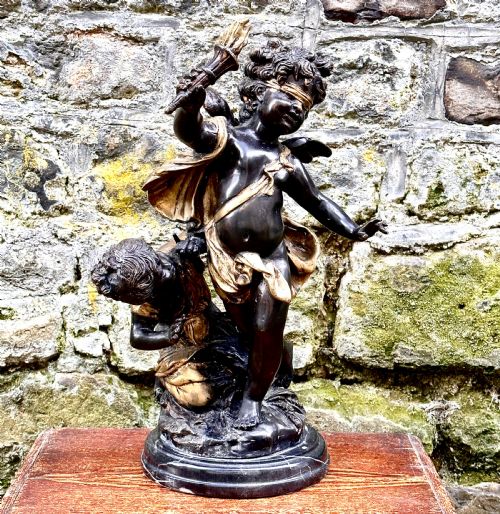
The choice and purity of the marble significantly influence the character of a piece, with dense, clean white or coloured varieties holding sharper lines. The integration between figures and their marble or bronze bases also distinguishes superior productions from standard studio work.
Listings feature works spanning the nineteenth century up to nineteen-thirty, incorporating white, Carrara, green, and rouge marble alongside bronze.
Barbedienne·Carlo Albacini·Claude Michel Clodian·Emile Carlier·Antonio Canova·Cellini·Franz Iffland·Denise Delavigne
The Mythological Marble Statue Glossary
- Grand Tour
- A traditional trip through Europe undertaken by upper-class young men in the eighteenth and nineteenth centuries to study classical art. Souvenirs from these travels included reduced-scale marbles and bronzes of famous antiquities.
- Carrara marble
- A type of white or blue-grey marble from the city of Carrara in Tuscany, widely prized for use in sculpture. It provides a fine, uniform grain suitable for delicate carving.
- Neoclassical
- A Western cultural movement in the decorative arts and sculpture inspired by the classical art and culture of ancient Greece and Rome. This style prioritises restraint, line, and classical subject matter.
- Rouge marble
- A rich red ornamental stone with white or grey veining used for architectural elements and sculpture bases. It provides a striking contrast to white marble figures and patinated bronzes.
- Patinated bronze
- Metalwork treated with chemical solutions to produce a specific surface colour and sheen. This treatment protects the metal and enhances the definition of sculptural details.
Mythological Marble Statue: Frequently Asked Questions
What periods do these marble statues come from?
The listings span the nineteenth century, with particular concentration in the eighteen-fifties through the early nineteen-hundreds. Many pieces reflect earlier neoclassical aesthetics and Renaissance revival traditions.
Date attributions often link specific works to Grand Tour souvenir production or named nineteenth-century sculptors working in the classical idiom.
How were these marble statues displayed?
Nineteenth-century collectors typically placed these carvings on pedestals, console tables, or desks where light could catch the carved details. Smaller figures often served as cabinet pieces or mantelpiece ornaments.
Many statues incorporate integrated stone bases or sit upon contrasting marble pedestals designed to elevate the work.
Are these statues solid marble?
The listings include solid carved marble sculptures alongside mixed-media groups that combine marble and bronze elements. Different varieties such as Carrara, green, and rouge marble appear across the pieces.
Makers frequently mounted stone figures onto stone or patinated metal bases to provide stability and visual contrast.
How do I identify classical subjects in sculpture?
Subjects usually derive from Greek and Roman mythology, including figures like Bacchus, Hermes, and Perseus, as well as literary narratives. Sculptors frequently based their compositions on famous antique prototypes known from museum collections.
Inscriptions, signatures on bases, and stylistic markers relating to nineteenth-century revival movements help determine the specific context of a piece.