

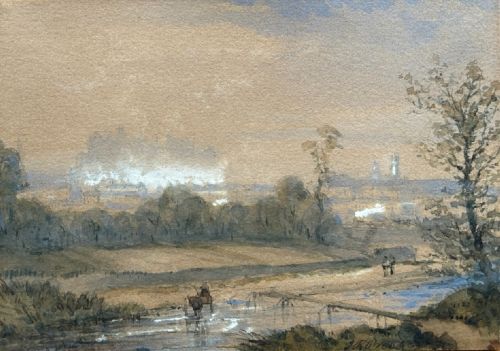


Muted Tones Landscape Artwork
Muted tones landscape artwork brings together subtle palettes and atmospheric scenery, offering collectors quiet views of coasts, rivers, and rural villages.
Muted Tones Landscape Artwork
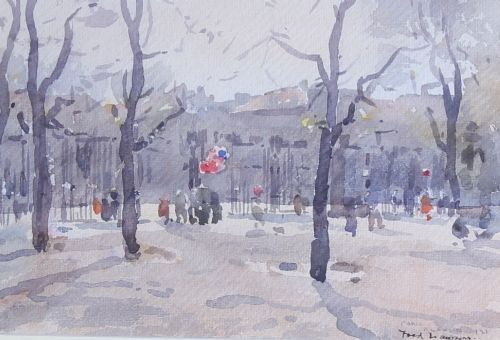
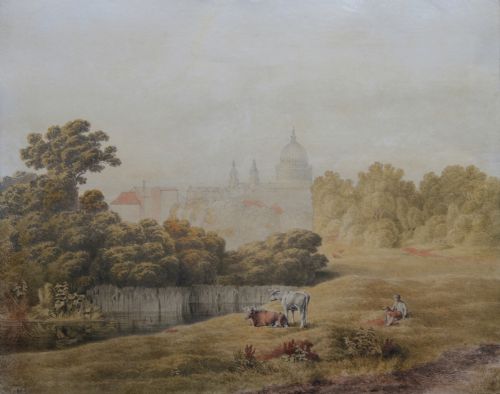
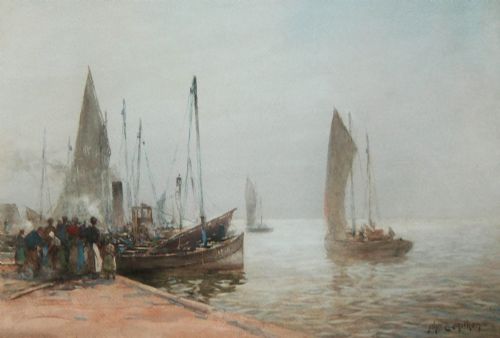
Muted tones landscape artwork captures natural scenery through restrained, earthy colour palettes that evoke specific atmospheres and light conditions. These pieces range from nineteenth-century watercolours of coastal villages and fenlands to mid-twentieth-century oil paintings depicting quiet rivers and harbour scenes.
The selections available here lean heavily towards British and French schools, encompassing styles from Victorian realism to post-impressionism and the twentieth-century British school. Buyers will frequently encounter works on paper and canvas depicting tranquil rural settings, winter rooftops, and maritime views.
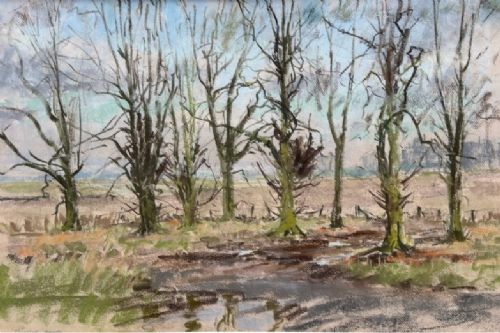
Depictions of local architecture, old barns, and quiet streams dominate the subject matter, recording regional topography across England, Scotland, Wales, and France. These paintings and watercolours offer a glimpse into historical landscapes rendered with a subdued visual harmony.
Materials and Construction
Artists created these works primarily using oil paint on canvas or panel, and watercolour paint applied to paper. Some pieces incorporate mixed media such as coloured pencil alongside watercolour, while others utilise pastel on paper to achieve softer textures.
Supports range from stretched canvas and wooden panels to heavy-weight paper stocks, housed within period or contemporary frames that protect the fragile mediums. The handling of pigment relies on traditional brushwork, ranging from detailed Victorian execution to looser post-impressionist applications of paint.
Muted Tones Landscape Artwork Retail Price Guide 2026
Typical asking prices for muted tones landscape artwork among the pieces listed under this phrase on Sellingantiques today, from the lower quarter to the upper quarter. They describe what is for sale here now, not the wider market.
Several artists captured quiet moments involving unexpected companions, including a diligent mule accompanying a traveller through the French countryside.
Assessing Quality and Execution
The distinction between standard examples and superior works lies in the artist's handling of light, atmospheric depth, and spatial composition. Stronger pieces demonstrate a confident control of muted pigment, allowing understated shades to convey genuine movement and weather.
Provenance and documentation also separate works, with signed pieces and identified topographical locations providing clearer historical context. The skill of the brushwork and the preservation of the original paper or canvas surface further define the standing of each piece.
James E. Aitken·Ernest Higgins Rigg·Gyrth Russell·Thomas Swift Hutton·Walter Sickert
The Muted Tones Landscape Artwork Glossary
- Watercolour
- A painting method in which the paints are made of pigments suspended in a water-based solution. It is typically applied to paper supports to achieve translucent washes of colour.
- Post-Impressionism
- An art movement extending the limits of impressionism while rejecting its limitations. Artists concentrated on symbolic motifs and distinct colour harmonies rather than purely optical recordings.
- Canvas
- A closely woven heavy fabric used as a support surface for oil paintings. It is typically stretched over a wooden frame before pigment is applied.
- Provenance
- The chronology of the ownership, custody, or location of a historical artwork. Clear records help verify the authenticity and history of a piece.
Muted Tones Landscape Artwork: Frequently Asked Questions
What periods do these artworks cover?
The selection spans from the mid-nineteenth century through the Victorian era and into the mid-twentieth century. Pieces reflect artistic movements across several decades, including post-impressionism and twentieth-century British schools.
Dates range from the 1860s up to the 1960s, offering a broad view of how artists interpreted natural scenery over a century of change.
How should I care for watercolour paintings?
Watercolour works on paper require protection from direct sunlight to prevent fading of the delicate pigments. Framing behind conservation glass helps shield the paper from humidity and environmental damage.
Keep these pieces in rooms with stable temperature and moisture levels to preserve the integrity of both the paper support and the medium.
What subjects are most common?
Coastal views, rural rivers, harbour scenes, and village rooftops dominate the imagery. Artists frequently recorded specific regional landmarks across Britain and France, from Yorkshire coasts to French fishing ports.
Agricultural settings, winter landscapes, and quiet pastoral views also appear regularly throughout the collection.
How do I identify oil paintings on panel?
Oil paintings on panel utilise a rigid wooden support rather than flexible fabric canvas. Examining the reverse often reveals the bare wood grain or historical panel maker stamps.
These works feel solid to the touch and require careful humidity control to prevent the wooden support from warping over time.