


Muted Tones Artwork
When you search for muted tones artwork, you find historic paintings defined by restrained colour palettes, subtle light and quiet subjects.
Muted Tones Artwork
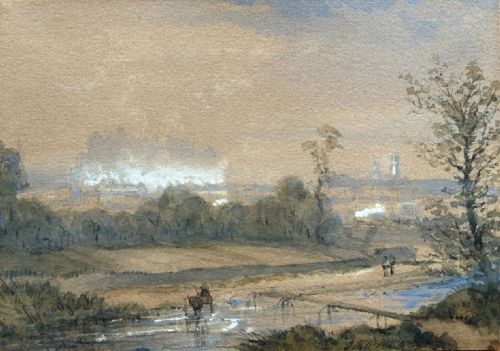
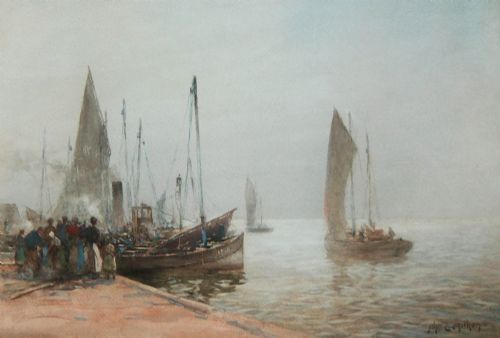
Muted tones artwork encompasses paintings and watercolours that rely on subdued colour harmonies rather than bright primary hues. The selection spans the nineteenth century through to the mid twentieth century, capturing landscapes, marine views, portraits and genre scenes.
You are most likely to encounter British and French works executed in oil or watercolour, representing periods from the Victorian era up to the nineteen sixties. These pieces range from local village streetscapes and harbour views to figures in domestic settings.
The aesthetic prioritises atmospheric depth, gentle tonal shifts and unpretentious subject matter over vivid visual drama. Artists working within this tradition use restraint to evoke mood, weather and place.
How they were made
Makers applied oil paint or watercolour paint onto traditional supports such as canvas, paper, wood panels or board. Oil on canvas and watercolour on paper dominate the works recorded here.
Techniques combine fluid washes of watercolour pigment with layered oil applications, allowing artists to build subtle luminosity and muted chromatic depth.
Listings feature paper, canvas, wood, oil paint and watercolour across the nineteenth and twentieth centuries.
What varies in quality
Quality rests upon the artist's command of tonal harmony and the sensitivity of the brushwork in capturing light and atmosphere. Stronger examples demonstrate confident composition and deliberate handling of pigment across the entire surface.
The depth of character in figurative subjects and the spatial clarity in landscapes distinguish more accomplished pieces from simpler decorative works.
James E. Aitken·Gyrth Russell·Ernest Higgins Rigg·Florence Hess·Kate E Booth·Henry Charles Fox·Thomas James Lloyd·Rowland Henry Hill·Edward Killingworth Johnson·Frederick Thomas Baynes·Thomas Swift Hutton·Irene Lagut·Maurice Asselin·Owen Bowen·Fred Lawson·Cuthbert Crossley·John D. Walker·Bernard Meninsky·Augustus William Ennes·Charles Edward Wilson
The Muted Tones Artwork Glossary
- Watercolour
- A painting method in which the paints are made of pigments suspended in a water-based solution. It is typically applied to paper to achieve translucent effects.
- Oil paint
- A slow-drying paint consisting of pigment particles suspended in a drying oil. This medium allows for rich blending and textured impasto.
- Genre painting
- The pictorial representation of scenes or events from everyday life, typically depicting ordinary people in domestic or public settings.
- Post-Impressionism
- An art movement extending French impressionism while rejecting its limitations. Artists developed broader styles focusing on symbolic content and expressive use of colour.
- Impasto
- The process of laying paint thickly on an area of the surface so that it stands out from it. This technique adds visible texture and dimension to oil paintings.
Muted Tones Artwork: Frequently Asked Questions
What subjects appear most often?
Landscapes, coastal harbours, street scenes and domestic figures dominate these historic paintings.
Artists frequently recorded rural views, marine activities and quiet townscapes using restrained palettes.
How do I care for these paintings?
Keep works out of direct sunlight to prevent watercolour fading and oil darkening.
Maintain stable indoor humidity and display them away from extreme temperature fluctuations.
Are these works signed by the artist?
Many examples feature original signatures or attribution notes left by the maker.
Signatures often appear in corners, though some period works remain unsigned or attributed through documentation.
How do I date a piece?
Dating relies on recorded artist active periods, stylistic movements, framing clues and inscribed dates on the work.
Nineteenth century pieces often show heavier gilt framing, while mid century examples reflect modernist simplification.