


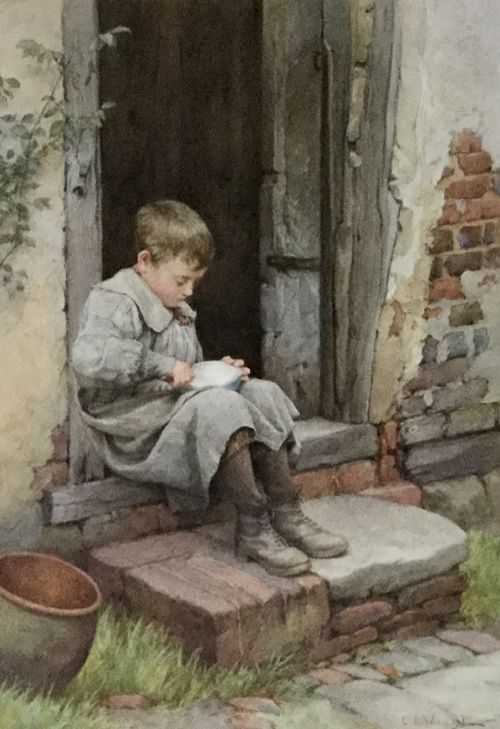

Muted Earth Watercolour
These muted earth watercolour paintings capture quiet landscapes and pastoral scenes through subtle, natural tones.
Muted Earth Watercolour
When buyers search for muted earth watercolour, they are looking for original fine art paintings that use understated natural pigments to depict landscapes, coastal views, and rural life. These works typically date from the nineteenth century through the mid-twentieth century, capturing historical British scenery with remarkable subtlety.
On this page, you will most frequently encounter works from the Victorian, Edwardian, and early twentieth-century periods. These paintings range from expansive Yorkshire coastal scenes and Welsh mountain views to intimate pastoral studies and village streetscapes.
The subjects focus heavily on traditional landscapes, vernacular architecture, and rural characters rendered with a restrained palette. Each piece offers a window into historic British and Irish topography through the specific lens of period watercolour practice.
Materials and Techniques
The works utilise traditional watercolour pigment applied to paper, card mount, or board supports. Artists relied on water-soluble media to create transparent washes and tonal depth, allowing the texture of the ground to show through the paint layers.
Surviving pieces often feature protective card mounts that frame the composition while preserving the delicate paper surface. The combination of dry pigment and fluid washes defines the characteristic look of these historic landscape paintings.
Several artists walked miles across muddy fenlands and coastal cliffs just to capture the exact shade of a wet Yorkshire rock.
Assessing Quality and Execution
Quality in these watercolours rests upon the confidence of the brushwork and the artist's ability to capture light and atmosphere with a restrained palette. Superior examples demonstrate assured handling of washes and precise detail in architectural or figural elements.
The condition of the paper surface and the stability of the muted pigments also distinguish finer works. Well-preserved pieces retain their tonal balance without excessive fading from past environmental exposure.
Fred Lawson·Louie Stanley Maurice Prince·Sidney James Beer·Kate E Booth·Henry Charles Fox·Thomas James Lloyd·Stephen John Batchelder·Edward Killingworth Johnson·Thomas Swift Hutton·Frederick William Jackson·Charles Edward Wilson·Alfred Leyman
The Muted Earth Watercolour Glossary
- Watercolour
- A painting method in which the paints are made of pigments suspended in a water-based solution. It creates luminous, transparent effects on paper.
- Card mount
- A thick paperboard frame placed around a watercolour to separate the painting from the glass. It protects the delicate surface and provides a visual border.
- Pigment
- The natural or synthetic coloured powder used to create paint. In older watercolours, earth-based pigments produce natural, subdued tones.
- Board
- A rigid paper or wood pulp substrate used as a painting support instead of flexible paper. It offers greater structural stability for larger works.
- Fine art
- Original creative work intended for contemplation and aesthetic appreciation. These watercolours represent individual artistic expressions rather than mass-produced prints.
Muted Earth Watercolour: Frequently Asked Questions
What periods do these watercolours date from?
The works span from the nineteenth century through the mid-twentieth century, encompassing Victorian, Edwardian, and early twentieth-century art movements.
Key dates and styles reflect British impressionism, pastoral scenes, and regional landscape traditions from across England, Wales, and Ireland.
How should I frame and display a watercolour?
Watercolours require careful framing behind glass with a mat or spacer to keep the paper from touching the glazing directly. This prevents moisture damage and preserves the delicate pigments.
Keep the paintings away from direct sunlight to prevent the subtle earth tones from fading over time.
What subjects are common in these paintings?
The dominant subjects include rural landscapes, coastal villages, country cottages, and historic street scenes. Artists often focused on local topography and everyday pastoral life.
Topographical views range from Yorkshire and the Welsh mountains to Devon and County Wicklow.
How do I identify the artist on an older painting?
Artists typically signed their work directly on the front surface within the painted composition, often using ink or watercolour. Some pieces also carry inscriptions naming the specific location on the front or reverse.
Signatures can be cross-referenced with period exhibition records and regional artist directories.