


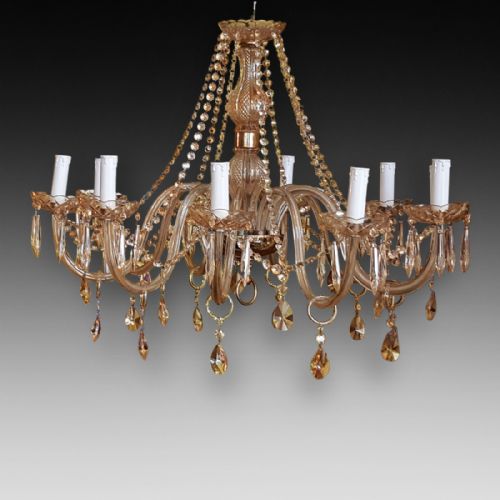
Multi Tier Crystal Light
A multi tier crystal light hangs with enough cut glass drops and cascading tiers to command a room, drawing the eye upward with brilliant refractive sparkle.
Multi Tier Crystal Light
A multi tier crystal light combines several stacked levels of framework to hold dozens of candles or electric bulbs, creating a cascading silhouette of illumination. When you search for a multi tier crystal light, you encounter substantial chandeliers and candelabras that span from the late nineteenth century through the 1930s.
The selections on this page feature robust structures influenced by French Chateau, Grand Regency, and Florentine design. Pieces range from twelve-arm fixtures to massive ballroom chandeliers boasting over forty lights.
Origins represented in these holdings stretch across England, Italy, Bohemia, and France. Workshops employed brass, gilt-brass, bronze, and gilt metal to anchor extensive arrangements of cut crystal and glass.
Construction and Materials
Makers built the foundational frames of these fixtures using durable metals including brass, bronze, and gilt metal to support heavy glass components. Armatures were cast or forged into branching configurations designed to distribute weight evenly across multiple tiers.
Cut crystal and glass elements, including drops, swags, and beads, were hand-cut and suspended from the metal framework using wire pins. Lead crystal and cut glass components were shaped to maximise light refraction from internal candles or early electric bulbs.
Listings feature pieces spanning from the nineteenth century through the 1930s, constructed in England, France, Italy, and Bohemia.
Distinctions in Quality
Quality in these fixtures rests upon the density and purity of the crystal elements alongside the precision of their cutting. Finer pieces exhibit sharp, clean facets on every drop and swag, producing intense light refraction rather than a dull reflection.
The underlying metalwork dictates the overall integrity of the piece, with heavier cast bronze or gilt-brass frames offering superior stability compared to lighter pressed metal alternatives. Elaborate polychrome finishes and intricate hand-chasing on the arms further separate standard production from masterworks.
The Multi Tier Crystal Light Glossary
- Cut crystal
- Glass containing lead oxide that has been polished with wheel-cut facets. This material increases the weight and refractive brilliance of the fixture.
- Table lustre
- A portable candelabra or candle holder decorated with hanging glass drops. These pieces sit on furniture rather than hanging from the ceiling.
- Swag
- A draped garland of interconnected glass beads or crystals. They loop between tiers to soften the vertical lines of the frame.
- Polychrome
- Painted in multiple colours. This surface treatment appears on Florentine frames to add decorative depth.
- Drop
- A suspended piece of cut glass designed to catch and scatter light. They hang from the arms and tiers of the chandelier.
Multi Tier Crystal Light: Frequently Asked Questions
Can these antique chandeliers be rewired safely?
Most antique fixtures designed for candles or early wiring are adapted by modern electricians to meet current safety standards. Rewiring involves threading new internal cables through the central stem and arms without altering the historic exterior.
Professional installation is essential due to the considerable weight of brass and crystal structures. Ceiling fixings must anchor directly into joists to support the heavy load safely.
What rooms suit a massive multi tier light?
Grand proportions, high ceilings, and generous floor space allow large multi-tier fixtures to hang without overwhelming the architecture. Dining rooms, entrance halls, and drawing rooms provide the vertical clearance needed for fixtures featuring numerous arms and cascading tiers.
Placing the light above a central table or open floor space creates a clear focal point. The expansive spread of light requires a room capable of absorbing substantial illumination.
How do I date an antique crystal chandelier?
Dating relies on examining the manufacturing techniques of the metal frame, the style of the casting, and the cut of the glass drops. Late nineteenth-century pieces often feature heavier bronze casting, whereas Edwardian and 1920s examples show distinct stylistic revivals like Regency or Florentine.
Inspecting the wiring channels and metal patina reveals the age of the construction. Unaltered original fixings provide the clearest clues to the exact period of manufacture.