
Vintage Chandelier Lighting
Vintage chandelier lighting brings remarkable presence to a room, drawing the eye upwards with period detail and warm illumination.
Vintage Chandelier Lighting
Vintage chandelier lighting encompasses overhead fixtures designed to illuminate interiors through multiple candle or bulb points, drawing heavily on historical styles from the nineteenth and early twentieth centuries. When searching for vintage chandelier lighting, buyers primarily encounter French, English, and Italian designs ranging from simple brass hall lanterns to ornate crystal-hung creations.
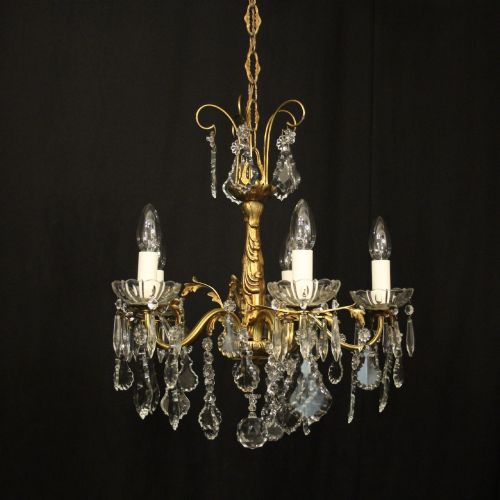
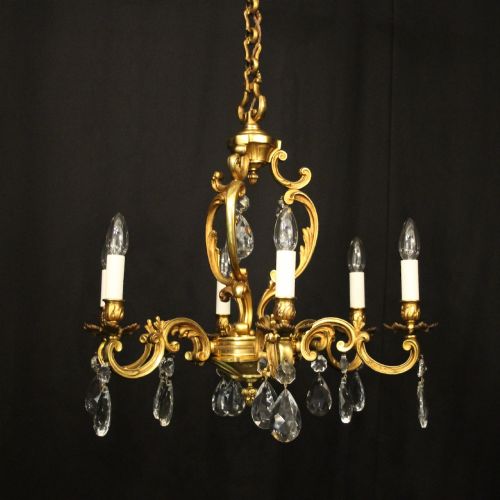
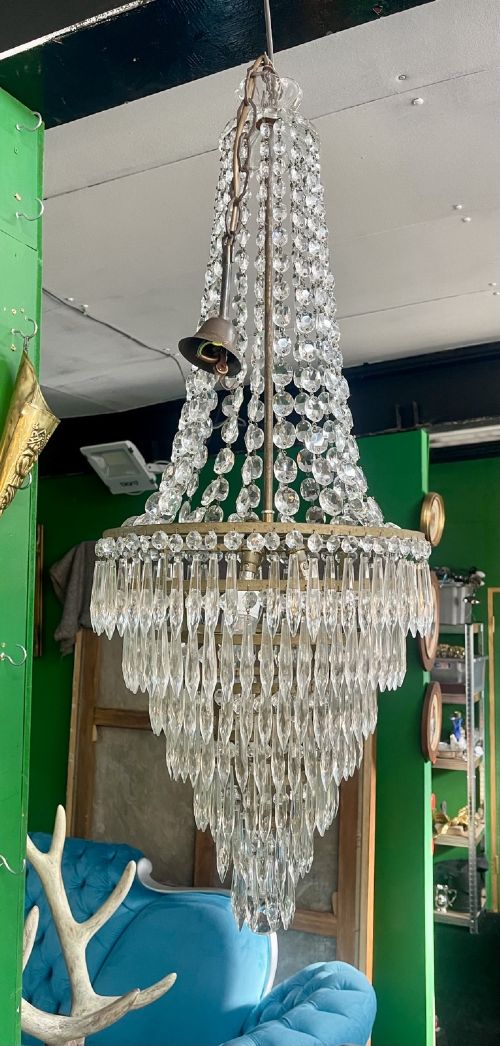
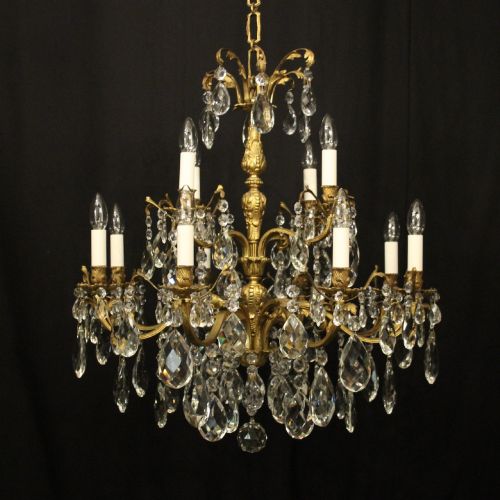
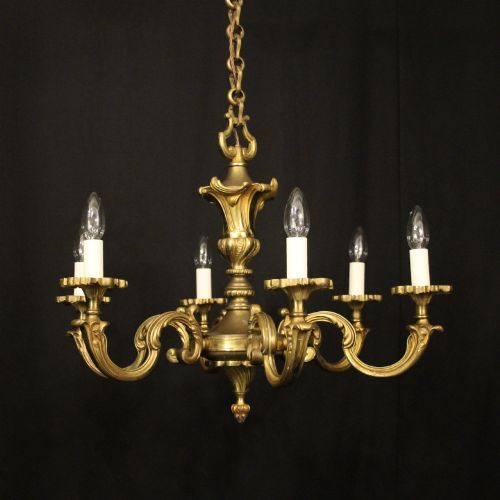
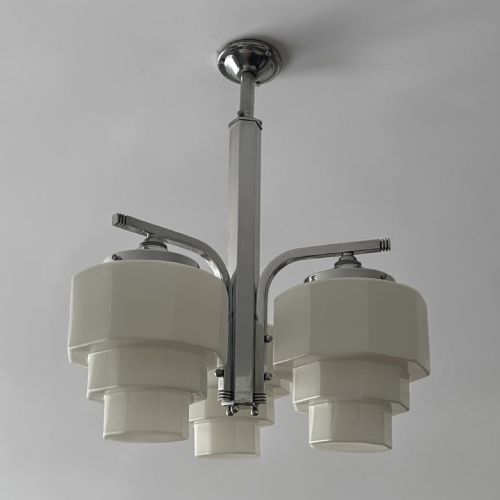
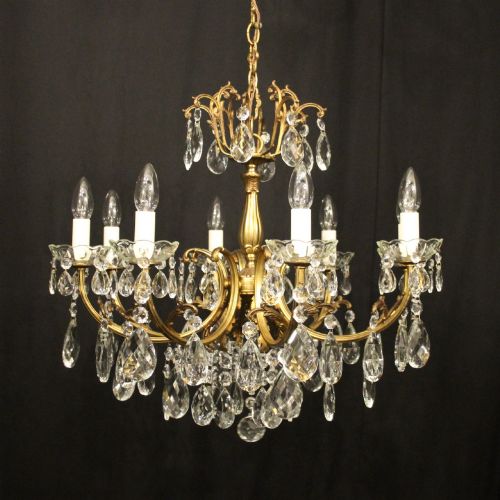
The selections available span periods from the Victorian era and Edwardian times through to the 1920s and 1930s, incorporating distinct movements like Art Deco and Arts & Crafts. French gilt bronze and gilded brass forms dominate the selection, often featuring elaborate structures such as birdcages, tents, and waterfalls adorned with cut glass elements.
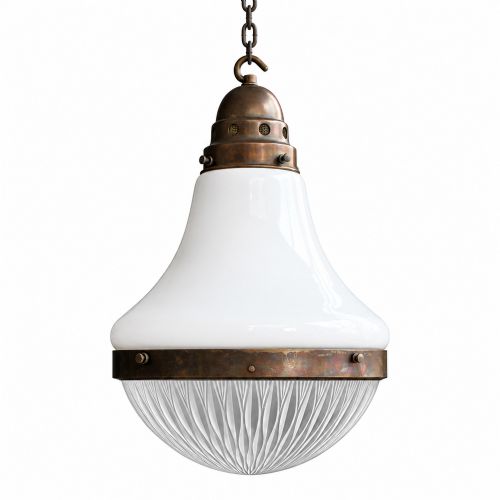
Buyers will find that many examples reflect specific historical revivals, including French Neoclassical, Empire, and Rococo styles alongside utilitarian Arts & Crafts brass pendants. These overhead lights served grand salons, town halls, and domestic hallways alike, bringing both functional brightness and decorative distinction to period interiors.
Materials and Construction
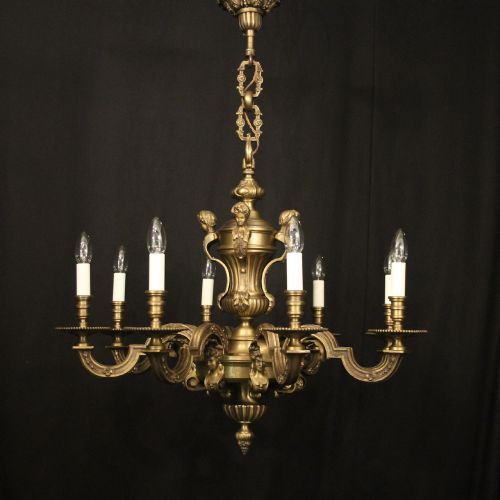
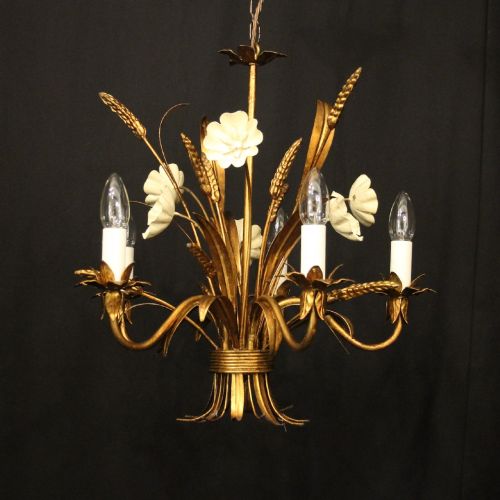
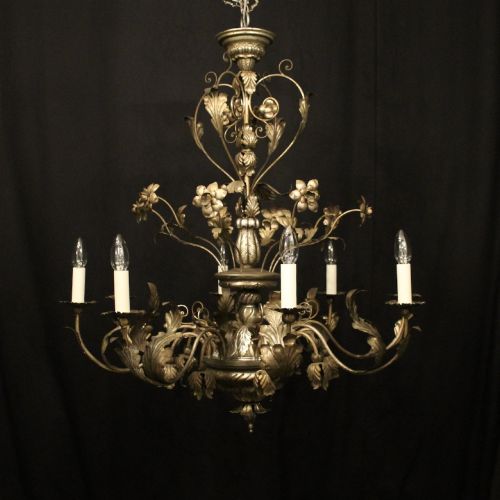
Metal forms the backbone of these fixtures, with brass, bronze, and copper cast or spun to create rigid frames, arms, and wall sconces. Many of these metal components receive a gilt or gilded finish, lending a rich golden hue that enhances the decorative impact of the lighting.
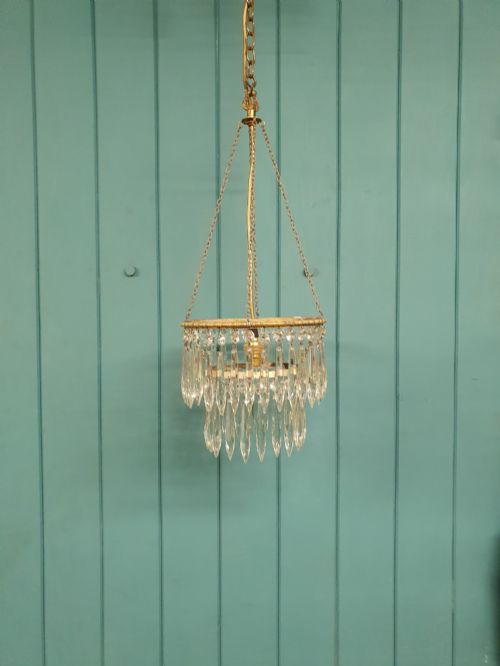
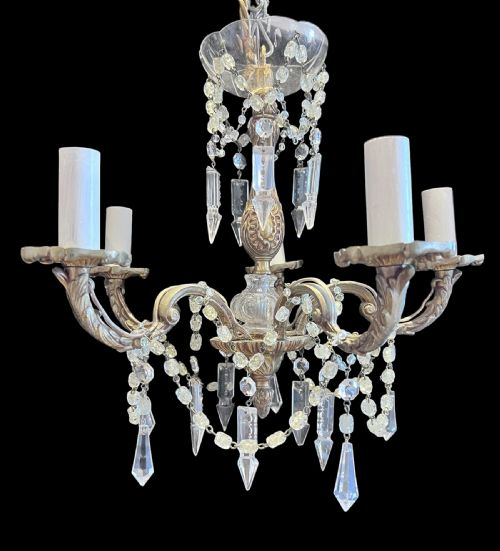
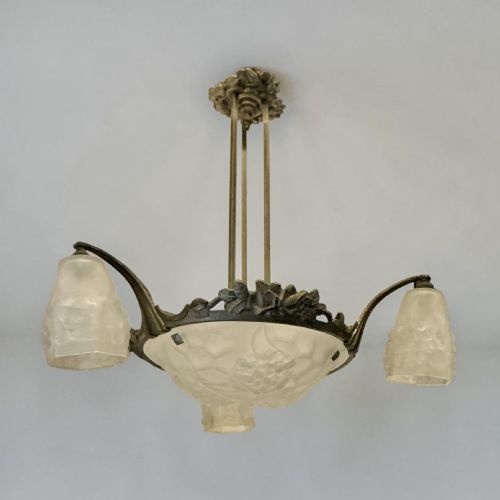
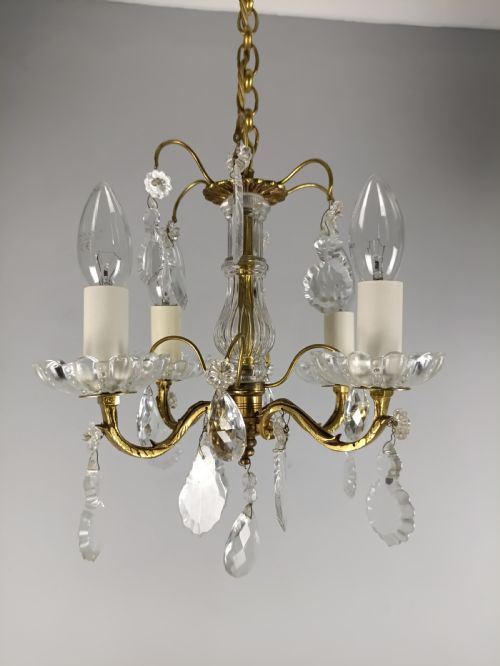
Glass and crystal play a defining role in diffusing light, appearing as cut glass drops, lustres, beads, and bevelled panels set into brass or copper frames. Specialised elements such as porcelain flowers, opalescent glass shades, and slip shades further enrich the construction of specific period pieces.
Assembly techniques rely on mechanical joints, pins, and wire linkages to suspend heavy crystal drops, beads, and glass plates from central metal armatures. Piercing and chasing methods decorate brass and bronze surfaces, particularly on Moorish hanging lanterns and Arts & Crafts ceiling lights.
Listings feature vintage chandelier lighting spanning the nineteenth century through the 1930s, executed in brass, bronze, crystal, and glass.
Assessing Quality and Execution
The standard of a fixture rests heavily on the depth and precision of the metalwork, distinguishing crisp, hand-chased bronze castings from simpler, flatter stamped brass components. Superior examples display refined proportions and robust structural framing that securely supports heavy arrangements of crystal and glass.
Material selection dictates the brilliance and longevity of the piece, with high-lead crystal cut precisely to refract light creating a superior visual sparkle compared to plain moulded glass. The integration of specialised decorative elements, such as hand-painted porcelain flowers or complex bevelled star lanterns, elevates the artistic achievement of the design.
Émile-Jacques Ruhlmann
The Vintage Chandelier Lighting Glossary
- Gilt bronze
- Metal cast in bronze and treated with a thin layer of gold or gold-coloured alloy to impart a bright surface finish. This technique protects the underlying metal while offering a luxurious appearance suited to formal reception rooms.
- Tent and waterfall
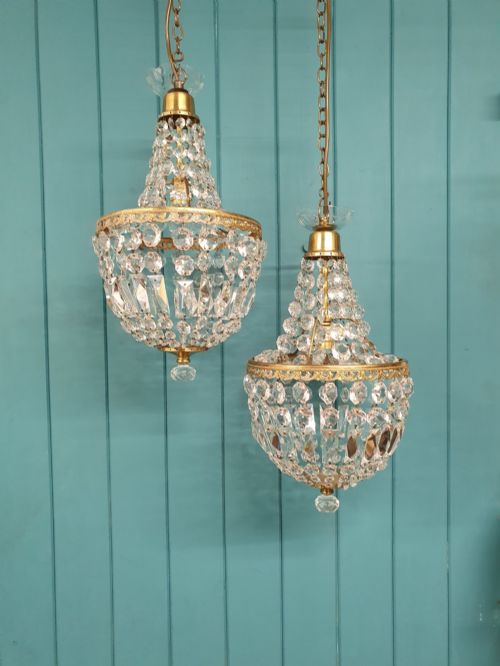
- A configuration where glass beads form a triangular tent shape above a wider, cascading tier of crystal drops. This arrangement creates a dramatic flow of refracted light across the lower arms of the fixture.
- Slip shade
- A type of frosted or moulded glass shade that slots directly into a metal frame, common in twentieth-century lighting. These shades diffuse the glow of concealed bulbs evenly across the room.
- Hall lantern
- A compact enclosed lighting fixture designed specifically for narrow entrance spaces and stairwells. They often feature glazed glass panels held within brass or bronze framework to protect the internal candle or bulb arrangement.
- Lustre
- A cut glass pendant suspended from the arms or crown of a fixture to catch and multiply the illumination. Lustres swing gently with air currents, adding dynamic sparkle to the room.
Vintage Chandelier Lighting: Frequently Asked Questions
How do I clean an antique crystal chandelier?
Cleaning requires a gentle hand, warm water, and a mild solution applied directly to each crystal drop using a soft cloth rather than dipping the entire frame. Take care to support individual lustres and ensure the electrical components remain completely dry throughout the process.
Allow all glass and metal parts to dry thoroughly before restoring power to the fixture. Regular dusting with a feather duster prevents grime buildup and preserves the refractive quality of the crystal.
Were these fixtures originally wired for electricity?
Many surviving examples from the nineteenth century began life as gasoliers or candle-lit fixtures before being converted to accept modern electrical wiring during later decades. This adaptation often involved running internal cords through the central hollow brass stem and modifying the original socket arms.
Buyers should examine the wiring pathway and consult a qualified professional to ensure the internal components meet current safety standards. Retaining original conversion methods adds character while ensuring safe daily use in a modern home.
How do I determine the correct size for my room?
Selecting the right proportion involves measuring the floor area and ceiling height to ensure the fixture neither overwhelms the space nor looks lost. A common guideline suggests adding the room's length and width in feet to determine an appropriate diameter in inches for the hanging light.
Consider the clearance needed beneath the lowest point of the fixture, especially if it hangs above a dining table or in a busy hallway. Matching the visual weight of the metal and crystal to the scale of surrounding furniture creates a balanced interior scheme.