


Classic Crystal Ceiling Light
Classic crystal ceiling light selections are grand hanging centerpieces of cut glass and metal designed to cast refracted light across a room.
Classic Crystal Ceiling Light
A classic crystal ceiling light encompasses antique chandeliers and ceiling lighting ranging from compact single-light fixtures to twelve-light multi-tiered arrangements. These pieces originate primarily from the nineteenth and early twentieth centuries, alongside earlier eighteenth-century examples.
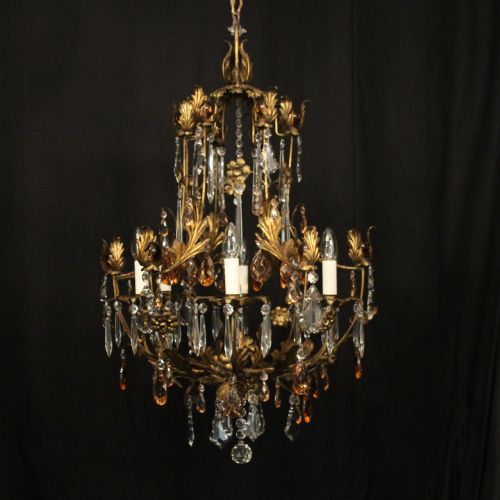
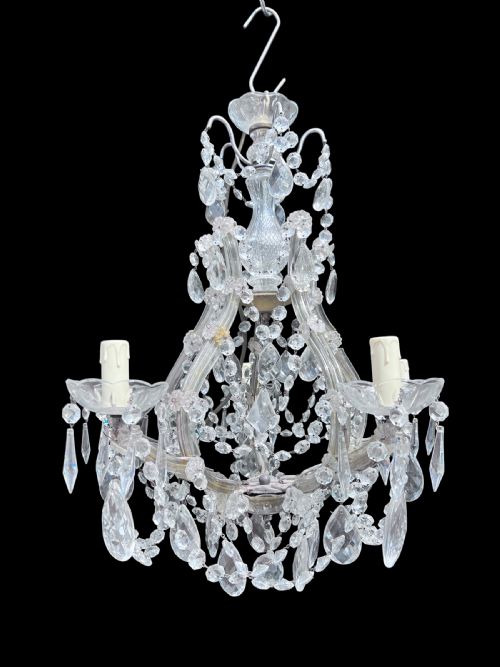
The assortment relies heavily on continental European centres of design, with French and Italian pieces forming the core of the selection. Buyers will frequently encounter French chateau, empire, and rococo styles alongside Italian Florentine and Marie Theresa forms.
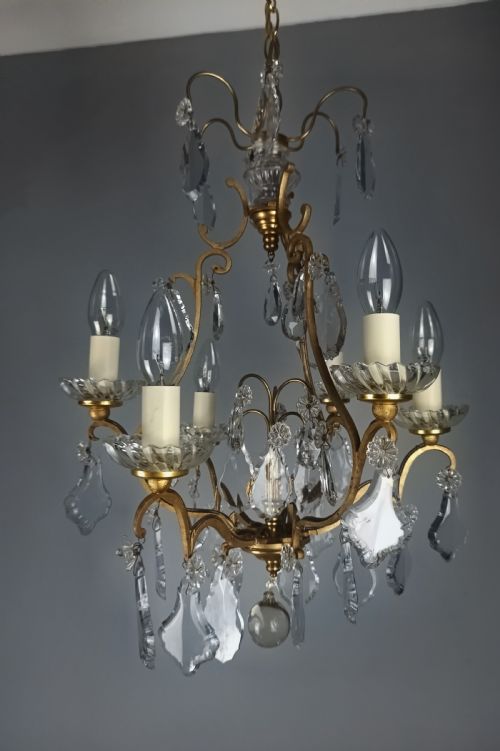
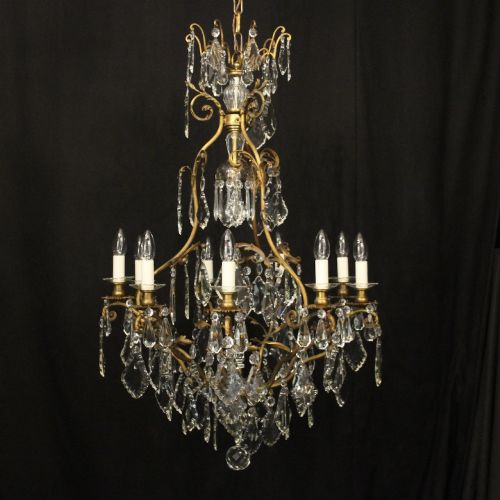
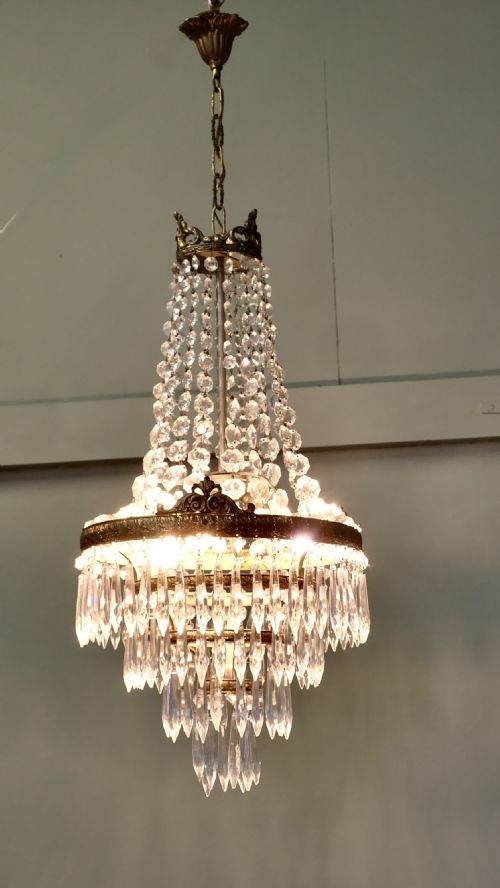
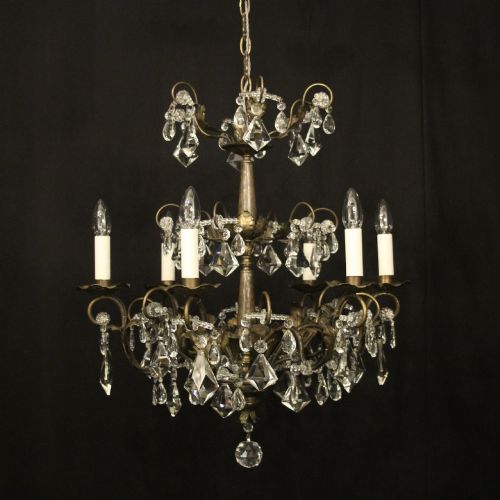
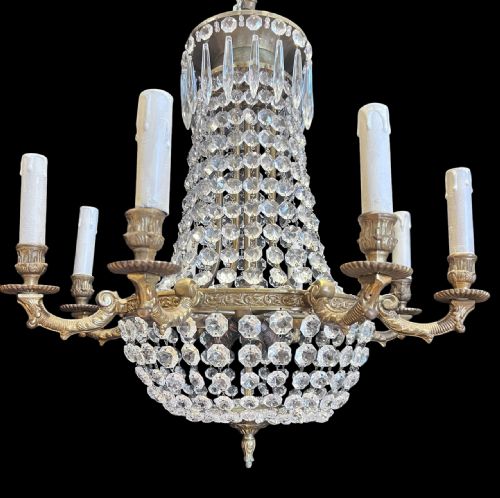
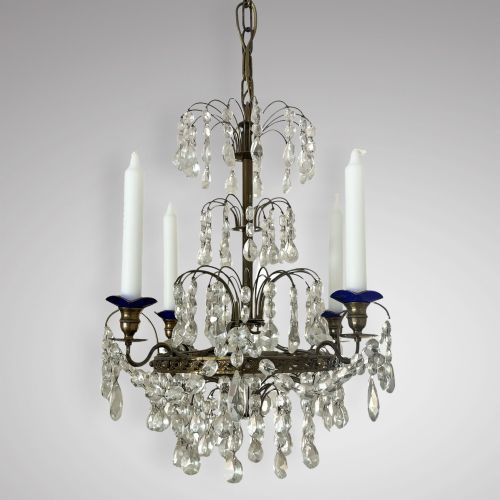
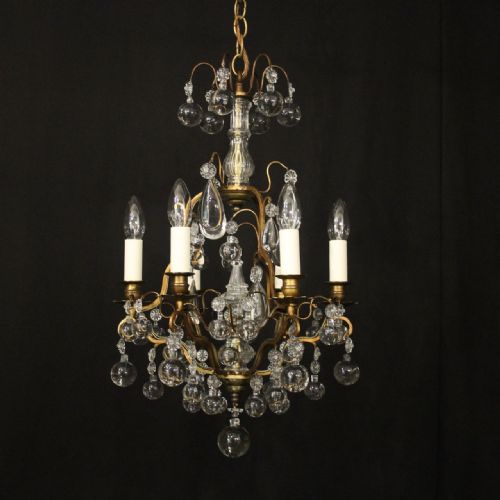
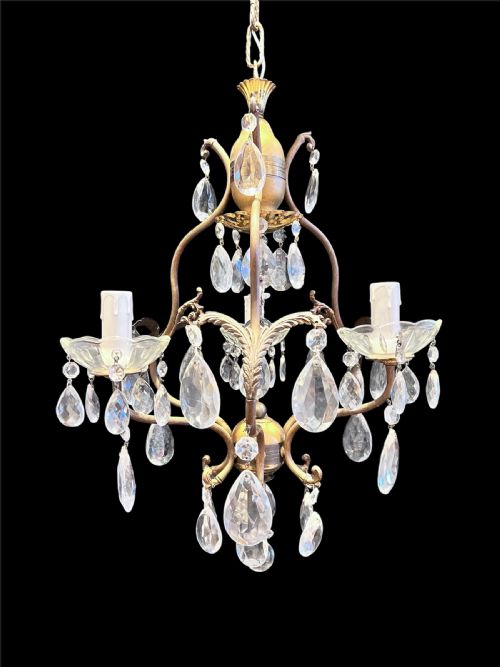
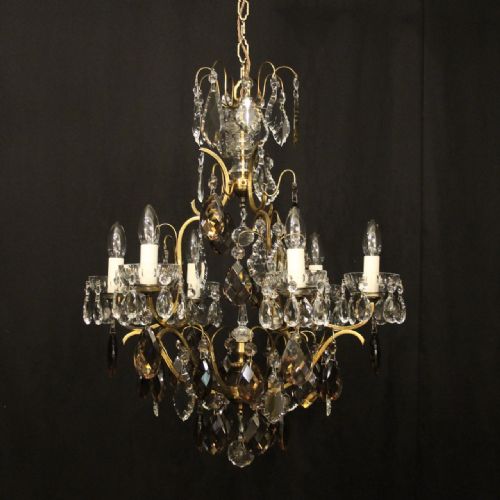
Common formats include birdcage frames, tent and waterfall configurations, and bag chandeliers adorned with numerous glass drops. Metal frames in gilded brass, bronze, and silvered finishes support the glass elements.
Materials and construction methods
Makers constructed the structural framework of these fixtures using durable metals including brass, bronze, and gilt or silvered metal. These metallic armatures were often cast and gilded to provide a robust skeleton capable of supporting heavy glass loads.
Pendants, drops, and beads were fashioned from crystal, cut glass, and crystal glass, sometimes featuring coloured crystal or amethyst accents. Artisans shaped and faceted these glass components by hand to maximise light refraction.
Wiring and suspension mechanisms were integrated into birdcage, tent, and tiered frames, combining structural metalwork with wired electrical or candle-holding branches.
Distinguishing grades of craftsmanship
Quality in these fixtures rests upon the clarity and cutting precision of the crystal elements. Deeply faceted drops produce sharper light refraction than simpler moulded glass counterparts.
The integrity of the metal frame dictates the overall substance of the piece. Finely cast bronze or heavy gilded brass frameworks exhibit superior detail and structural resilience compared to lighter, simpler metal constructions.
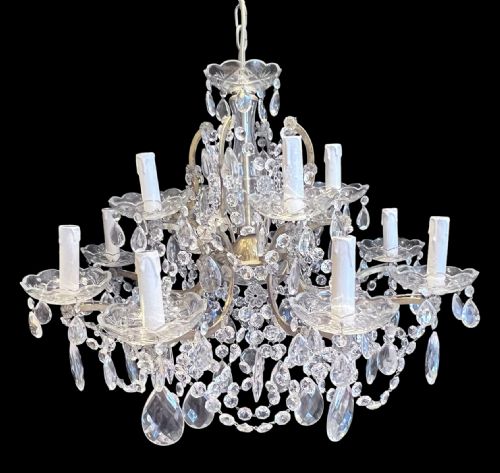
Design complexity and scale separate standard examples from exceptional pieces. Multi-tiered configurations, such as twelve-light Italian frames or large French empire waterfall designs, require more intricate assembly and artistic coordination.
The Classic Crystal Ceiling Light Glossary
- Birdcage chandelier
- A lighting fixture featuring a curved metal framework resembling a birdcage, enclosed by cascading crystal drops and strings of beads.
- Tent and waterfall
- A style where crystal strands form an upper conical tent shape above a wider lower tier resembling a cascading waterfall of glass.
- Marie Theresa
- A distinctive flat-armed chandelier style featuring scrolling metal straps completely covered by glass plates and crystal rosettes.
- Bag chandelier
- A lighting design characterised by a flattened or rounded bag-shaped lower section composed of dense mesh or vertical strings of crystal beads.
- Gilt metal
- A metal base coated with a thin layer of gold leaf or gilt paint to impart a rich golden appearance.
Classic Crystal Ceiling Light: Frequently Asked Questions
How do I choose the right size?
Consider the proportion of the room and the height of the ceiling before selecting a fixture. Larger multi-tiered pieces require substantial vertical space to hang comfortably without overwhelming the floor area.
Compact single-light or small three-branch chandeliers suit lower ceilings and more intimate rooms, whereas twelve-light arrangements demand wider expanses.
What styles are available here?
The selection spans French empire, rococo, and chateau designs alongside Italian Florentine and Marie Theresa styles. These continental European variations offer distinct structural silhouettes.
Frames range from gilded bronze and brass to silvered metal, dressed with clear, coloured, or amethyst crystal elements.
How were these fixtures used historically?
These hanging lights served as primary illumination sources in grand reception rooms, salons, and dining spaces. Candles originally provided the light, which multiplied as it passed through the faceted crystal drops.
Later conversions integrated electrical wiring while retaining the original decorative metal and glass structures.
How do I date these pieces?
Dating relies on stylistic markers, framing techniques, and material composition seen across different manufacturing periods. Eighteenth and nineteenth-century examples often display heavy cast bronze frames and hand-cut glass.
Early twentieth-century pieces, including Edwardian and 1930s variations, incorporate similar traditional motifs alongside updated wiring methods.