



Moulded Panel Drawers
Moulded panel drawers bring solid timber, deep shadow lines and tactile grain to any room.
Moulded Panel Drawers
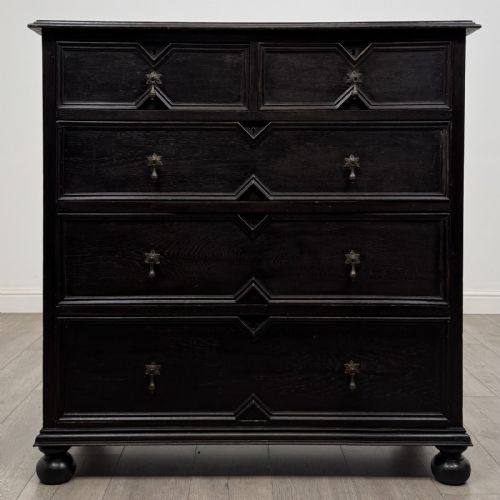
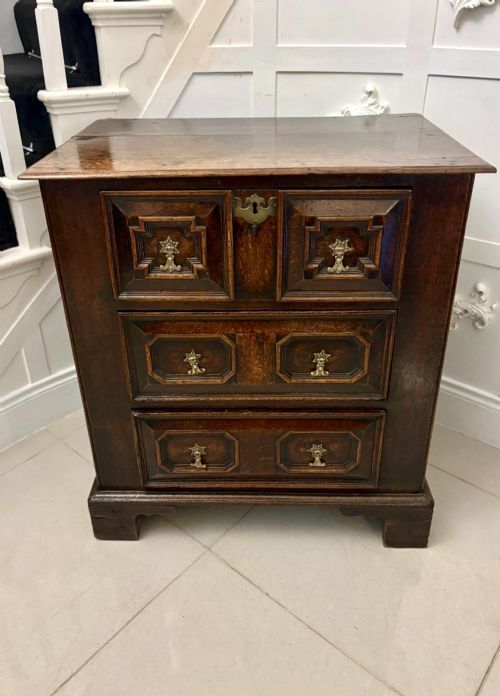
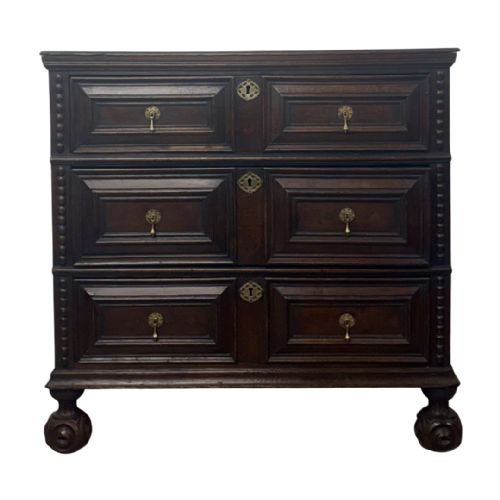
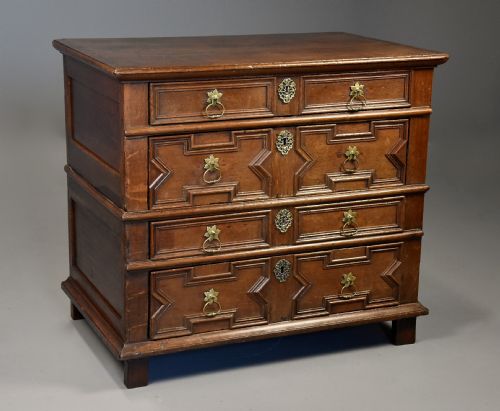
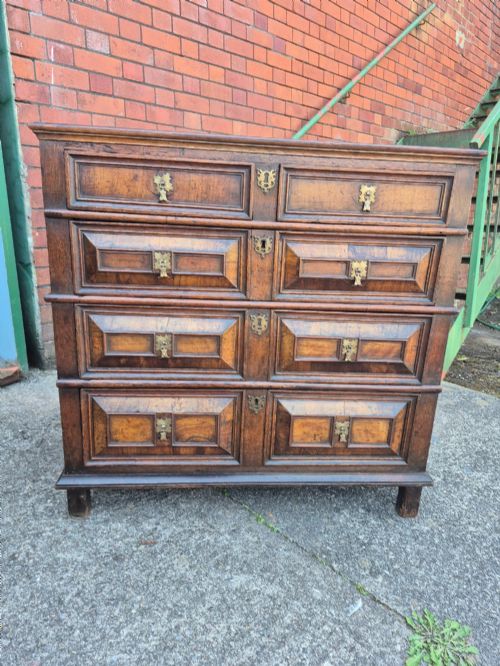
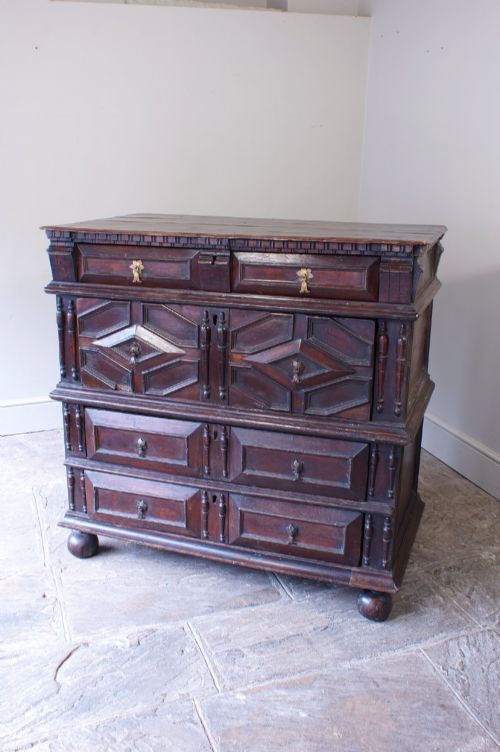
Moulded panel drawers refer to timber case pieces featuring raised or sunken panels bordered by raised geometric or curved mouldings. These chests of drawers, servers, dressers and bureaux predominantly originate from the seventeenth century, alongside occasional eighteenth-century iterations.
Buyers most commonly encounter seventeenth-century English oak pieces displaying geometric mitred mouldings across the drawer fronts. These heavier, sturdy forms often utilise two-part construction or bun feet for support.
French and Italian commodes appear alongside domestic oak furniture, incorporating walnut, marble tops or fruitwood details. The selection spans straightforward utility chests to intricately decorated cabinets reflecting Jacobean, Charles II and Georgian styles.
Materials and Construction
Joiners built these carcasses primarily from solid oak, walnut and fruitwood, selecting native hardwoods for structural strength and longevity. Secondary woods and decorative veneers such as snakewood or ebonised oak provided high-contrast geometric ornamentation on drawer faces.
Panels were shaped using hand planes and chisels, then fitted into grooved framing to accommodate seasonal timber movement. Craftsmen secured decorative mouldings with pins and animal hide glue, creating tactile, multi-layered reliefs on the drawer fronts.
Moulded Panel Drawers Retail Price Guide 2026
Typical asking prices for moulded panel drawers among the pieces listed under this phrase on Sellingantiques today, from the lower quarter to the upper quarter. They describe what is for sale here now, not the wider market.
At least one chest utilises cedar wood, bringing an aromatic pine scent to seventeenth-century storage.
Assessing Quality and Execution
The sophistication of the mitred moulding work dictates the visual success of the piece, with crisp, sharply defined geometric patterns marking superior cabinet work. Richness of timber patina and the survival of original brass handles or feet elevate individual examples.
Construction integrity distinguishes workshop output, particularly in how cleanly the two-part carcasses join and how smoothly the heavy drawers travel within their runners. Subtle secondary woods like fruitwood or snakewood inlay indicate higher ambition in the original commission.
The Moulded Panel Drawers Glossary
- Mitred moulding
- A border trim cut at forty-five-degree angles to frame drawer panels cleanly at the corners. This technique requires precise hand joinery to maintain tight joints.
- Geometric moulding
- Raised wooden strips applied in repeating octagonal, diamond or strapwork patterns across a drawer front. It defines seventeenth-century English case furniture.
- Two-part chest
- A tall case constructed as two separate stacked boxes to ease transport up narrow staircases. This format is typical of substantial seventeenth-century oak furniture.
- Bun foot
- A rounded, compressed spherical foot supporting the weight of a heavy timber chest. They elevate the piece slightly off damp floorboards.
- Patina
- The deep surface sheen and colour acquired by aged wood through decades of handling, light exposure and polishing. A faded patina shows gentle, natural wear.
Moulded Panel Drawers: Frequently Asked Questions
What periods do these pieces date from?
The selection spans primarily the seventeenth century, with notable examples from the Jacobean, Charles II and William and Mary eras. Eighteenth-century pieces also appear, including continental commodes.
Most items are constructed from solid oak or walnut, reflecting the dominant cabinet-making traditions of those earlier periods.
How were these drawers used originally?
These pieces served for storing household linens, clothing and valuables in domestic chambers and halls. Larger servers and dressers also provided surface space for displaying plate.
The robust construction and partitioned drawers helped protect textiles and documents from dust and dampness in seventeenth-century homes.
How do I care for antique oak furniture?
Keep timber furniture away from direct heat sources and dramatic humidity shifts to prevent wood splitting and shrinkage. Maintain a stable indoor climate to protect ancient joints.
Apply traditional beeswax sparingly and buff with a soft cloth to preserve the natural surface sheen without building up heavy chemical residues.
How can I identify seventeenth-century oak furniture?
Look for hand-split timber boards, pegged mortise and tenon joints, and tactile tool marks left by saws and adzes on internal surfaces. Drawer bottoms typically consist of thick oak planks.
Geometric applied mouldings and rich, dark patination are characteristic hallmarks of English oak pieces from the sixteen-hundreds.