




Mother of Pearl Novelty
Mother of pearl novelty items bring together iridescent nacre and silver in playful shapes that collectors prize for their ingenuity.
Mother of Pearl Novelty
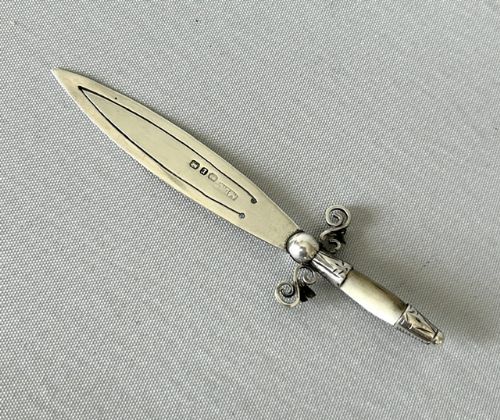
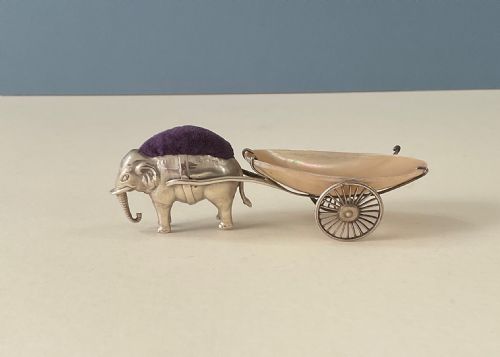
When you search for mother of pearl novelty, you encounter small decorative and practical objects shaped as daggers, trowels, swords, animals, and shoes. These items date from the Georgian era through to the mid twentieth century, spanning Victorian and Edwardian periods.
Bookmarks form the most common group on this page, often styled as miniature gardening tools or edged weapons with iridescent handles. Pin cushions, rattles, brooches, and snuff boxes also appear, combining shell with sterling silver, gold, or papier-mâché.
The selection ranges from functional stationery items to whimsical personal accessories. Each piece relies on the natural shimmer of shell to elevate everyday objects into conversation pieces.
Materials and construction
Craftsmen shaped thin plates of mother-of-pearl, derived from marine shell, to form handles, panels, and decorative inlays. They pinned, riveted, or glued these fragile segments onto silver and metal foundations.
Silversmiths worked sterling silver into detailed mounts, blades, and frames, frequently hallmarked in Birmingham, Chester, or Glasgow. Velvet, bone, and diamond additions further enrich specific brooches and rattles from the Victorian and Edwardian periods.
Victorian silversmiths turned gardening tools into reading aids, crafting tiny silver trowels with shimmering shell handles to mark pages.
Evaluating quality and execution
Superior examples display precise metalwork alongside unblemished shell panels with deep iridescent play of light. The crispness of the novelty form, whether a garden trowel or a dog cart, dictates the success of the design.
Makers focused attention on secure riveting and intact hallmarks rather than mere scale. Lesser pieces show loose mounts, replacement handles, or dull shell lacking the characteristic depth of nacre.
Crisford & Norris·Adie & Lovekin
The Mother of Pearl Novelty Glossary
- Mother-of-pearl
- The iridescent inner layer of mollusc shells used for handles and decorative panels. It provides a shimmering surface that catches light from different angles.
- Novelty
- An object manufactured in an amusing or unusual shape rather than a standard utilitarian form. These pieces often mimic tools, animals, or weapons on a miniature scale.
- Vertu
- Small ornamental objects of personal use, typically made of precious materials and embellished with silver, gold, or shell. Snuff boxes and needle cases fall into this category.
- Hallmark
- An official stamp applied to precious metals indicating purity, origin, and often the year of manufacture. British silver items frequently carry town marks and maker's initials.
- Nacre
- The scientific term for mother-of-pearl, secreted by oysters and other molluscs as a pearl-producing substance. Its layered structure creates the characteristic rainbow sheen.
Mother of Pearl Novelty: Frequently Asked Questions
How were novelty bookmarks used?
Miniature trowels, daggers, and swords slipped between book pages to mark reading progress while displaying decorative silver and shell handles. Their unusual shapes made them popular gifts.
Owners kept them on desks or reading tables alongside other stationery items like correspondence boxes and letter clips.
How do I date these objects?
Silver hallmarks provide the most reliable dating method, identifying assay offices and specific years of production through stamped letters and symbols. Stylistic clues also help distinguish Georgian items from later Victorian and Edwardian pieces.
Materials like papier-mâché and specific fastening techniques further narrow down the decade of manufacture.
Are these pieces delicate to handle?
Mother-of-pearl is a natural organic material that requires gentle handling to prevent surface scratching or edge chipping. Silver mounts also benefit from careful cleaning without harsh abrasive polishes.
Storing them away from direct sunlight and extreme humidity helps preserve the iridescent nacre and fabric linings.