


Silver Book Page Marker
A silver book page marker slides between leaves to hold a place, combining practical desk utility with Victorian and twentieth-century novelty design.
Silver Book Page Marker
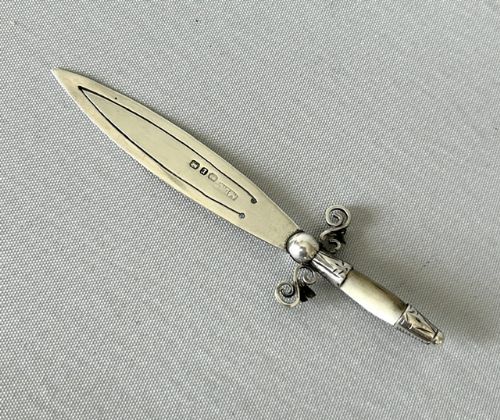
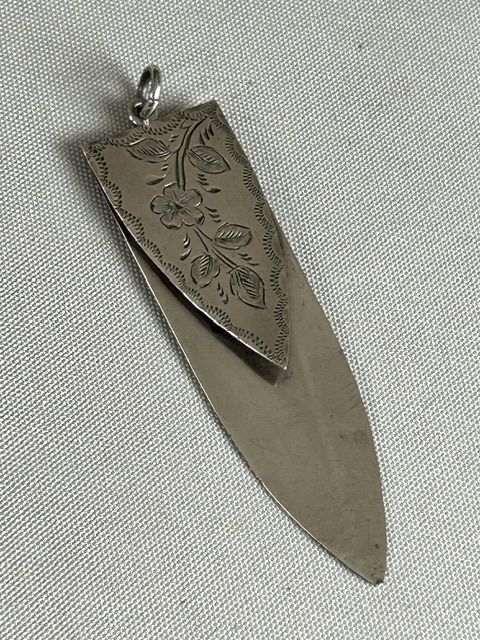
A silver book page marker is a small desk accessory designed to slip between the pages of a volume without damaging the paper. You will most frequently encounter Victorian examples shaped as miniature trowels, daggers, or page turners, alongside later twentieth-century novelty forms.
The pieces span the Victorian period through to the 1930s, encompassing Edwardian and George V outputs. Makers utilised distinct regional assays, with pieces originating from Birmingham, Chester, Glasgow, and London.
Novelty formats dominate the historical record, ranging from animals such as cockerels, elephants, and bears to human figures like kewpie dolls and pointing hands. These varied designs reflect changing tastes in personal accessories across the decades.
Materials and Construction
Makers fashioned the structural components from sterling silver, frequently employing engraving and chasing techniques to define handles and blades. Assay offices marked these items to guarantee the standard of the metal.
Handles and inserts often incorporate decorative natural materials such as mother-of-pearl, Scottish banded agate, carnelian, Connemara marble, and New Zealand jade. These hardstones and organic elements contrast with the polished silver of the blade.
Enamelwork appears on select pieces, adding colour and intricate detail to novelty subjects such as Egyptian-themed designs.
Listings demonstrate a strong prevalence of Victorian sterling silver examples incorporating banded agate and mother-of-pearl.
Craftsmanship and Distinction
The selection and fit of natural materials like agate or mother-of-pearl dictate the desirability of a marker. Tighter integration of stone blades or handles into the silver mounts denotes higher workshop standards.
Attribution to recognised makers or specific assay offices elevates certain pieces above unmarked or generic production.
Crisford and Norris·Charles Horner·Sampson Mordan
The Silver Book Page Marker Glossary
- Assay mark
- A stamp indicating the purity of the silver and the testing office. These marks help determine the town of origin and year of manufacture.
- Trowel bookmark
- A design shaped like a miniature builder's trowel, which served as a popular nineteenth-century format for sliding between bound pages.
- Novelty bookmark
- An item shaped to represent an animal, figure, or object rather than a standard flat blade. These pieces reflect whimsical Victorian and Edwardian design trends.
- Hardstone
- A semi-precious stone such as agate, carnelian, or jade used for decorative panels or handles. Craftsmen polished these materials to highlight natural banding and colour variations.
- Page turner
- A larger accessory with a flat blade used to separate uncut paper pages in books. Some smaller variants double as page markers.
Silver Book Page Marker: Frequently Asked Questions
How were silver book page markers used?
Owners slid the thin blade or stem of the marker between the pages of a book to hold their place while reading. They functioned as both practical stationery and personal decorative accessories.
Unlike folded paper or heavy bookmarks, silver designs rested lightly within the binding to protect the paper edges.
What materials appear on these markers?
Sterling silver forms the primary structure of every piece, often paired with natural accents. Makers fitted handles and panels with mother-of-pearl and various hardstones.
Agate, carnelian, Connemara marble, and jade occur frequently, alongside occasional applications of enamel for added colour.
How do I date an antique marker?
Hallmarks stamped directly onto the silver provide the exact year of assay and the town where the piece was tested. Maker's marks further narrow down the production period based on registered working dates.
Stylistic shifts also indicate age, moving from Victorian trowels and daggers to Edwardian and George V novelty figures.
Are these markers safe for old books?
Sterling silver is smooth and relatively soft, making these markers gentle on paper when handled with care. The thin profile of the blades prevents distortion of the book binding.
Collectors should ensure hardstone or mother-of-pearl handles remain secure before inserting them into delicate volumes.