

Mother of Pearl Inlay Furniture
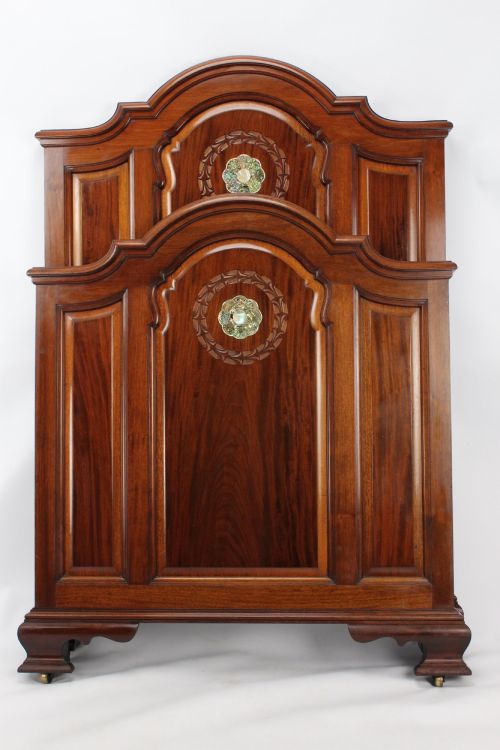
Mother of pearl inlay furniture brings together complex geometric patterns and shimmering shell work across tables, cabinets and seating.
Mother of Pearl Inlay Furniture
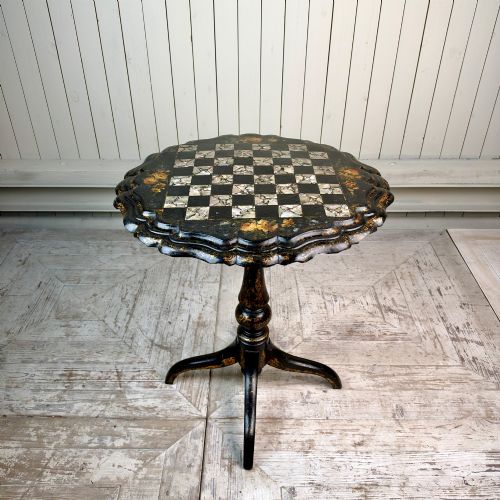
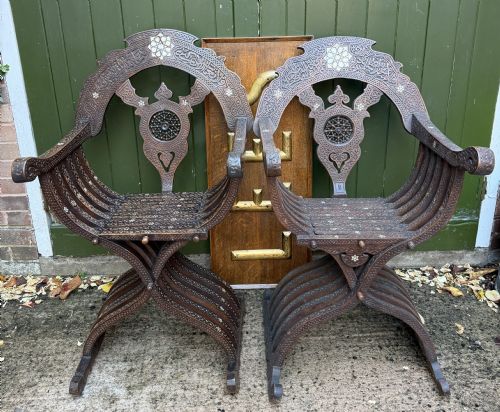
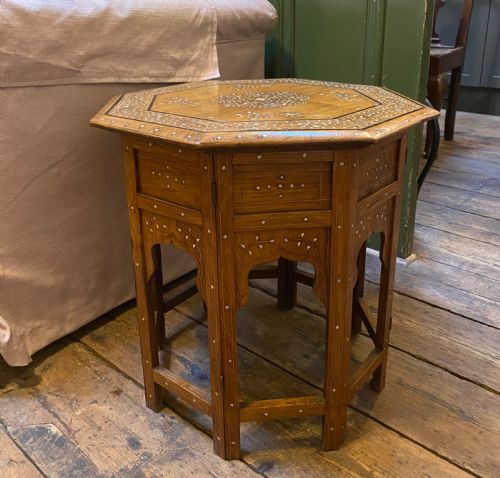
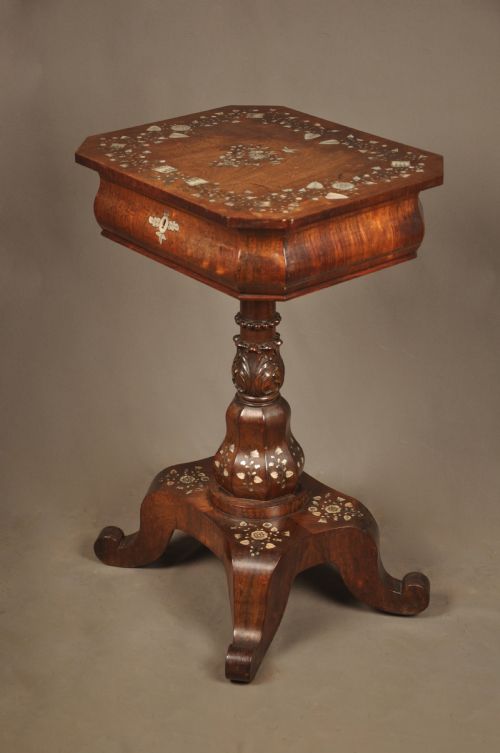
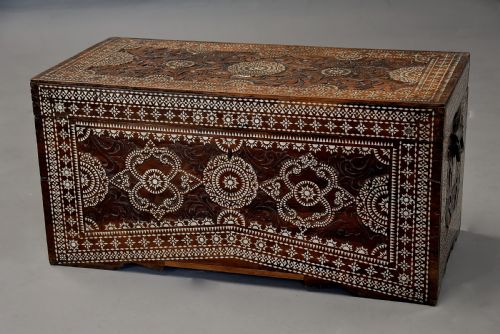
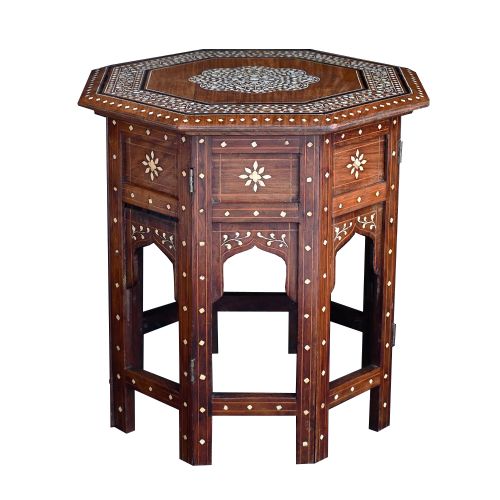
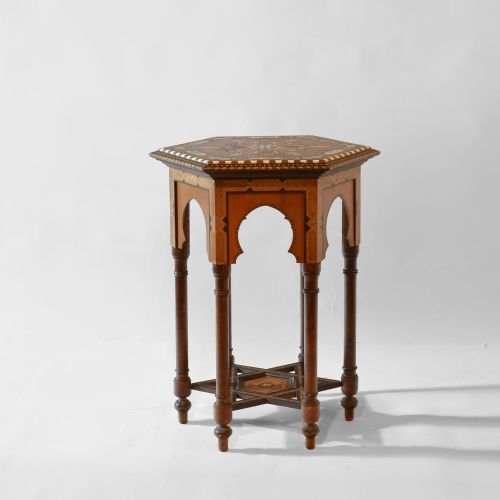
Mother of pearl inlay furniture comprises items designed for sitting, surface use and display, predominantly originating from nineteenth century workshops in Syria, India and Britain. Side tables, occasional tables and games tables dominate the selection, often taking hexagonal or octagonal forms derived from Middle Eastern and Moorish traditions.
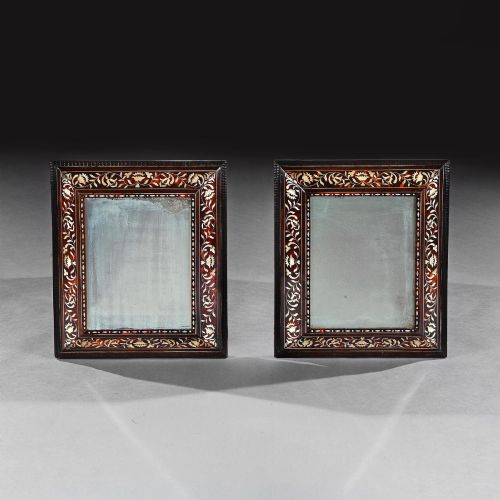
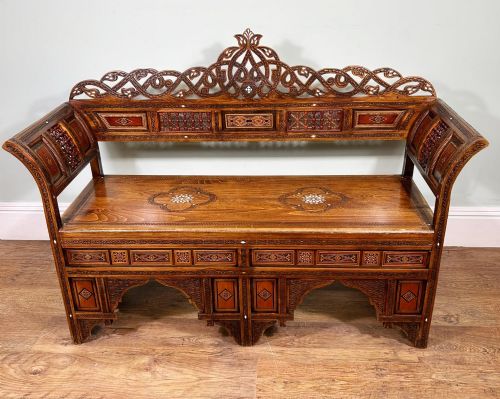
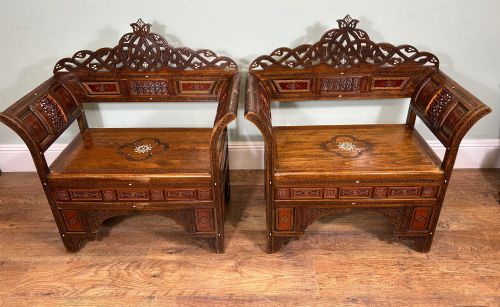
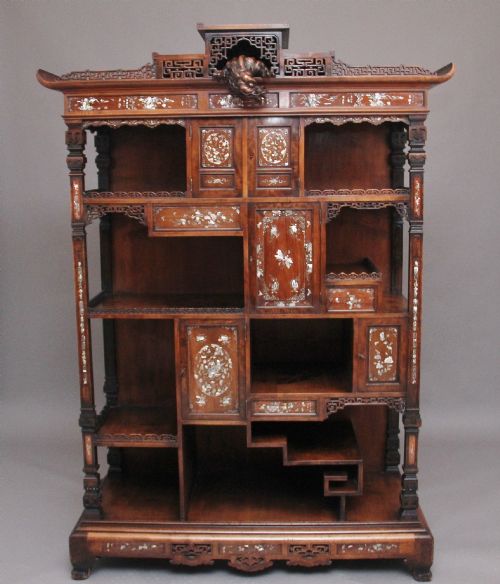
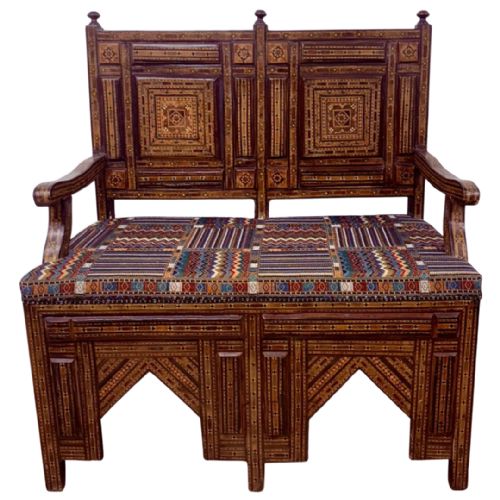
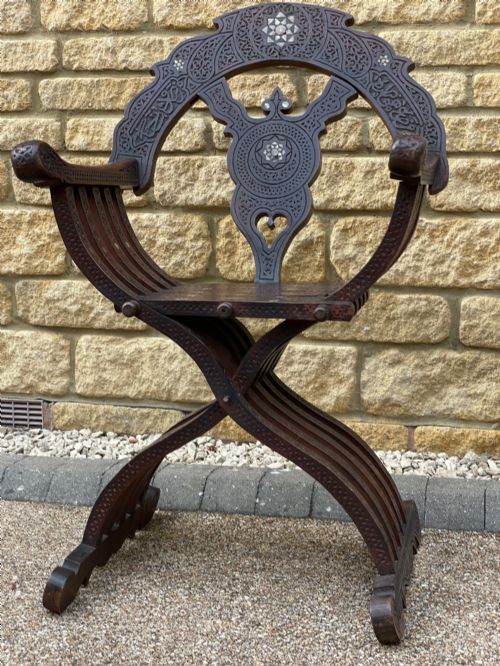
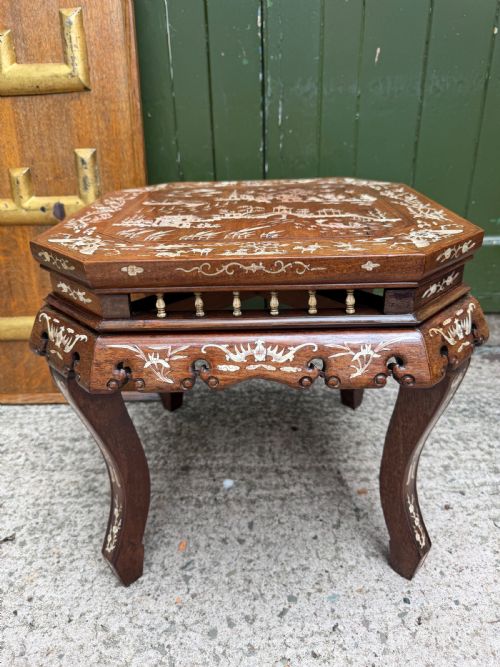
Beyond tables, the category extends to armchairs, benches, display cabinets and wall mirrors spanning various global traditions. Pieces from Anglo Indian and Syrian origins sit alongside Japanese shodana cabinets and European interpretations influenced by the Aesthetic Movement.
How they were made
Craftsmen built the core structures using dense timbers such as walnut, rosewood, ebony, mahogany and various regional hardwoods. These wooden foundations provided stable planes for intricate surface decoration.
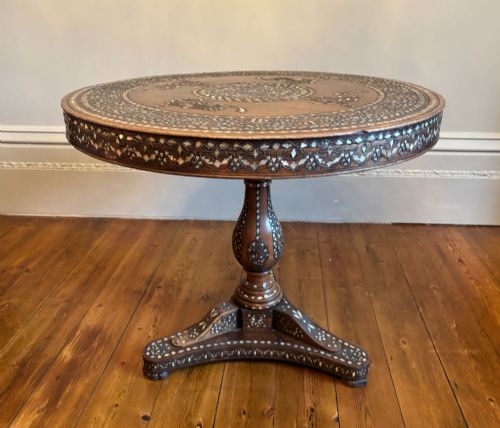
Workers shaped small fragments of mother-of-pearl, abalone and bone into geometric or floral tesserae, pressing them individually into recessed channels within the wood. Lacquer, glass and painted highlights frequently complemented the shell work, particularly in Japanese and European examples.
Mother of Pearl Inlay Furniture Retail Price Guide 2026
Typical asking prices for mother of pearl inlay furniture among the pieces listed under this phrase on Sellingantiques today, from the lower quarter to the upper quarter. They describe what is for sale here now, not the wider market.
Listings feature items spanning the eighteenth to the twentieth centuries, utilising rosewood, walnut, hardwood, lacquer, and glass.
What varies in quality
Quality rests upon the density and precision of the tessellation, where tighter geometric alignment and minimal filler between shell fragments indicate superior workmanship. Pieces featuring complex multi-material combinations of abalone, bone and contrasting hardwoods demonstrate higher technical ambition.
Structural integrity of the timber base and the completeness of the delicate shell inlays govern the overall standard of preservation. Uniformity in the depth of the carving and the secure seating of each individual piece of pearl distinguish workshop standards.
Liberty & Co·August Ungethüm
The Mother of Pearl Inlay Furniture Glossary
- Tessera
- An individual small piece of mother-of-pearl or bone cut to shape for insertion into an inlaid surface. These components form the intricate geometric patterns seen on Damascus and Hoshiarpur tables.
- Shodona
- A Japanese multi-tiered display cabinet featuring asymmetrical shelving and cupboards. These items often incorporate fine lacquer work and delicate framing.
- Parquetry
- Geometric mosaic woodwork formed by fitting small wooden blocks together to create patterned surfaces. This technique frequently frames the pearl and bone inlays on Levantine furniture.
- Hoshiarpur
- A North Indian centre of woodcarving known for intricate wire and micro-inlay work using bone and mother-of-pearl on hardwood foundations. Pieces from this region display dense floral and animal motifs.
Mother of Pearl Inlay Furniture: Frequently Asked Questions
Where was mother of pearl furniture made?
Production spans multiple regions, with significant traditions in Damascus, Hoshiarpur in India, and various European workshops influenced by Eastern styles. Each region utilised local timbers and distinct geometric or organic motifs.
Syrian and Middle Eastern pieces often favour hexagonal forms and dense polygon tessellation, while Indian items lean towards intricate floral carving combined with bone and shell.
How do I clean inlaid furniture?
Dust surfaces gently with a dry, soft cloth to prevent particles from lodging in the recesses between the shell and timber. Avoid liquid cleaners and polishes that can seep under the pearl fragments and loosen the adhesive.
Maintain stable humidity levels in the room to prevent the wood from expanding or contracting, which places stress on the brittle inlay materials.
What is the difference between bone and pearl?
Mother-of-pearl and abalone derive from marine shells, displaying an iridescent sheen that shifts colour under changing light. Bone is an opaque, matte material that lacks this natural rainbow effect but offers a steady creamy white tone.
Both materials appear together on many Syrian and Anglo Indian pieces to create contrast within the geometric compositions.
How do I identify Moorish style tables?
Moorish style tables typically feature multi-sided tops, such as octagonal or hexagonal formats, supported by intricate pierced arches and geometric fretwork panels. The surfaces carry dense arrangements of inlaid pearl and bone forming interlocking stars and polygons.
These pieces emerged strongly during the nineteenth century revival periods, reflecting European fascination with Islamic design.