



Mosaic Inlay Trinket Box
A mosaic inlay trinket box brings together minute timber tesserae, polished stone, and bone to hold small treasures on a dressing table.
Mosaic Inlay Trinket Box
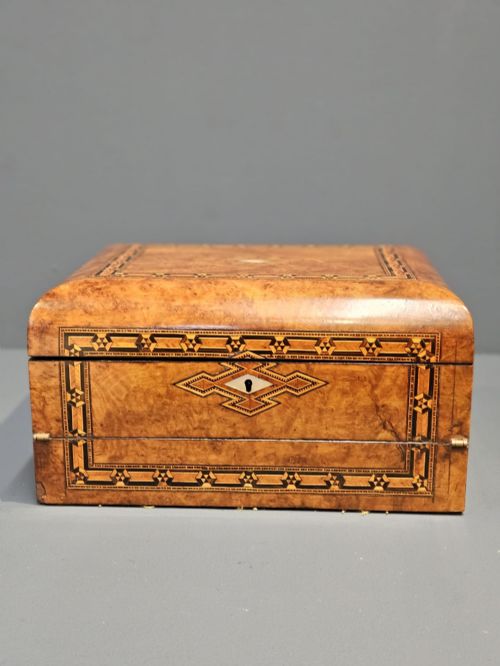
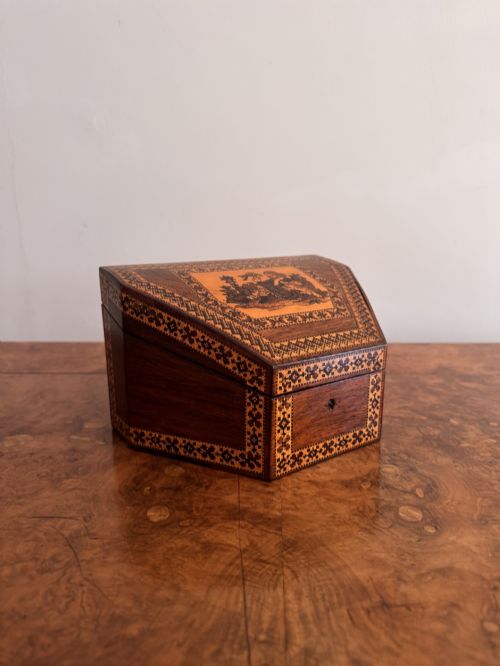
When you search for a mosaic inlay trinket box, you are looking at small containers ornamented with tiny, precise geometric or pictorial tilework. The pieces on this page span the nineteenth century and the mid twentieth century, drawing on English, Italian, and Anglo-Indian traditions.
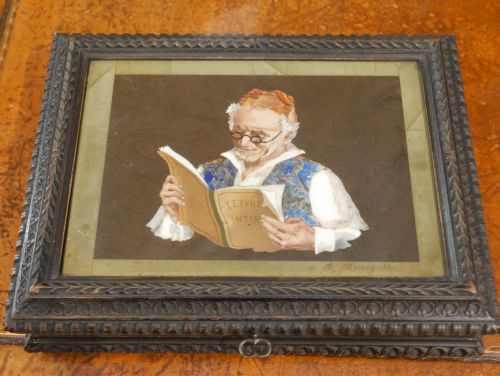
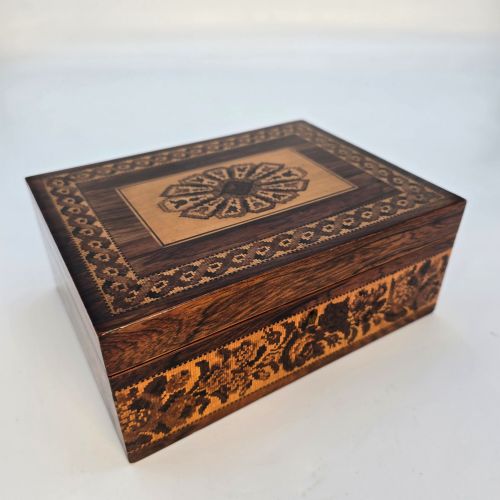
The most common forms you will meet here are Tunbridge Ware items fashioned from rosewood or walnut, alongside Italian pietra dura mounted ebonised wood boxes and Anglo-Indian Sadeli mosaic pieces. These range from simple trinket boxes and jewellery boxes to ladies glove boxes, work boxes, and tea caddies.
Originating largely from Victorian workshops, these boxes utilise varied timber veneers, bone, and brass fittings to create intricate surface patterns. Buyers find them valued both for their meticulous craftsmanship and their enduring utility on a desk or dressing table.
How they were made
Maker workshops constructed the foundations of these boxes in dense timbers such as rosewood, walnut, boxwood, ebony, and general wood before applying elaborate surface veneers. Tunbridge Ware pieces relied on thousands of microscopic wood blocks glued together in multi-coloured geometric mosaics, sliced from long composite rods.
Other traditions incorporated pietra dura mounted stonework or intricate specimen bone veneers, occasionally combined with brass mounts and hinges. Artisans then lined the interiors with paper or fabric, sealing the exterior work with protective varnishes to highlight the natural grain and colour of each tiny tessera.
Mosaic Inlay Trinket Box Retail Price Guide 2026
Typical asking prices for mosaic inlay trinket box among the pieces listed under this phrase on Sellingantiques today, from the lower quarter to the upper quarter. They describe what is for sale here now, not the wider market.
What varies in quality
Quality rests primarily on the density, precision, and alignment of the mosaic tesserae across the lid and sides. Finer examples display extraordinarily minute wood blocks or perfectly fitted stone panels without visible gaps in the adhesive matrix.
Edmund Nye·Henry Hollamby
The Mosaic Inlay Trinket Box Glossary
- Tunbridge Ware
- A distinct style of woodworking developed in Kent, featuring minute mosaic patterns assembled from thousands of differently coloured natural woods.
- Pietra dura
- An Italian technique of inlaying cut and fitted polished coloured stones to form pictorial or geometric designs on a dark wooden base.
- Sadeli mosaic
- An Anglo-Indian craft utilising intricate geometric micro-mosaics constructed from horn, bone, and ivory or metal strips.
- Tessera
- An individual small block, tile, or piece of stone, wood, or bone used in the creation of a mosaic pattern.
- Marquetry
- The art and craft of applying pieces of veneer to a structure to form decorative patterns, pictures, or designs.
Mosaic Inlay Trinket Box: Frequently Asked Questions
What is a mosaic inlay trinket box?
These are small nineteenth-century containers decorated with microscopic wooden tesserae, polished stones, or bone veneers. They were designed to hold rings, pins, and small keepsakes.
Craftsmen in England, Italy, and India produced them using specialised mosaic techniques. Today, they function as decorative desktop accessories.
How do I date a Tunbridge Ware box?
Dating relies on the types of wood used, the complexity of the mosaic border, and the style of the box itself. Victorian examples often feature printed paper maker labels inside the lid.
Earlier nineteenth-century pieces tend to show broader mosaic bands, while later decades refined the technique into microscopic pictorial landscapes.
How should I clean a mosaic box?
Dust the exterior gently with a dry, soft artist brush to clear debris from between the tiny tesserae. Avoid liquid cleaners entirely, as moisture can loosen old glue.
Keep the box away from direct sunlight and radiators to prevent the wood veneers from drying out and shrinking.
What is the difference between Tunbridge and Sadeli work?
Tunbridge work utilises thousands of microscopic blocks of dyed and natural British timbers arranged into geometric or pictorial tilework. Sadeli work originates from Anglo-Indian traditions and employs intricate micro-mosaics made from bone, horn, and metal.
Both create striking geometric surfaces, but the materials and regional aesthetic distinctively separate them.