


Monochrome Figure Study
Monochrome figure study works capture the human form through tonal draughtsmanship, offering direct insight into academic training and artistic observation.
Monochrome Figure Study
A monochrome figure study focuses on the human body using single-colour mediums across periods ranging from the eighteenth century to the twentieth century. These works appear primarily as framed drawings, original sketches, and prints executed on paper or canvas.
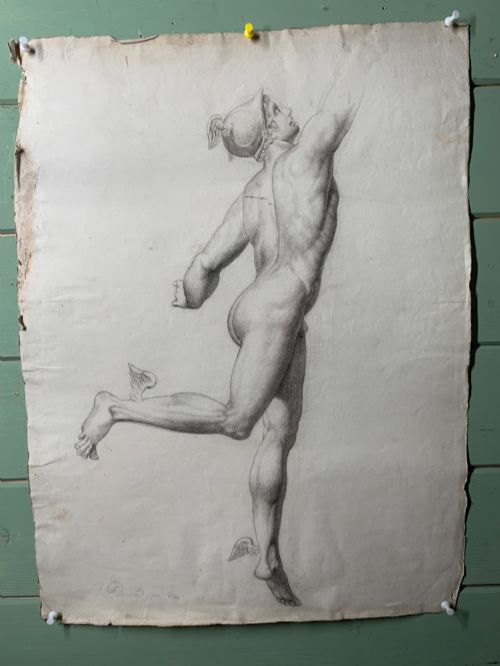
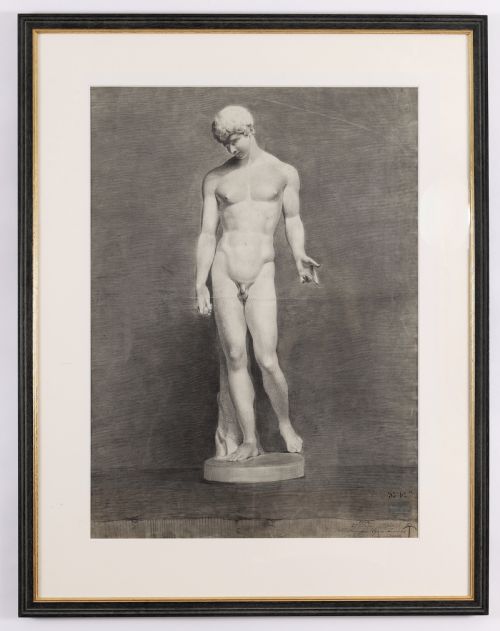
The selection includes academic life studies of male and female nudes, classical figure renditions such as Hermes and the Capitoline Antinous, and character portraits. Artists ranging from named practitioners to regional schools produced these pieces within studio and academy settings.
How they were made
These works rely on paper supports marked with charcoal, graphite, chalk, ink, and pencil, alongside occasional oil on canvas applications. Artists built form and shadow through monochrome tones, utilising en grisaille techniques and linear precision.
Framed presentations preserve these delicate works on paper behind glass, often within wooden frames suited to Georgian, nineteenth-century, and art deco periods.
One charcoal study records the exact moment a model awaited a boat in 1923.
What varies in quality
Quality rests upon the sureness of the draughtsmanship and the structural understanding of anatomy demonstrated across the subject. Pieces originating from formal academic submissions or established ateliers generally display rigorous proportion and confident line work.
Condition and preservation of the paper support, along with the retention of distinct tonal gradation in charcoal and pencil, distinguish finer historical examples from simpler studio exercises.
Alexandre-Louis Martin·Henry Arthur Roberts·Pierre-Paul Prud'hon·Augustus Edwin John·Winifred Eugene Ballard·John Hoppner·Francis Dodd·Cecil CP Lawson
The Monochrome Figure Study Glossary
- En grisaille
- Painting executed entirely in monochrome shades of grey or neutral greyish-brown to imitate sculpture or achieve a specific tonal effect.
- Academic realisms
- Artistic styles and methods taught within official art academies emphasising strict anatomical accuracy and classical draughtsmanship.
- Life study
- A drawing or painting produced from a live human model, forming a central component of traditional art training.
- Charcoal
- A dry drawing material made from burnt organic matter that produces rich, dark black lines and soft tonal blends on paper.
- Capitoline Antinous
- A famous classical marble sculpture type frequently used as a subject for academic drawing practice in the nineteenth century.
Monochrome Figure Study: Frequently Asked Questions
What is a monochrome figure study?
A monochrome figure study is a drawing or painting depicting the human body in a single colour or tonal range, focusing on form, line, and shadow.
These pieces range from formal academic life drawings of nudes to classical deity representations and portrait studies created across several centuries.
How were these drawings used historically?
Artists created these works as part of rigorous academic training, atelier practice, or preparatory exercises for larger compositions.
Students in academies drew from plaster casts and live models to master human anatomy, proportion, and tonal shading before attempting complex multi-figure paintings.
What materials should I expect to find?
The works use paper as the primary support, marked with mediums such as charcoal, graphite, chalk, pencil, and ink.
Some examples utilise oil on canvas or appear as framed prints, often protected behind glass within period wooden frames.
How do I care for antique works on paper?
Works on paper require protection from direct sunlight and excessive humidity to prevent fading of charcoal, graphite, and ink.
Keeping them framed behind glass and hung away from direct heat sources helps preserve the delicate paper supports.
How can I tell the period of a study?
Dating relies upon paper characteristics, framing styles, inscriptions, artist signatures, and stylistic markers associated with academic art traditions.
Nineteenth-century academic pieces often display classical proportions and rigorous hatching, whereas 1920s and 1930s examples may incorporate modernist or art deco interpretations.