



Modular Lawyer Bookcase
A modular lawyer bookcase brings flexible storage and classic office style to your home, letting you stack sections as your library grows.
Modular Lawyer Bookcase
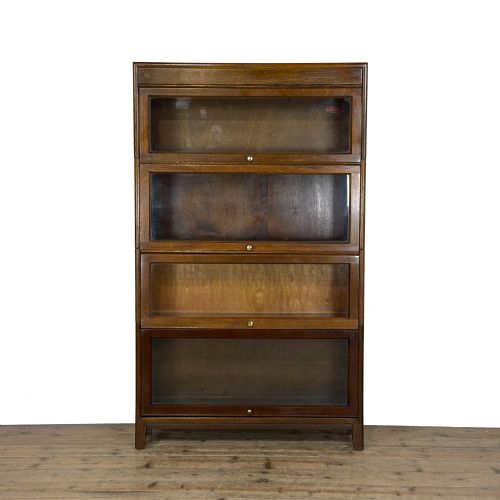
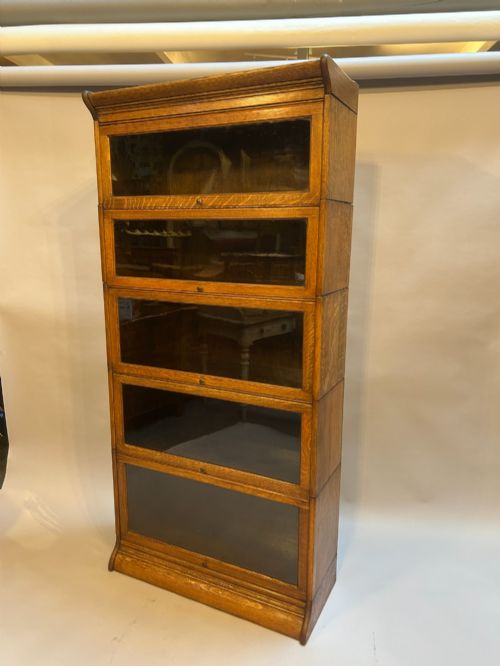
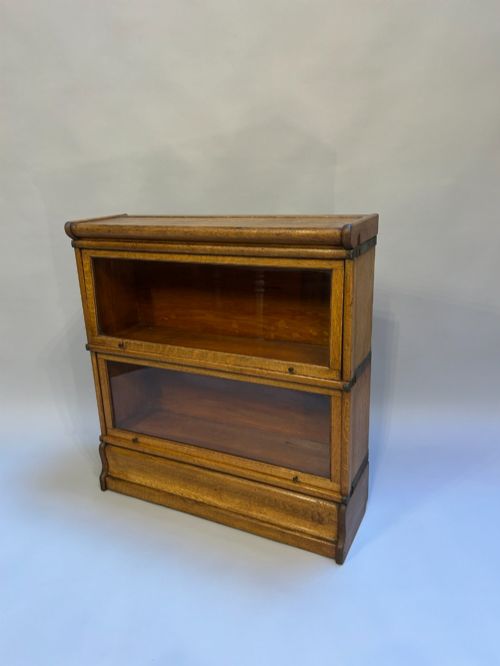
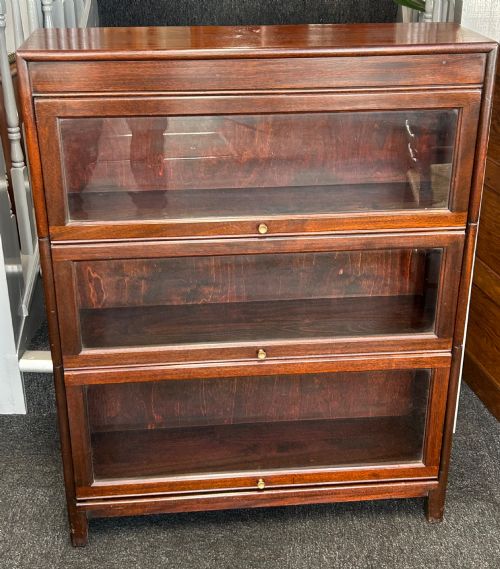
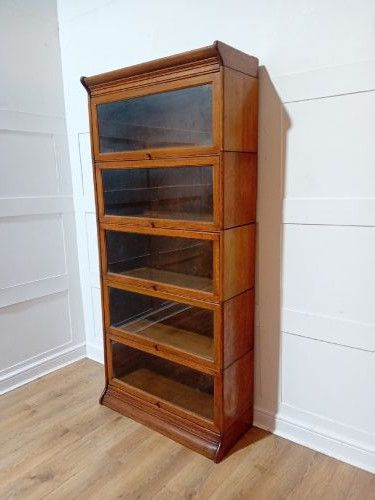
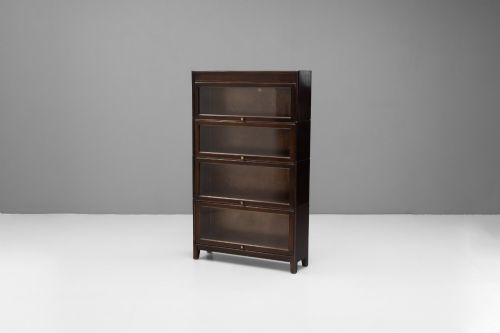
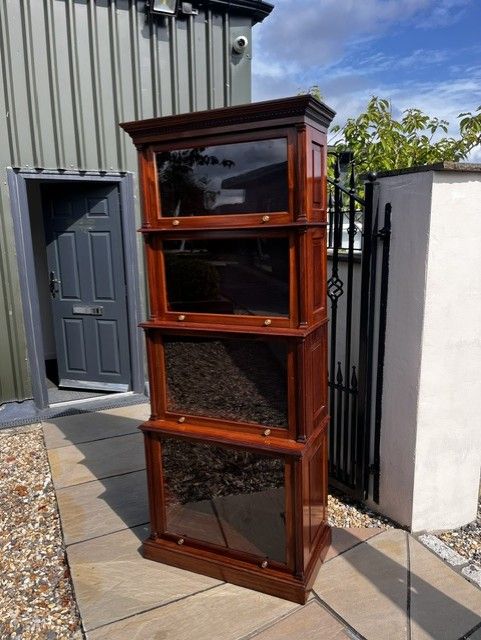
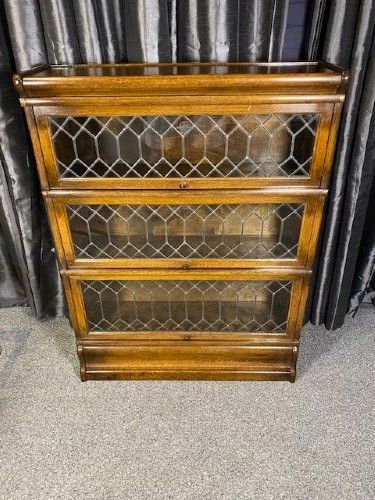
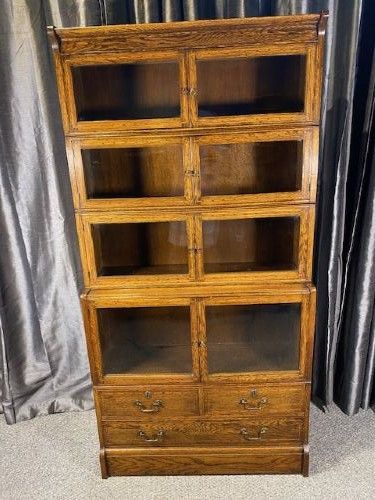
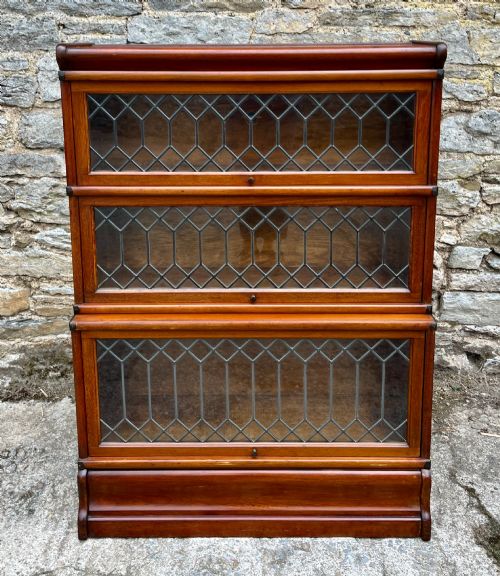
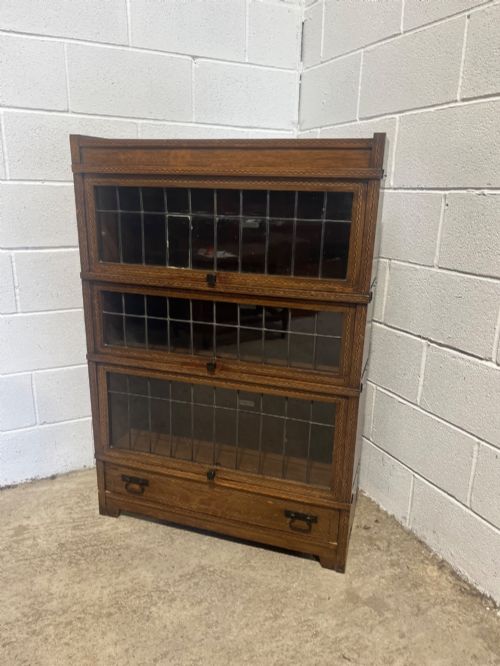
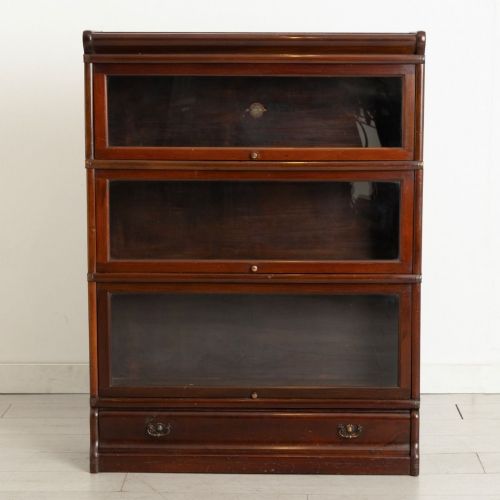
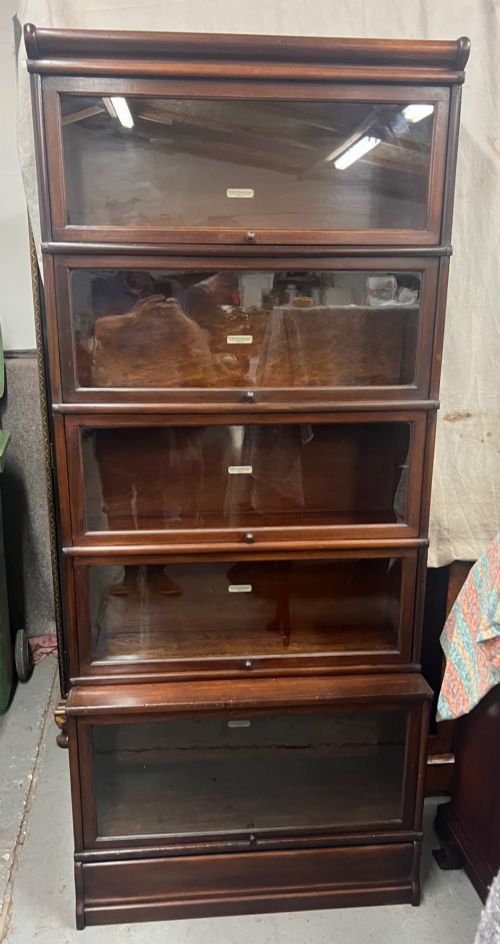
When you search for a modular lawyer bookcase, you are looking at clever sectional furniture designed to protect books behind individual glass doors. These pieces consist of separate stacking tiers that sit one upon another, topped with a cornice and grounded on a base plinth.
The versions you meet most frequently on this page date from the Edwardian period through to the 1930s, reflecting the golden age of office filing furniture. They appear primarily in oak and mahogany, with configurations ranging from single stacks to double-wide office units.
Makers such as Globe Wernicke, Macey, Gunn Furniture, and Warwick dominate the selection, bringing functional ingenuity to domestic and commercial spaces alike. Each tier operates independently, allowing collectors to reconfigure the height and arrangement to suit different room layouts.
How They Were Made
These bookcases rely on solid oak and mahogany construction to provide the rigidity needed for stacking multiple heavy tiers. Cabinet makers joined the carcass corners using robust dovetail or pin joints to withstand the daily strain of office use.
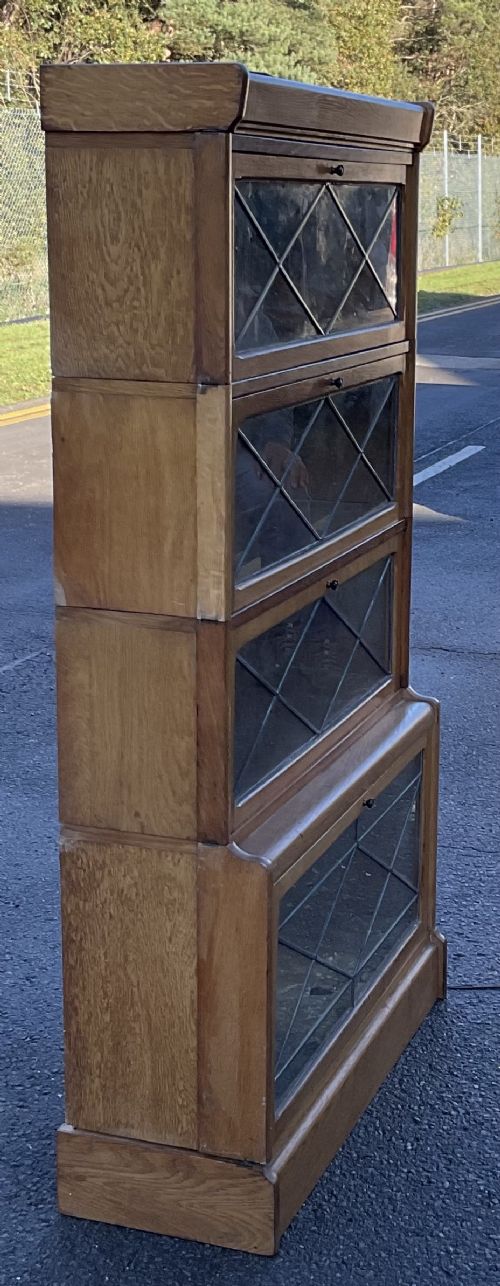
Transparent panels of glass, sometimes secured with lead cames, slide up and over the shelf space on internal metal or brass mechanisms. A crowning cornice and a simple moulded base complete the architectural assembly without the need for permanent glue or screws between the sections.
Modular Lawyer Bookcase Retail Price Guide 2026
Typical asking prices for modular lawyer bookcase among the pieces listed under this phrase on Sellingantiques today, from the lower quarter to the upper quarter. They describe what is for sale here now, not the wider market.
Listings feature oak and mahogany pieces spanning the Edwardian era, 1900, 1910, 1920, and 1930.
What Varies in Quality
Quality in a sectional bookcase rests upon the cleverness of the mechanical door action and the choice of primary timber. Examples featuring figured mahogany or quarter-sawn oak sit at the upper end of the scale, showing tighter grain patterns and richer natural colour.
Maker signatures and branded stamps inside the tiers separate standard commercial output from the workshop productions of established firms. Furthermore, the presence of matching cornices and original brass hardware preserves the integrity of the piece.
Gunn Furniture·Macey·Globe Wernicke·Warwick
The Modular Lawyer Bookcase Glossary
- Sectional
- Built in separate, interchangeable tiers that stack vertically to form a complete cabinet. This modular design allows the bookcase to be easily dismantled and moved.
- Up and over door
- A glass fronted panel suspended on a scissor mechanism that glides upwards and recesses into the top of the tier. It protects books from dust while remaining effortless to open.
- Cornice
- The decorative moulded projection sitting at the very top of the bookcase. It caps the uppermost stacking tier to give a finished architectural silhouette.
- Quarter-sawn oak
- Timber cut radially from the growth rings to produce characteristic medullary ray flecks. This method yields stable boards prized for mission and Edwardian furniture.
- Lead cames
- Narrow strips of lead used to hold individual panes of glass together in leaded windows and cabinet doors. They form structural geometric patterns across the front of the shelf.
Modular Lawyer Bookcase: Frequently Asked Questions
Can the sections be separated?
Yes, the tiers are entirely independent modular units that simply rest on top of one another between the base and the top cornice.
You can pull the bookcase apart into individual shelf boxes, a base, and a top for straightforward transport or rearrangement.
What wood types are common?
Oak and mahogany appear most frequently across these vintage office and library cabinets, often finished with a warm polished sheen.
Some examples feature solid timbers, while others incorporate detailed grain patterns typical of early twentieth-century commercial manufacturing.
How do I date a stacking bookcase?
Dating relies on maker stamps, hardware styles, and timber choices pointing to the Edwardian era or the 1920s and 1930s decades.
Catalogues and manufacturer labels pasted inside the tiers offer the clearest indication of the exact period of production.