



Mirrored Vanity Tray
These mirrored vanity tray pieces offer a decorative surface for dressing tables and sideboards, combining functional glass with period metalwork.
Mirrored Vanity Tray
A mirrored vanity tray serves as a reflective base for perfumes, bottles, and glassware, appearing across Edwardian and Art Deco designs. These objects function primarily as decorative vessels for display on dressing tables, sideboards, and drinks cabinets.
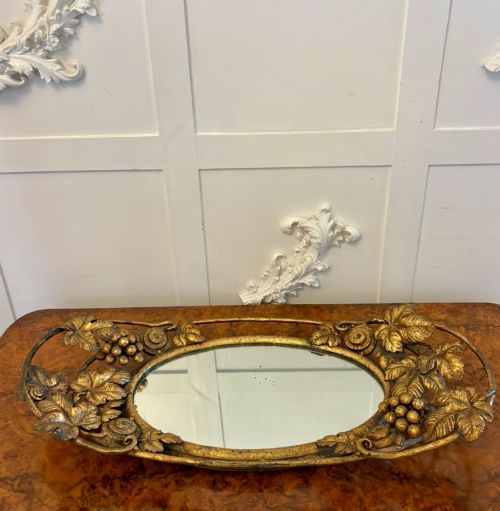
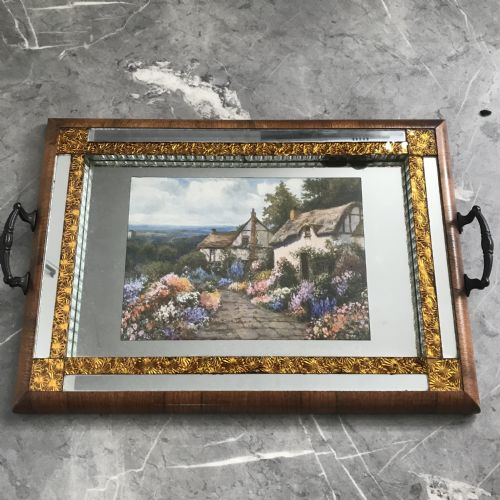
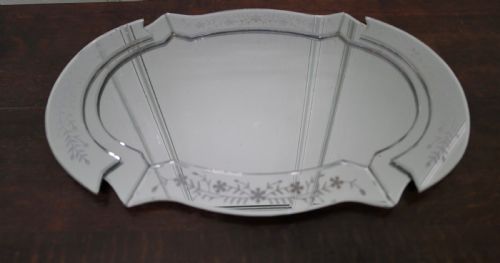
The selections available here range from early twentieth century Edwardian gilt metal frames with grape vine motifs to geometric Art Deco creations incorporating walnut veneer, chrome, and copper handles. Venetian and Italian glass Murano trays bring distinct regional craftsmanship into the category, often featuring delicate etchings.
Buyers will encounter various forms spanning small octagonal display stands, reception hall valet sets complete with hand brushes, and larger silver plated wine trays. Each piece uses mirror plate surfaces framed in metal or wood to catch the light.
How they were made
Maker construction methods rely on combining heavy mirror glass with structural frames cast in gilt metal, silver plate, or formed from chrome and copper. Walnut veneer and ebony provide wooden backings and borders for specific Edwardian and Art Deco examples.
Surface decoration involves wheel-cutting, etching, and beveling the glass plates, alongside cast metal ornamentation such as vine patterns applied to the edges. Frames are assembled with secure backing boards to protect the silvered mirror layers.
Mirrored Vanity Tray Retail Price Guide 2026
Typical asking prices for mirrored vanity tray among the pieces listed under this phrase on Sellingantiques today, from the lower quarter to the upper quarter. They describe what is for sale here now, not the wider market.
Some Edwardian valet sets managed to turn brushing your coat into an aesthetically coordinated mirror-and-ebony affair.
What varies in quality
The distinction between standard examples and finer pieces rests on the depth of the glass cutting and the intricacy of the metal framework. Hand-etched Venetian details and substantial cast bronze or silver plated mounts indicate superior workshop production.
Weight and structural rigidity also separate categories, as heavier mirror plates combined with solid wood veneers or substantial metal handles demonstrate greater durability than lighter, frameless alternatives.
The Mirrored Vanity Tray Glossary
- Mirror plate
- The flat glass sheet coated with a reflective silver or metal backing on one side. This forms the central functional surface of the tray.
- Silver plate
- A thin layer of silver fused to a base metal such as copper or brass. This technique gives the appearance of solid silver while maintaining structural strength.
- Gilt metal
- Base metal treated with a gold-coloured finish or gold leaf application. It provides decorative warmth to Edwardian frames.
- Valet set
- A matched collection of dressing accessories often including a mirror, tray, and brush. These sets were standard dressing table fittings in Edwardian hallways and bedrooms.
- Venetian glass
- Glassware produced on the islands of Murano and in Venice, known for clarity and decorative etching. These pieces often feature specialised cutting techniques.
Mirrored Vanity Tray: Frequently Asked Questions
What is a mirrored vanity tray used for?
These trays serve as decorative bases for holding perfume bottles, trinkets, and small accessories on dressing tables. They are also utilised on sideboards and cocktail cabinets for presenting glassware.
The reflective surface enhances the appearance of items placed upon it by bouncing light upward through the objects.
How do I clean a mirrored vanity tray?
Maintenance requires gentle dusting of the glass surface using a soft microfiber cloth to avoid scratching the silvered backing. Care must be taken around metal frames and wooden veneers to prevent moisture damage.
Harsh chemical cleaners should be avoided to protect antique silver plate and gilt finishes from degradation.
How do I date an antique tray?
Dating relies on identifying the prevailing stylistic markers, such as Edwardian gilt metal vine motifs or geometric Art Deco lines. Materials like walnut veneer, chrome, and specific etching styles also point to distinct decades.
Construction methods, including the type of backing board and framing technique, help confirm the period of manufacture.
Can these trays hold drinks?
Certain examples designated as drinks or wine trays are built to support glassware, decanters, and bottles. Sturdier frames with integrated handles accommodate the weight of barware.
Delicate Venetian or frameless glass variations are better suited for light decorative display rather than heavy service.