





Mirrored Console Table
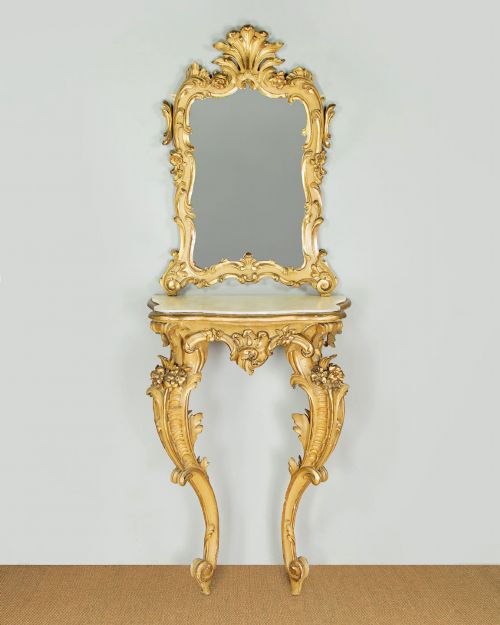
A mirrored console table brings depth and reflected light into a room, pairing a substantial timber or gilded base with the sharp clarity of vintage glass.
Mirrored Console Table
A mirrored console table combines a narrow wall-mounting or floor-standing base with either an integrated plate mirror or a matching wall-hanging glass panel above. These pieces typically stand against principal room walls in entrance halls, reception rooms, and drawing rooms to display decorative items whilst enhancing the sense of space.
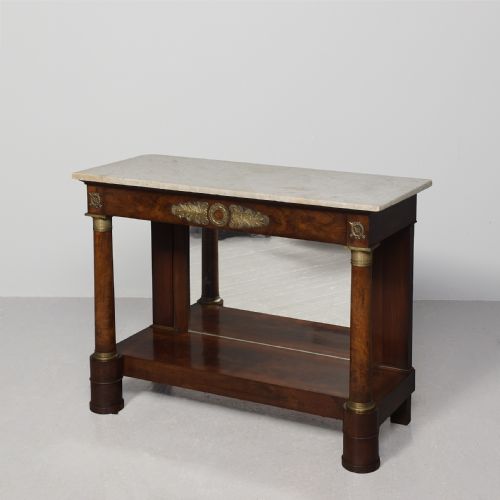
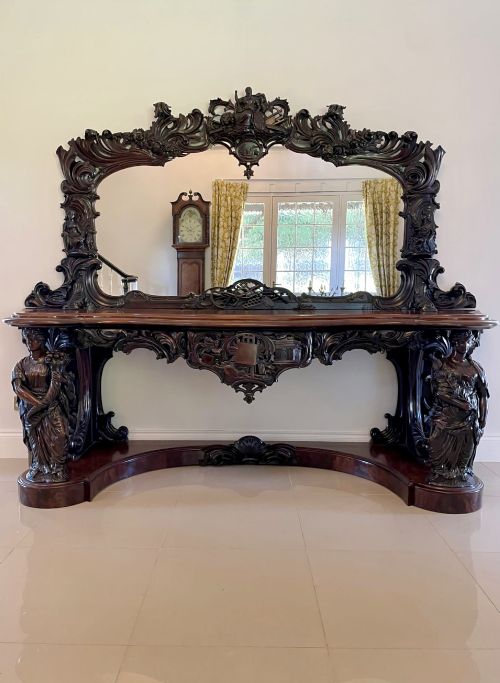
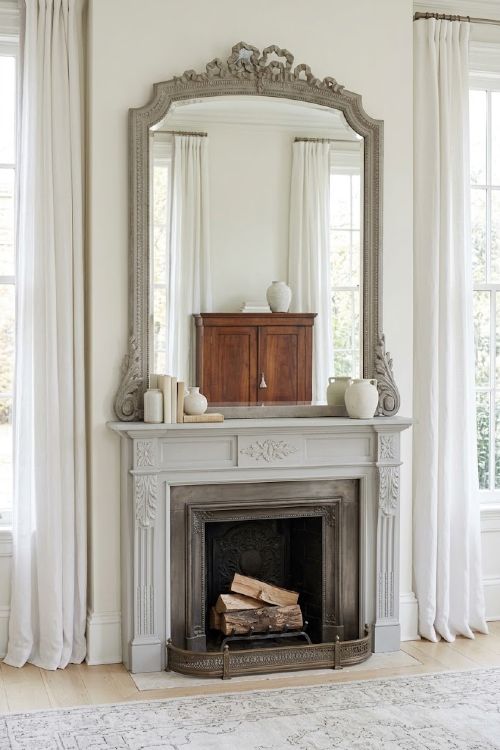
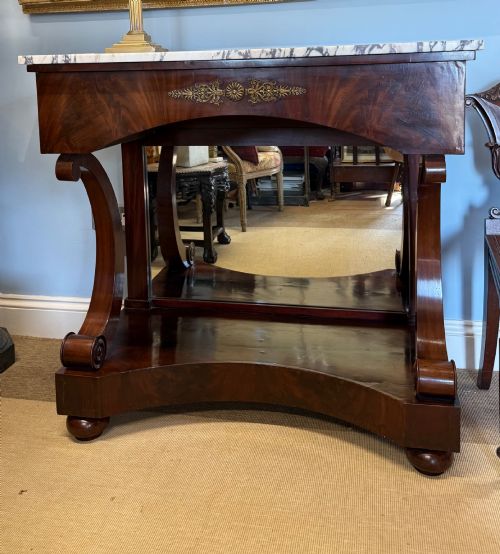
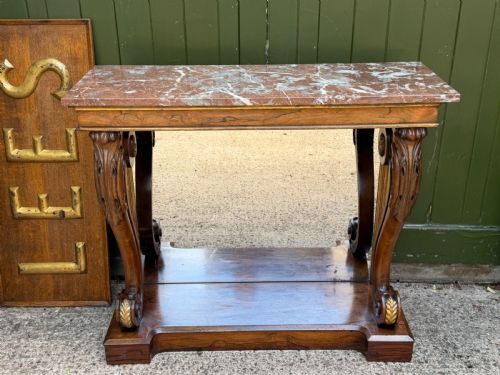
The selections recorded on this page range from nineteenth-century Regency rosewood and Victorian mahogany frames to early twentieth-century Edwardian and French examples. Many incorporate matching pier mirrors or trumeau glass designed to sit directly above the table surface on the wall.
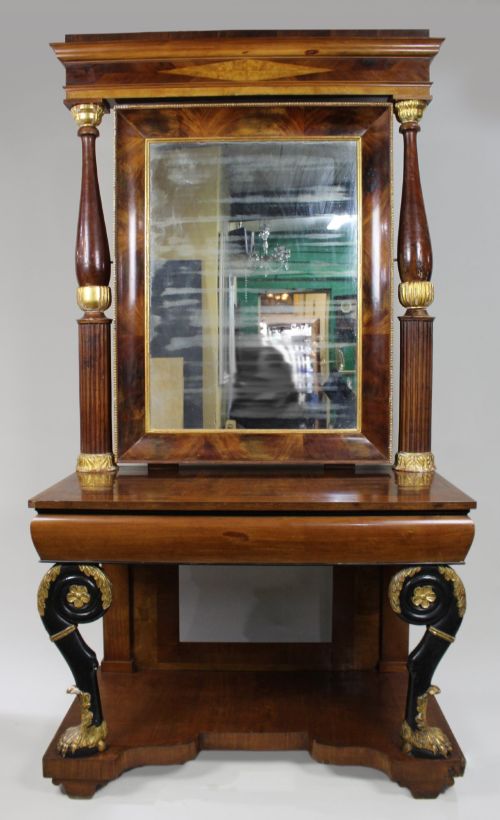
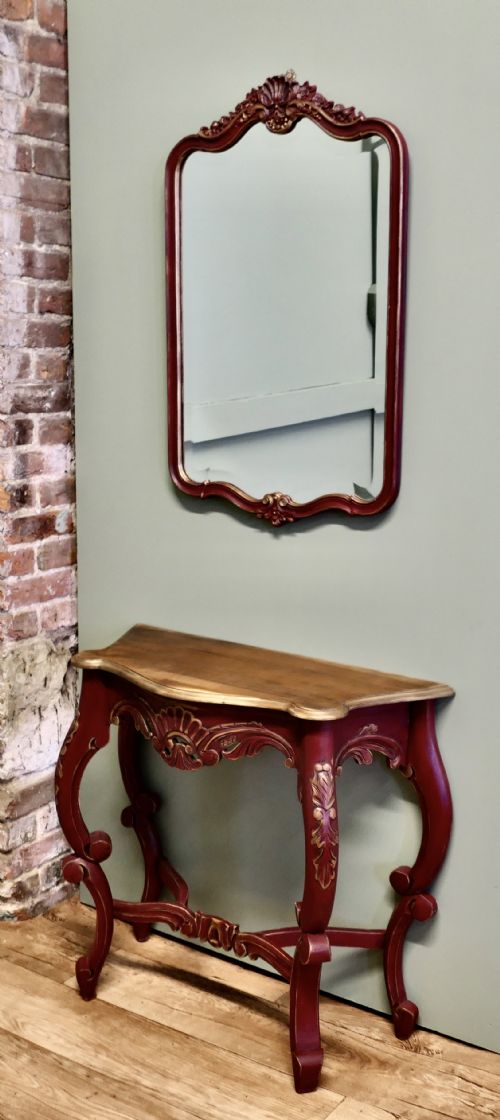
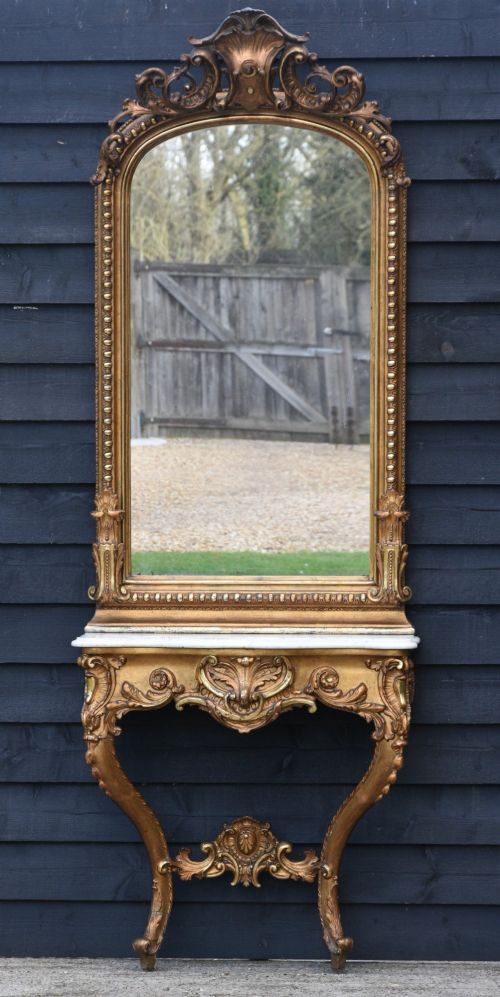
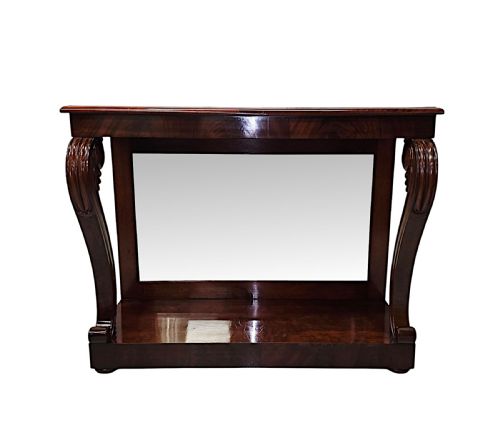
Buyers will encounter both standalone console tables paired with separate wall mirrors and unified furniture pieces where the mirror frame attaches structurally to the rear of the console base. Timber surfaces frequently feature inset marble tops in white or coloured varieties alongside traditional polished wood finishes.
How They Were Made
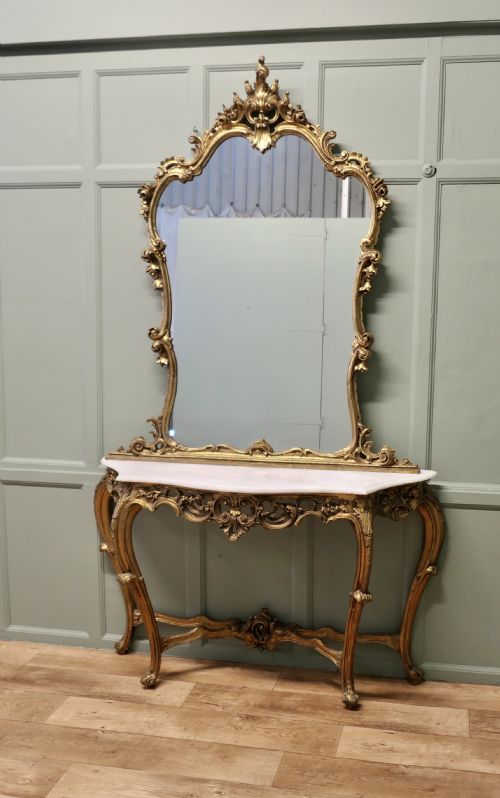
Cabinet makers constructed these frames using dense hardwoods including mahogany, rosewood, walnut, and oak, often applying parcel-gilt accents, carved giltwood ornamentation, or intricate marquetry inlay. Substantial pieces frequently received heavy carved details such as dolphins, rococo scrolls, or architectural mouldings.
Table surfaces commonly utilise heavy slabs of figured marble, carrara marble, or polished stone fitted precisely into wooden frames to provide durable display areas. Glass components rely on silvered mirror plates set within carved wooden or gilded surrounds, which reflect light and complement the polished timber beneath.
Mirrored Console Table Retail Price Guide 2026
Typical asking prices for mirrored console table among the pieces listed under this phrase on Sellingantiques today, from the lower quarter to the upper quarter. They describe what is for sale here now, not the wider market.
Some nineteenth-century halls required guests to deposit visiting cards upon marble console shelves whilst checking their attire in the attached mirror glass.
What Varies in Quality
The calibre of a mirrored console table rests upon the crispness of the hand-carved ornamentation, the selection of figured timber veneers like flame mahogany or maserbirch, and the weight of the integrated marble top. Superior examples demonstrate fluid joinery and balanced proportions, particularly where console bases and matching mirrors were conceived as a single suite.
The standard of the silvered mirror glass and the depth of the gilding on gesso frames further separate standard production from exhibition-grade pieces. Maker attribution, such as work linked to Gillingtons of Dublin or Pauly et Cie, elevates historical significance and craftsmanship.
Gillingtons of Dublin·Pauly et Cie
The Mirrored Console Table Glossary
- Pier mirror
- A tall mirror specifically designed to hang on the wall space between two windows, frequently positioned directly above a console or pier table.
- Trumeau
- A decorative wall mirror featuring an upper painted or carved panel integrated into the glass frame, commonly found in French interior schemes.
- Parcel-gilt
- A decoration technique where selected areas of a wooden furniture surface receive a thin layer of gold leaf while the surrounding timber remains visible.
- Giltwood
- Timber that has been coated with a thin layer of gold leaf over a prepared gesso ground, frequently seen on ornate nineteenth-century frames.
- Carrara marble
- A fine-grained white or blue-grey Italian marble traditionally utilised for classical sculpture and high-end furniture tabletops.
Mirrored Console Table: Frequently Asked Questions
Where should a mirrored console table go?
These tables suit entrance halls, reception rooms, and narrow corridors where floor space is limited. Placing one against a principal wall allows the glass to reflect natural light and open up the surrounding area.
Matching wall mirrors should be anchored securely to wall studs to support the weight of the frame and glass safely.
How do I care for antique marble tops?
Marble surfaces benefit from regular dusting with a soft, dry cloth to prevent grit accumulation. Acidic liquids like lemon juice or wine should be wiped away immediately to avoid staining the porous stone.
Avoid abrasive cleaners or scouring pads, which dull the polished finish over time.
What is the difference between pier and console tables?
Pier tables historically stood against the wall between windows beneath a pier mirror, whilst console tables rely on wall brackets or legs for support. Many surviving antique examples combine both functions into a single integrated suite.
Later Victorian and Edwardian variations often adapted these forms into hall stands or washstands.
How do I identify nineteenth-century styles?
Regency and William IV pieces display classical restraint, dark rosewood or mahogany timbers, and occasional brass inlay. Later Victorian and Rococo Revival examples favour heavier carved ornament, giltwood frames, and elaborate scrollwork.
French Empire pieces utilise bold mahogany veneers with gilt bronze mounts.