

Mirrored Compactum
A mirrored compactum combines full-length glass with fitted internal compartments, giving you a complete bedroom storage solution in a single substantial piece.
Mirrored Compactum
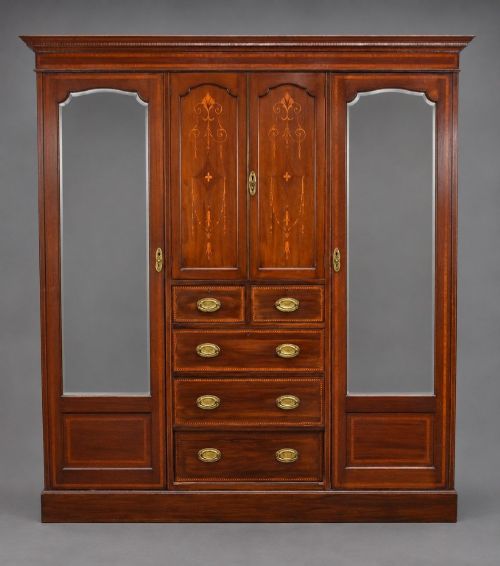
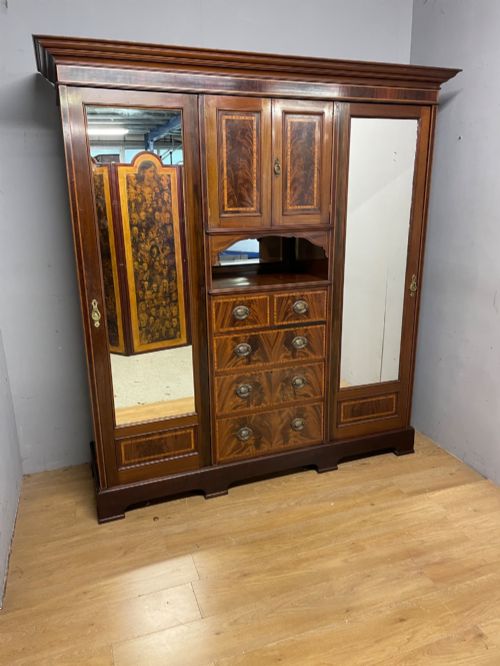
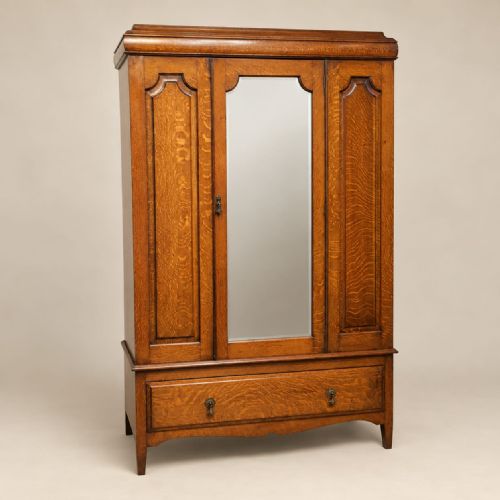
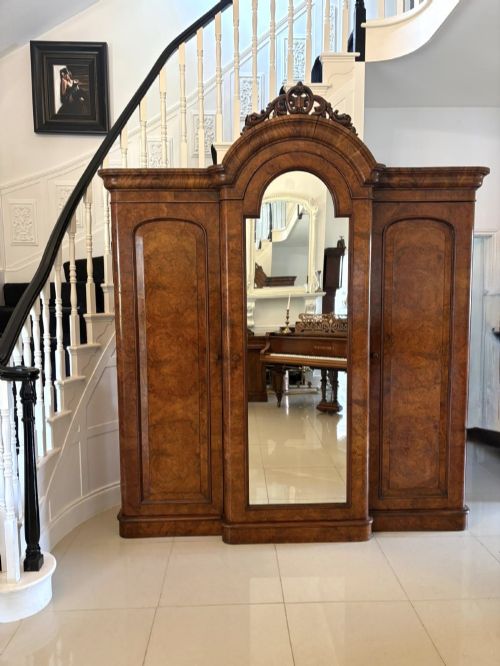
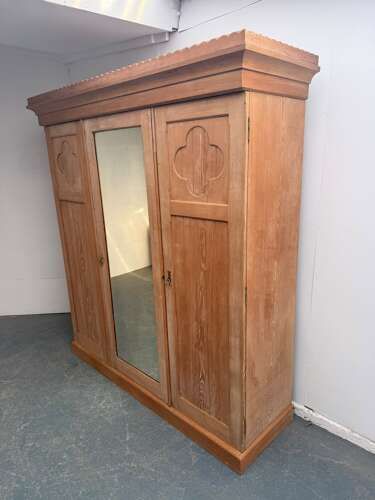
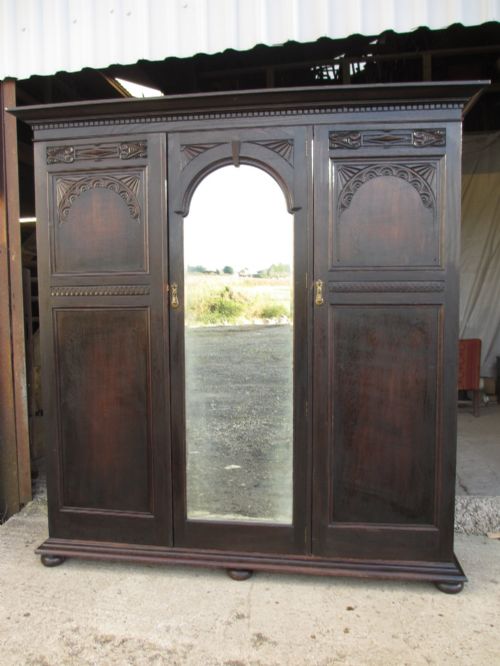
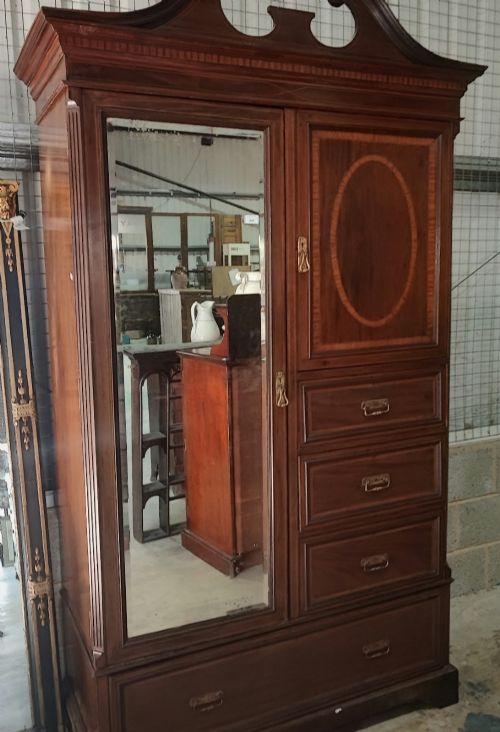
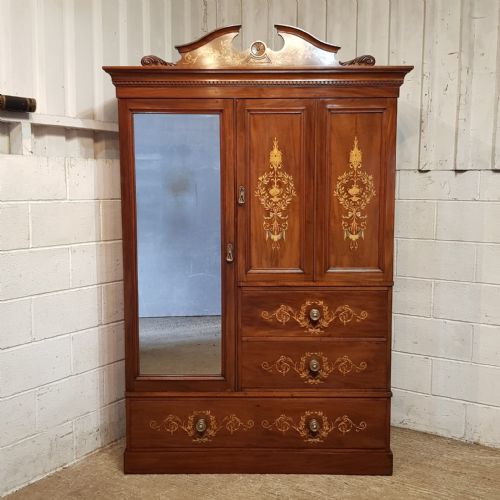
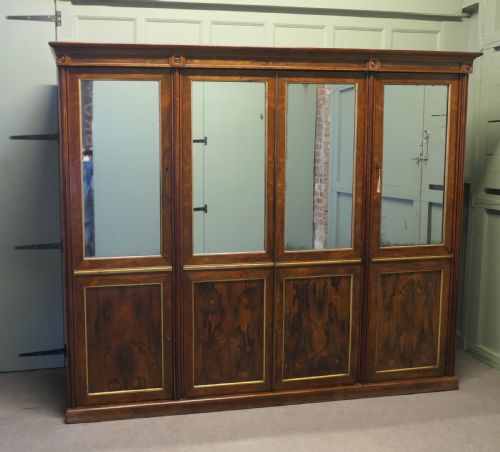
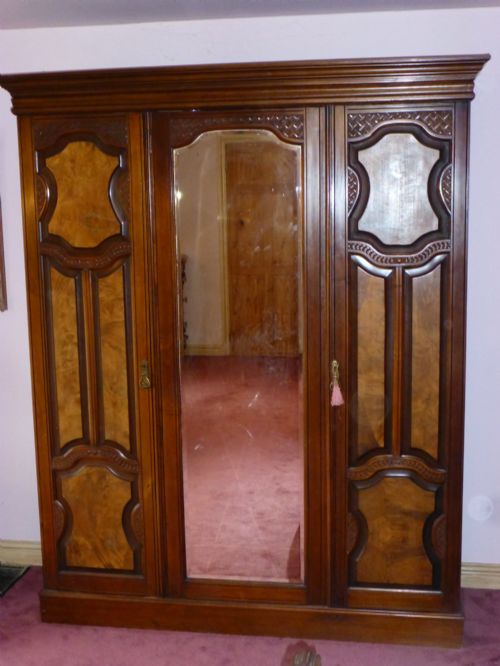
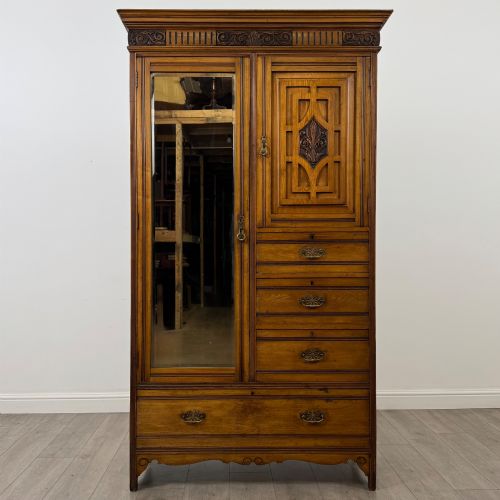
A mirrored compactum is a large bedroom storage item, most frequently encountered here as a Victorian, Edwardian, or turn-of-the-century wardrobe that integrates hanging space with internal drawers and shelves behind central mirrored doors.
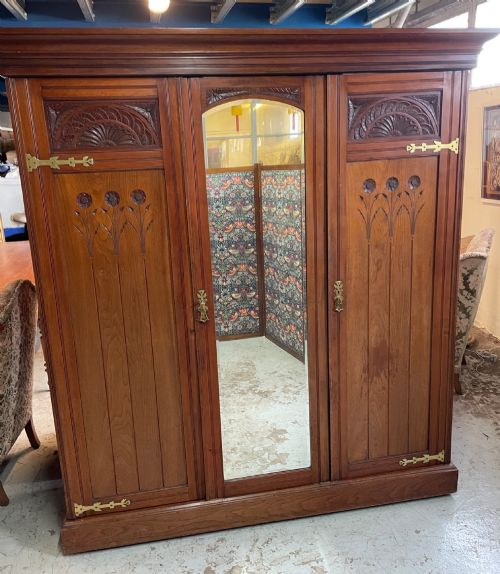
The evidence shows these pieces spanning the nineteenth and early twentieth centuries, emerging in styles from Late Victorian and Edwardian to Arts and Crafts and 1930s country manufacture.
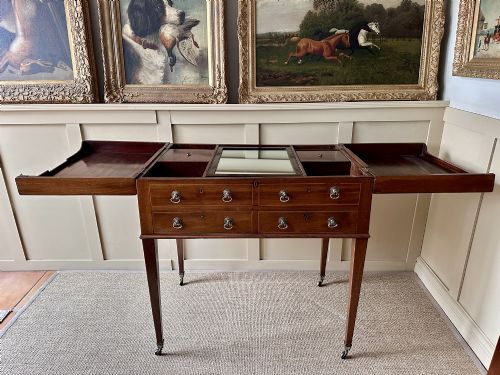
Makers designed these multi-compartment wardrobes to hold diverse garments within a single footprint, often pairing them with matching dressing tables or bedside cabinets in larger bedroom suites.
Materials and Construction
Cabinet makers utilised dense hardwoods including mahogany, oak, walnut, and burr walnut, frequently applying fine veneers to large panel surfaces to display rich timber grain.
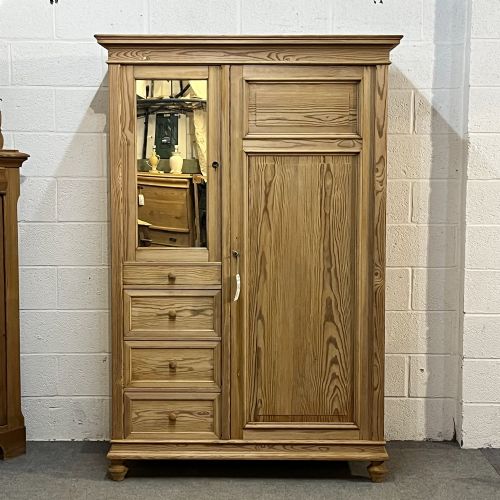
Secondary timbers such as ash and pine provided structural stability for internal drawers and partitions, while bevelled glass was set into heavy timber doors to serve as dressing mirrors.
Mirrored Compactum Retail Price Guide 2026
Typical asking prices for mirrored compactum among the pieces listed under this phrase on Sellingantiques today, from the lower quarter to the upper quarter. They describe what is for sale here now, not the wider market.
Some Edwardian compactums hide tie rails and linen slides behind heavy bevelled glass doors.
Distinctions in Execution
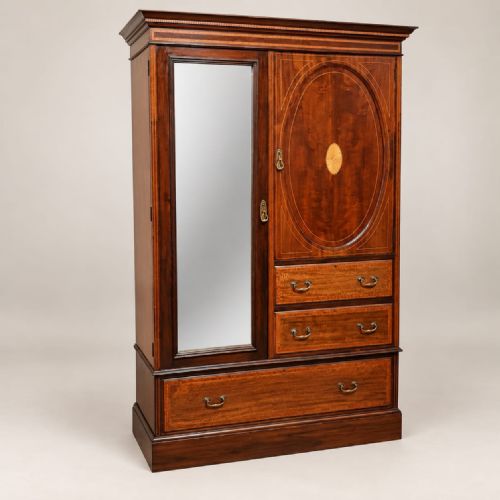
Quality rests in the depth of timber figure, the precision of marquetry inlay, and the integration of fitted internal drawers and sliding trays behind the outer doors.
Subtle differences distinguish standard production from workshop pieces, visible in hand-carved decorative details, panel construction, and the substantial weight of brass hardware.
Edwards and Roberts·Holland and Sons·Shapland and Petter·Lamb of Manchester·Maple and Co·Heal and Son
The Mirrored Compactum Glossary
- Compactum
- A multi-function wardrobe containing a combination of hanging space, internal drawers, and shelving. This layout maximises bedroom storage within one framework.
- Burr Walnut
- Timber taken from a tree growth that produces complex, swirling grain patterns. Cabinet makers prized this material for decorative veneering on prominent doors.
- Inlay
- Pieces of contrasting timber or light satinwood fitted flush into the primary wood surface. This technique created geometric borders and floral motifs on Victorian and Edwardian doors.
- Bevelled Glass
- Mirror glass with edges cut and polished at an angled slope. This traditional method added depth and a finished appearance to large wardrobe doors.
Mirrored Compactum: Frequently Asked Questions
What is a mirrored compactum?
A mirrored compactum is a large wardrobe featuring an integrated mirror alongside internal drawers, shelves, and hanging compartments.
These pieces appeared in Victorian and Edwardian bedrooms to provide comprehensive garment storage in a single item.
How do I date a compactum wardrobe?
Dating relies on timber choices, construction methods, and stylistic details such as Arts and Crafts carving or Victorian marquetry inlay.
Earlier examples often utilise solid mahogany or burr walnut, while later twentieth-century pieces turn towards pine and simpler oak designs.
Are these wardrobes dismantleable?
Many large nineteenth-century triple wardrobes and compactums were constructed to dismantle into sections for transport and installation.
Cornices, base plummets, and individual side robes detach from the central mirrored section to ease movement through doorways.
What fits inside the internal drawers?
Internal drawers within a compactum were designed to hold folded garments, linens, and accessories away from dust.
These nested compartments sit behind the main doors, complementing the primary hanging space found in larger multi-door configurations.