
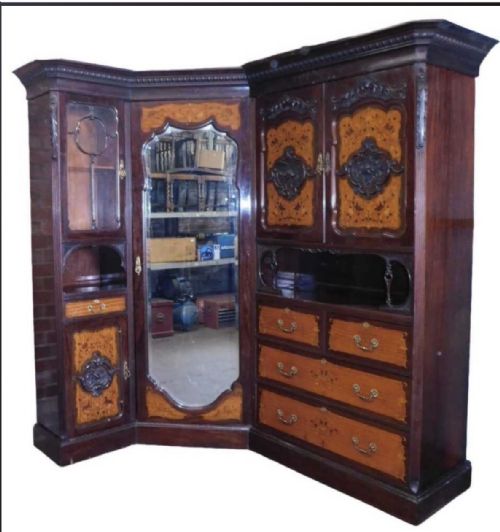


Mirrored Armoire Cabinet
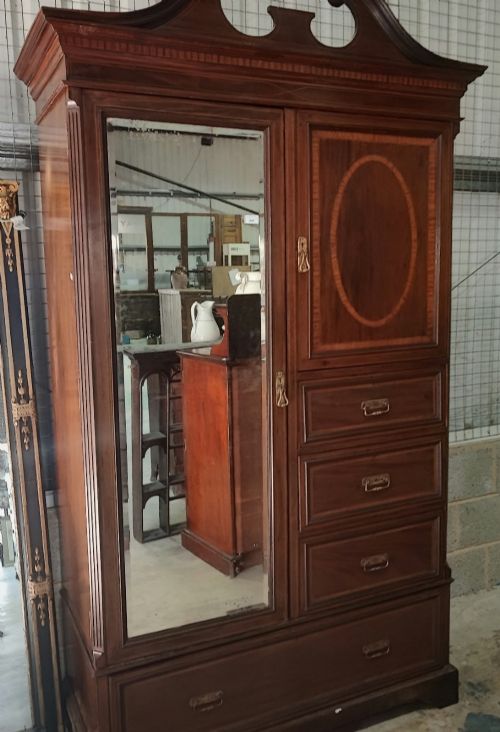
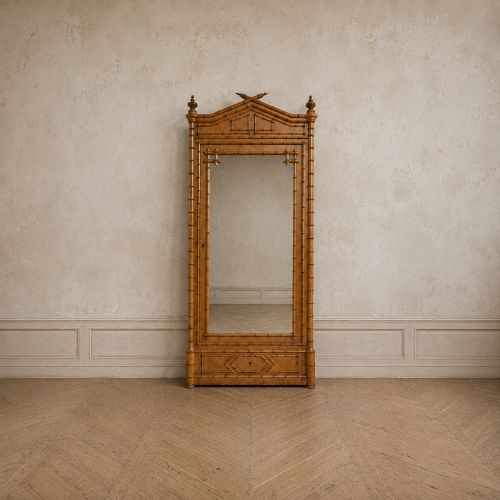
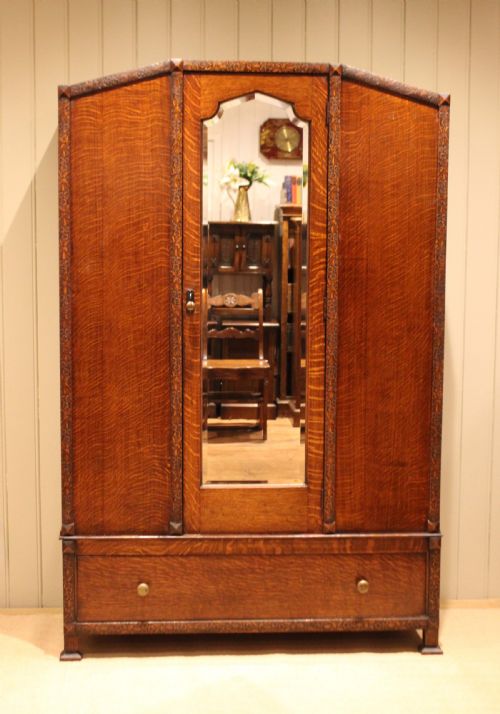
These mirrored armoire cabinet pieces offer grand storage and light reflection, combining substantial timber frames with full-length glass doors.
Mirrored Armoire Cabinet
A mirrored armoire cabinet combines large-scale bedroom storage with reflective glass door panels, serving both practical and decorative functions in a room. When you search for a mirrored armoire cabinet, you encounter substantial furniture pieces designed primarily for hanging garments and storing apparel.
The pieces on this page span from the eighteenth century through to the early twentieth century, taking forms such as compactum wardrobes, triple wardrobes, and French armoires. Victorian and Edwardian examples predominate, alongside earlier French designs and twentieth-century interpretations.
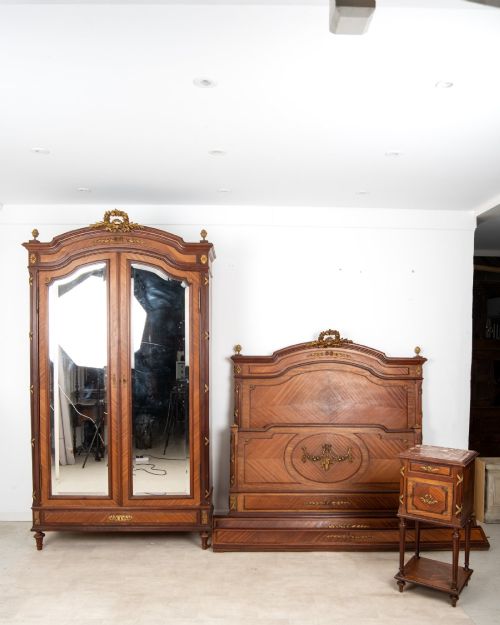
Makers utilised various timber types, mounting bevelled or plain glass mirrors into timber doors. Some items form part of larger bedroom suites complete with matching beds and bedside cabinets.
How they were made
Cabinetmakers constructed these wardrobes using dense hardwoods such as mahogany, walnut, burr walnut, oak, satinwood, and ash, frequently applying intricate marquetry inlays or bird's-eye maple veneers. These timbers provided the structural strength required to support heavy mirrored doors and internal hanging space.
Glass panels, often bevelled along the edges, were secured into door frames using timber mouldings and brass hardware. Carved cartouches, gilt bronze mounts, and lead light panels appear on specific French and Edwardian items to enhance their decorative finish.
Listings feature oak, mahogany, walnut, and satinwood pieces spanning from the eighteenth century to the nineteen thirties.
What varies in quality
Quality rests upon the selection of timber veneers and the precision of inlaid marquetry work across the doors and cornice. Finer examples employ figured burr walnut, satinwood, or mahogany with careful grain matching.
The integration of the mirror glass into the timber frame dictates the level of craftsmanship. Superior pieces feature heavy, thick glass with clean bevels housed securely within substantial panelled doors that maintain their alignment over time.
Edwards and Roberts·Maple and Co.
The Mirrored Armoire Cabinet Glossary
- Compactum
- A large wardrobe designed with multiple internal compartments, drawers, and hanging space. This layout allows for comprehensive garment storage within a single footprint.
- Armoire
- A traditional large cupboard or wardrobe originating in continental Europe. These pieces often feature prominent decorative carvings and single or double doors.
- Marquetry
- The art of applying pieces of veneer to a structure to form decorative patterns. Cabinetmakers use contrasting timbers to create geometric or floral motifs.
- Bevel
- An edge ground on glass at an angle other than ninety degrees. This technique catches the light and adds a decorative border to the mirror panel.
- Cornice
- The ornamental moulding running round the top edge of a cabinet piece. It provides a finished architectural transition between the wardrobe body and the ceiling.
Mirrored Armoire Cabinet: Frequently Asked Questions
How do I clean the mirror glass?
Wipe the glass gently with a soft microfibre cloth and a mild glass cleaner. Avoid spraying liquid directly onto the frame to protect the surrounding timber and polish.
Ensure moisture does not seep behind the mirror plate edges. Regular dusting keeps the glass clear without requiring harsh chemical treatments.
Will an antique armoire fit in a modern bedroom?
Measure your ceiling height and floor space carefully before purchasing, as these wardrobes were built for high-ceilinged rooms. Many pieces are exceptionally heavy and tall.
Consider whether the wardrobe dismantles for transport. Some nineteenth-century models feature modular construction while others remain solid.
How do I tell Victorian from Edwardian pieces?
Victorian wardrobes often feature darker timbers like mahogany and walnut, with heavier proportions and dense carved details. They lean towards formal, imposing silhouettes.
Edwardian pieces frequently utilise lighter woods such as satinwood and lighter oak, reflecting a shift towards brighter, simpler bedroom aesthetics by the nineteen hundreds.
What is a compactum wardrobe used for?
A compactum combines hanging space with banks of internal drawers and linen shelves. This multi-functional interior provides dedicated storage for diverse garments.
These pieces suit rooms lacking chest of drawers space. They concentrate comprehensive wardrobe organisation into one unified cabinet.