





Mirror Back Vanity
These mirror back vanity pieces bring a functional surface and reflected light together, offering a practical setup for dressing and grooming.
Mirror Back Vanity
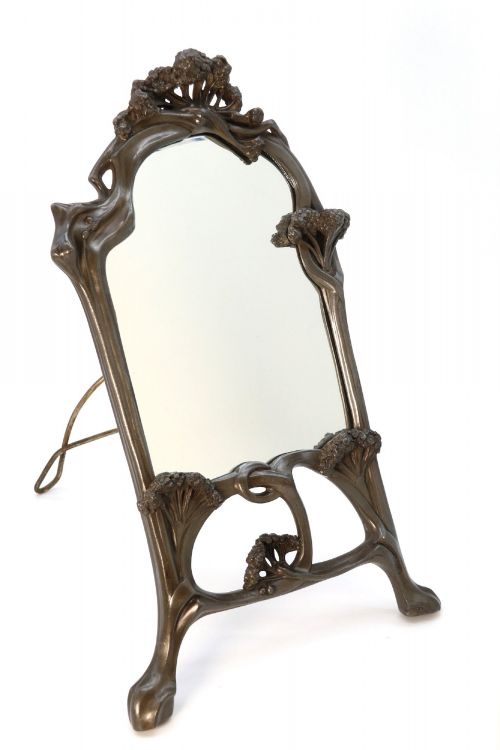
A mirror back vanity brings together a dressing surface, console, or washstand with an attached mirror. You will encounter various forms here, from dressing tables and washstands to console tables and tabletop mirrors, dating across the nineteenth and early twentieth centuries.
The periods represented stretch from the Georgian era through Victorian, Edwardian, and Art Nouveau times up to Art Deco pieces of the nineteen twenties. Materials range from mahogany and walnut to marble, brass, sterling silver, and velvet.
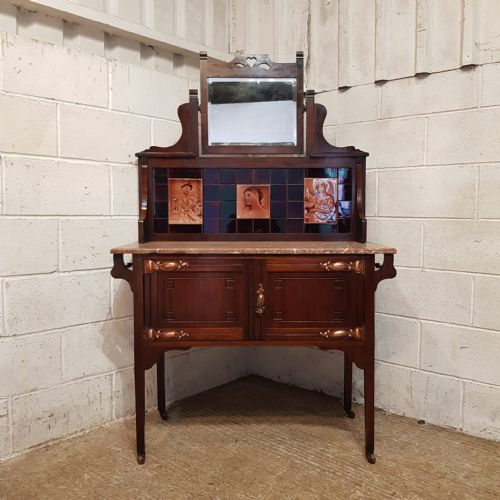
Many examples incorporate surfaces of marble or woods such as mahogany, alongside dressing table mirrors and washstands fitted with ceramic panels or Majolica work.
Materials and construction
Makers utilised solid timbers like mahogany and walnut alongside applied brass and sterling silver mounts. Glass forms the primary backing for the mirror plates found across dressing tables and tabletop examples.
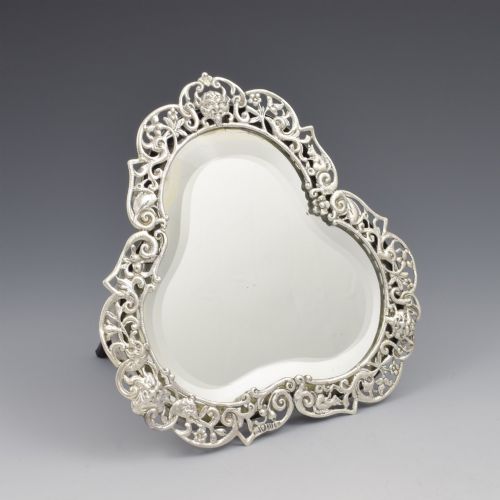
Marble tops appear frequently on washstands and console tables, providing a durable surface resistant to water and daily use. Metalwork techniques include silver plating and pierced silver work seen on easel mirrors from the late Victorian period.
Textiles also feature, with velvet covering specific mirror frames and backing surfaces, particularly in late nineteenth-century examples.
Mirror Back Vanity Retail Price Guide 2026
Typical asking prices for mirror back vanity among the pieces listed under this phrase on Sellingantiques today, from the lower quarter to the upper quarter. They describe what is for sale here now, not the wider market.
Silver dressing mirrors carry the ghosts of Victorian dressing tables, where little silver animals and birds silently watched over morning routines.
Distinguishing quality across examples
Quality rests in the selection of materials and the execution of decorative details, such as the depth of pierced silver work or the figuring in mahogany and walnut timbers. Finer pieces demonstrate careful joinery and substantial marble slabs fitted precisely to washstands and console tables.
The refinement of period styles, from French Rococo Revival curves to Art Nouveau whiplash lines and Secessionist metalwork, separates standard production from superior workshop output.
Louis Auguste Moreau·WMF·William Comyns·Henry Matthews
The Mirror Back Vanity Glossary
- Easel back
- A hinged strut attached to the rear of a tabletop mirror allowing it to stand unsupported at an angle. This mechanism is common on silver and velvet vanity mirrors.
- Majolica
- Tin-glazed earthenware featuring colourful lead glazes, often incorporated as decorative panels within cabinet furniture and washstands.
- Console table
- A table designed to stand against a wall, frequently paired with a mirror or forming part of a larger vanity and cabinet arrangement.
- Bonheur du jour
- A light lady's writing desk, often incorporating small drawers, shelves, and a mirror back above the main writing surface.
- Washstand
- A piece of furniture designed to hold a basin and pitcher, typically finished with a marble top to protect the wood from water splashes.
Mirror Back Vanity: Frequently Asked Questions
What is a mirror back vanity?
A mirror back vanity combines a dressing table, console, or washstand with an integrated mirror to reflect light and assist with grooming.
These pieces integrate the mirror directly into the furniture structure or mount it securely to the rear surface.
How do I date a mirror back piece?
Dating relies on identifying stylistic markers such as Victorian proportions, Edwardian simplicity, or Art Nouveau and Art Deco decorative motifs.
Materials, construction methods, and hallmarks on silver components also provide specific chronological indicators.
Where were these pieces used?
They served primarily in bedrooms, dressing rooms, and boudoirs as functional furniture for personal grooming and morning routines.
Console and washstand variants also appeared in hallways and reception rooms where reflected light enhanced smaller spaces.
How do I care for marble tops?
Marble surfaces require regular dusting with a soft cloth and immediate cleaning of spills to prevent staining.
Avoiding harsh acidic cleaners protects the polished stone finish over years of daily use.