

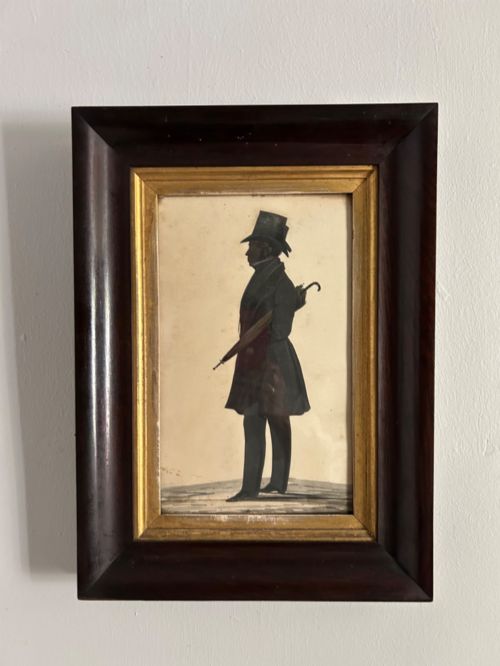


Miniature Silhouette Art
Miniature silhouette art offers intimate profile portraits and studies in black, prized for capturing the exact likeness of subjects from past centuries.
Miniature Silhouette Art
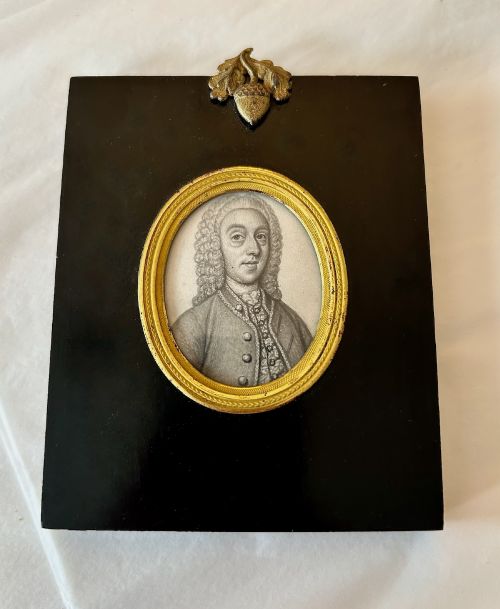
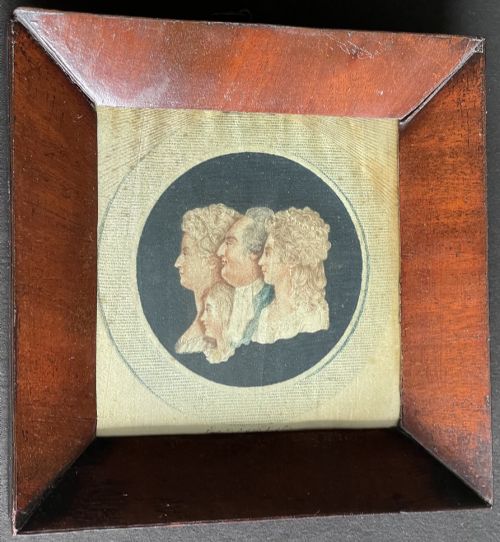
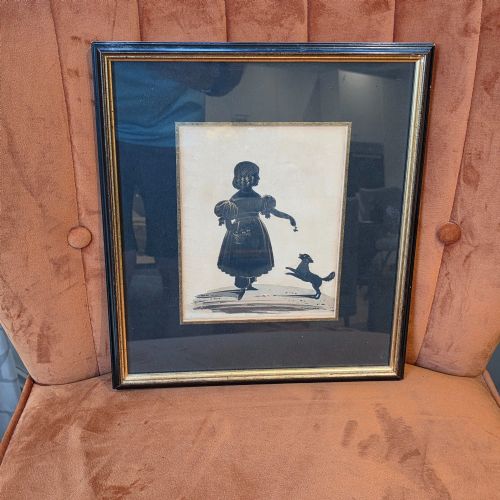
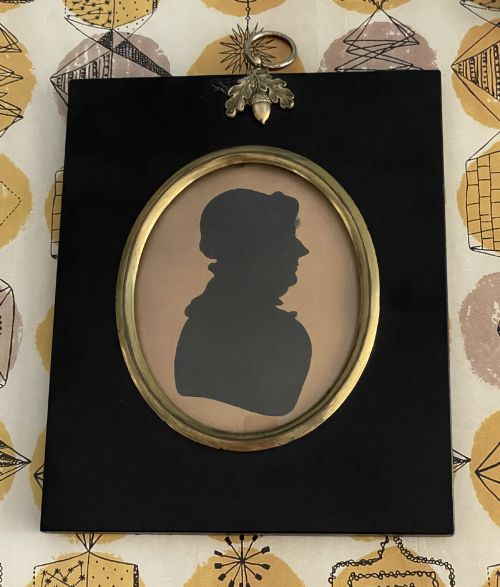
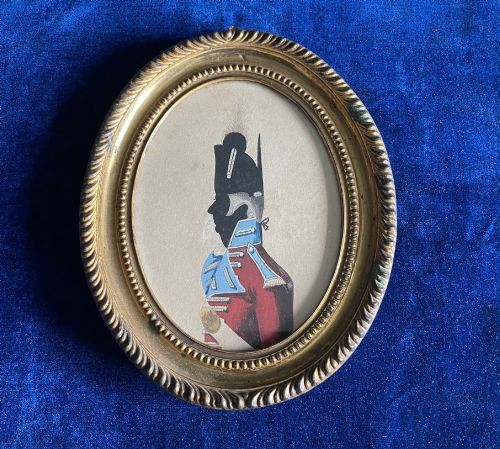
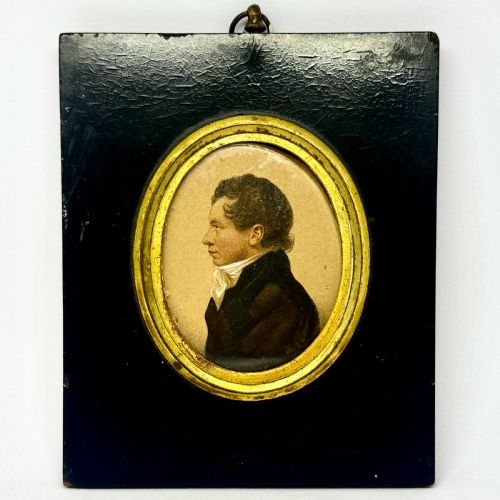
Miniature silhouette art encompasses small profile portraits and framed artwork created during the 18th and 19th centuries. Buyers searching for miniature silhouette art encounter framed portrait miniatures, pendant pieces, and wall art depicting gentlemen, ladies, children, and animals.
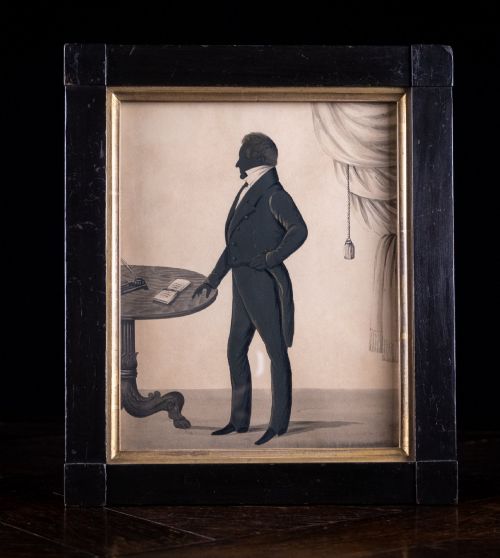
The pieces on this page originate predominantly from the Georgian, Regency, and Victorian periods. Most examples present full-length or bust profiles housed in original wooden frames, often executed in ebonised wood or rosewood.
Makers and studios such as the Hubard Gallery and artists working in the Georgian era established specific traditions of cut paper and painted profiles. The selection spans straightforward cut-paper depictions to reverse-painted glass and plaster profiles.
Materials and Technique
Makers utilised paper, glass, plaster, and silk as grounds for their profiles, applying black ink, watercolour, and gold leaf for detail. Cut-paper silhouettes required steady knife work to define the subject before mounting against a contrasting background.
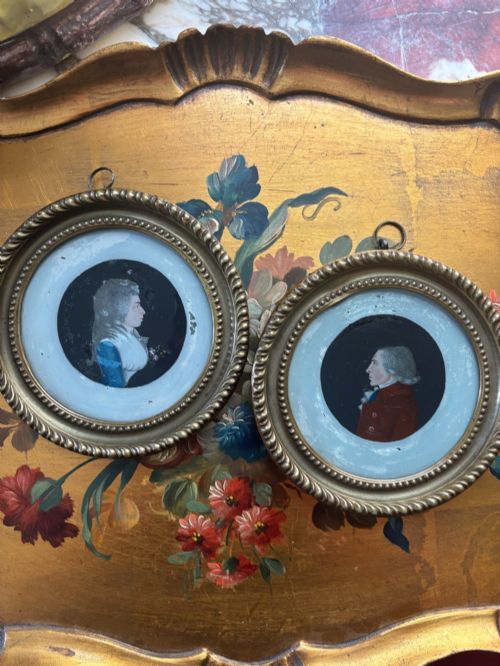
Reverse painting on glass involved rendering the profile directly onto the glass panel, sometimes backed with wax or silk to give depth to the monochrome figure. Gilded highlights were often added by hand to accent clothing buttons, lace, and hair.
Miniature Silhouette Art Retail Price Guide 2026
Typical asking prices for miniature silhouette art among the pieces listed under this phrase on Sellingantiques today, from the lower quarter to the upper quarter. They describe what is for sale here now, not the wider market.
Listings incorporate works executed in cut paper, glass, paper, wood, brass, ink, gold leaf, ebonised wood, and watercolour.
Quality Variations
The distinction between ordinary and superior miniature silhouette art rests on the precision of the cutting or brushwork and the presence of artist signatures. Finer pieces demonstrate exact facial mapping and delicate gilded detailing that brings dimension to the flat black profile.
Framing and mounting also dictate quality, with original brass bezels, convex glass, and period rosewood or ebonised frames preserving the piece as intended by the maker. Associated provenance, original trade labels on the reverse, and documented attribution elevate certain examples considerably.
William James Hubard·John Miers·Augustin Edouart·John Smith of Edinburgh·J. Deacon
The Miniature Silhouette Art Glossary
- Silhouette
- A solid profile portrait, typically filled in with black against a pale background. The form derives its name from Etienne de Silhouette.
- Reverse painting
- A technique where the artist paints on the reverse side of a glass sheet so the image is viewed through the front. This method protects the pigment from dust and abrasion.
- Ebonised wood
- Timber treated to resemble ebony, frequently used for dark picture frames in the Regency and Victorian eras. It provides a stark contrast to gilded highlights.
- Pendant
- A small framed portrait designed to be worn or hung from a ribbon. These pieces often feature convex glass and brass suspension loops.
- Plaster
- A moulded composition base used by artists such as John Miers for profile reliefs. The white plaster figure was mounted on a dark ground to create sharp contrast.
Miniature Silhouette Art: Frequently Asked Questions
What periods do these silhouettes come from?
These works originate primarily from the eighteenth and nineteenth centuries, spanning the Georgian, Regency, and Victorian eras.
Specific dates on signed and attributed pieces range from the late seventeen-eighties through to the mid-nineteenth century.
How were silhouettes displayed originally?
Makers housed these small portraits in tight wooden frames made of rosewood or ebonised wood, frequently fitted with convex glass and brass hangers.
Some smaller examples were set into pocket-sized pendants or hinged cases designed to be carried or kept on a desk.
What materials did silhouette artists use?
Artists worked with plain and textured paper, card, plaster, silk, and glass as the primary surfaces for their portraits.
Pigments included black ink, watercolour, and fine gold leaf used for highlighting costume details and jewellery.
How can I tell a cut silhouette from a painted one?
Cut silhouettes utilise paper sliced with a knife or scissors to form the profile, sometimes laid over a contrasting white or pale backing.
Painted examples apply ink or dark pigment directly onto glass, plaster, or paper using fine brushes to achieve the profile outline.