



Brass Hanger Portrait
A brass hanger portrait offers an intimate glimpse into past lives through delicate silhouettes and miniatures held by distinctive metal mounts.
Brass Hanger Portrait
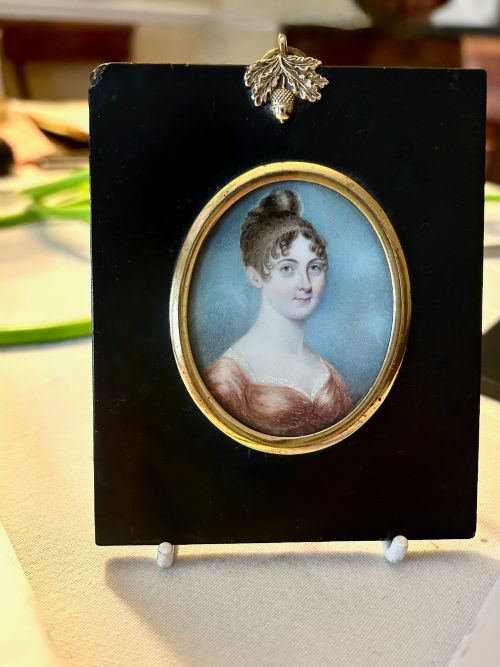
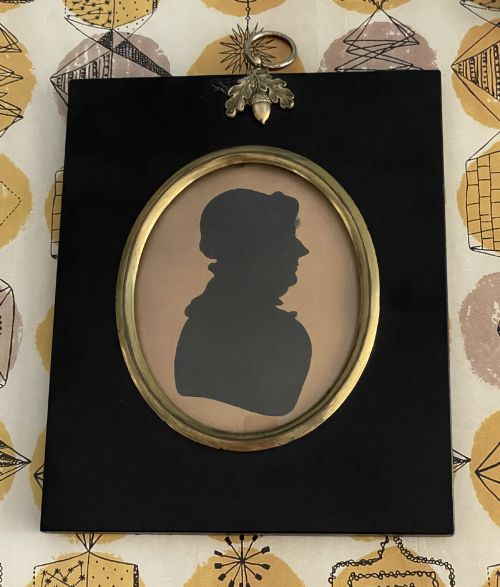
A brass hanger portrait brings together framed silhouettes and miniature watercolours designed for wall display during the Georgian, Regency, and nineteenth-century periods. Buyers searching for a brass hanger portrait seek these profile likenesses and small painted works, which frequently depict gentlemen, ladies, and children.
The selections encountered on this page encompass cut paper silhouettes, gilded profiles, and watercolour portraits on card. These pieces reflect the prevailing portraiture trends of the nineteenth century alongside earlier Regency and Georgian examples.
Framing often involves ebonised wood or papier-mache surrounds paired with distinctive top hanger rings cast in brass. Such mounts allow the lightweight frames to be suspended directly from wall hooks.
Materials and construction
Portraits of this nature rely on paper, card, and watercolour pigments to capture profile likenesses. Cut paper silhouettes use contrasting dark paper mounted against pale grounds, sometimes enhanced with delicate gilt highlights applied by hand.
Brass Hanger Portrait Retail Price Guide 2026
Typical asking prices for brass hanger portrait among the pieces listed under this phrase on Sellingantiques today, from the lower quarter to the upper quarter. They describe what is for sale here now, not the wider market.
Current listings feature pieces spanning the Georgian, Regency, and nineteenth-century periods, utilising paper, glass, and ebonised wood.
Assessing quality and execution
Distinction across these portraits rests upon the precision of the cutting or the fineness of the brushwork. Superior examples display sharp facial definition, careful proportion, and skilled application of gilt detailing.
The integrity of the original framing, including the casting quality of the brass hanger and the preservation of the ebonised wood or papier-mache, marks the difference between standard and exceptional pieces.
James Gillespie·George Atkinson
The Brass Hanger Portrait Glossary
- Silhouette
- A solid black profile likeness, typically cut from paper or painted, popular for portraiture before the widespread adoption of photography. It provides a stark and elegant outline of the sitter.
- Portrait miniature
- A small-scale painting executed with immense detail on card, ivory, or vellum. These intimate works were often kept as personal mementoes or displayed in domestic settings.
- Ebonised wood
- Timber treated with a dark stain or finish to imitate ebony. It provides a deep, matte black border that contrasts sharply with the pale background of a profile portrait.
- Papier-mache
- A composite material made from paper pulp or reinforced sheets mixed with binding agents, moulded and hardened for frames. It offers a smooth surface capable of taking a fine black lacquer.
Brass Hanger Portrait: Frequently Asked Questions
What is a brass hanger portrait?
These works comprise small silhouette profiles or watercolour miniatures housed in frames featuring a prominent metal suspension loop at the top. They represent popular forms of domestic likenesses from the Georgian and nineteenth-century eras.
Such objects allowed families to display likenesses of relatives and notable figures on interior walls without requiring large canvas spaces.
How do I hang these frames?
The integrated brass loop at the top of the frame slips directly over a sturdy wall hook or picture nail. Their light construction makes them straightforward to arrange in groups on a wall.
Ensure that the hanging location avoids direct, strong sunlight to protect the delicate paper and watercolours inside.
How to identify period pieces?
Dating relies on examining the materials of the frame, such as papier-mache or ebonised wood, alongside the style of the clothing and hair depicted in the profile. Georgian and Regency examples often feature distinct costume silhouettes like turban caps and high-collared coats.
Backings, old adhesives, and handwritten inscriptions on the reverse further help establish the era of creation.