



Miniature Painted Scene
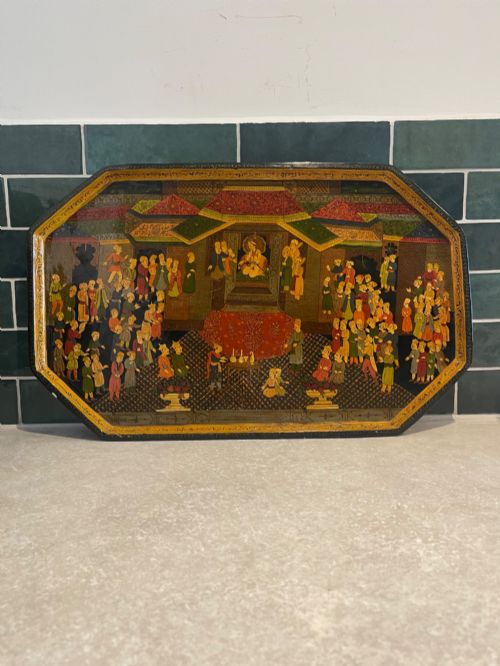
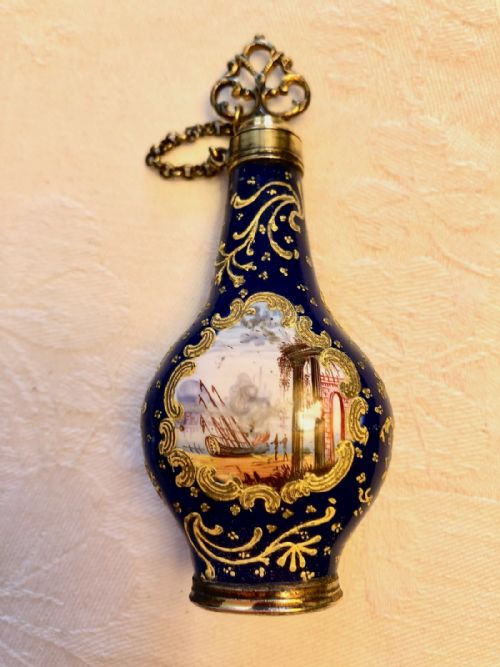
These small works known as a miniature painted scene range from Kashmiri papier-mache trays to delicate enamelled scent bottles.
Miniature Painted Scene
When you search for a miniature painted scene, you are looking at small-scale artworks executed across diverse global traditions, spanning French Rococo compositions, Mughal court scenes, and Meiji period Japanese ceramics.
The objects themselves take varied forms, appearing as framed watercolour paintings, painted porcelain plaques, small enamel scent bottles, and decorative trays made of paper or wood.
On this page, you are most likely to encounter 19th-century works, including gouache paintings on paper and porcelain plaques rendered in French and Indo-Persian styles.
How they were made
The making of these small pieces relies on precise hand work using gouache, watercolour, ink, and enamel applied to delicate surfaces like paper, glass, wood, and porcelain.
Makers often housed these detailed compositions within thoughtful frames or mountings utilising gilt metal, velvet backing, and carved wood.
Specialised techniques are evident in works such as Kashmiri papier-mache trays and Meiji Satsuma miniature vases, combining local craft traditions with fine miniature brushwork.
Miniature Painted Scene Retail Price Guide 2026
Typical asking prices for miniature painted scene among the pieces listed under this phrase on Sellingantiques today, from the lower quarter to the upper quarter. They describe what is for sale here now, not the wider market.
Lovers lounge across cruciform frames and woodland clearings while birds go birding after Boucher.
What varies in quality
Quality in a miniature painted scene rests upon the precision and confidence of the brushwork, distinguishing skilled hand-painted execution from looser or more rigid decorative interpretations.
The choice and preservation of materials also dictate the piece's standing, with well-preserved gouache on paper and finely fired enamel showing greater refinement than degraded surfaces.
The origin and artistic school influence the character of the work, with named makers and distinct regional styles such as the Mughal School or Sevres style offering greater artistic context.
Chosei Kyoto·H Desprez
The Miniature Painted Scene Glossary
- Gouache
- An opaque watercolour paint consisting of pigment mixed with a water-bound binding agent. It allows for rich, flat areas of colour in small-scale paintings.
- Papier-mache
- A composite material consisting of paper pieces or pulp reinforced with adhesives. It is moulded and painted, frequently seen in Kashmiri trays.
- Enamel
- A glassy substance fused to metal through firing to form a smooth, decorative coating. It provides a durable surface for hand-painted scenes on small objects like scent bottles.
- Porcelain
- A ceramic material made by heating materials in a kiln, used here for flat decorative plaques. It serves as a bright, stable ground for detailed figurative painting.
Miniature Painted Scene: Frequently Asked Questions
What periods do these pieces come from?
The pieces span the 18th century, the Georgian era, and the 19th and early 20th centuries.
They reflect various historical movements including French Rococo, Meiji, and Mughal traditions.
What materials were used to create them?
Makers utilised paper, glass, wood, porcelain, and gilt metal alongside gouache, watercolour, ink, and enamel paints.
Some objects also incorporate velvet as a backing or mounting material.
How were these miniature objects used?
Many served as decorative items for the home, such as small framed artworks, vases, and painted porcelain plaques.
Others had functional roles as personal accessories like scent bottles or decorative serving trays.
How do I tell different styles apart?
Styles are distinguished by their regional motifs and painting techniques, such as courtly figures in Mughal works or pastoral scenes after Boucher in French pieces.
Materials also help identify origins, like Kashmiri papier-mache or Japanese Satsuma ceramic ware.