
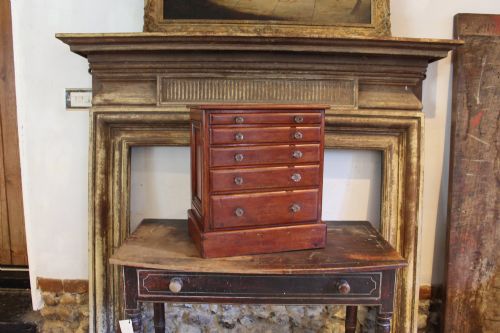


Miniature Cupboard Unit
A miniature cupboard unit brings the scale of domestic storage down to the tabletop, offering compact craftsmanship for small collections.
Miniature Cupboard Unit
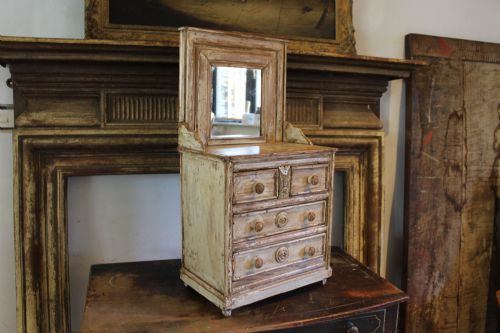
A miniature cupboard unit encompasses small-scale storage forms including apprentice chests of drawers, collector chests, and table cabinets. These pieces serve as intimate display items or practical tabletop storage for small valuables.
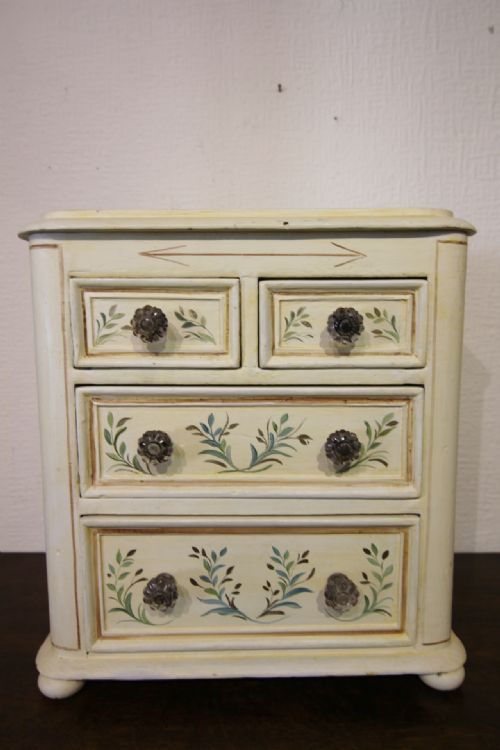
The selections span the nineteenth century, Victorian, and Edwardian eras, alongside pieces dated around 1880, 1900, and 1920. Regional expressions range from French Provincial and Gustavian to Anglo-Indian and Japanese Meiji designs.
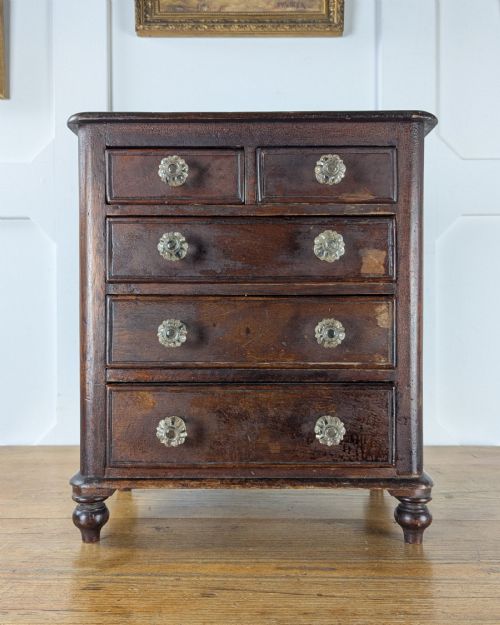
Buyers most frequently encounter apprentice chests of drawers and tabletop cabinets constructed during the Victorian period. These items demonstrate the same architectural proportions and detailing found in full-size furniture of the era.
How they were made
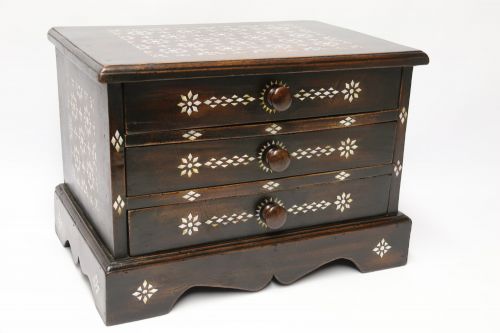
Construction relies on traditional timbers such as mahogany, walnut, pine, and deal, frequently paired with hardwood for durability and finer grain work. Many examples incorporate decorative elements like inlaid surfaces and paint finishes.
Metal components introduce functional contrast, utilising brass for pulls, hinges, and escutcheons, alongside bronze animal decoration found on Japanese Meiji period examples. Turned feet provide stable elevation for chests of drawers and tabletop cabinets.
Some miniature chests come complete with tiny turned feet just waiting to march off the tabletop.
What varies in quality
The refinement of joinery and timber selection defines the standard of a piece, distinguishing utilitarian storage from meticulous decorative work. Surfaces featuring intricate inlay or careful paint application reflect greater artisan effort.
Hardware integration and proportion affect overall execution, where well-fitted brass handles and balanced drawer arrangements indicate superior craftsmanship. The inclusion of specialised elements like bronze animal decoration adds distinct character to specific regional styles.
The Miniature Cupboard Unit Glossary
- Apprentice chest
- A small-scale chest of drawers traditionally made by a woodworker to demonstrate skill for guild admission. These pieces replicate full-size furniture in miniature detail.
- Collector chest
- A specialised tabletop cabinet designed to house small specimens, coins, or curiosities. They often feature multiple shallow drawers.
- Anglo-Indian
- A style of furniture produced in India during the British colonial period, combining British forms with traditional Indian carving and inlay techniques.
- Gustavian
- The Swedish interpretation of neoclassical design, characterised by restrained ornamentation and pale painted finishes. This style appears on miniature dressers.
Miniature Cupboard Unit: Frequently Asked Questions
What were miniature cupboard units used for?
These small pieces served various practical functions in domestic settings, from storing jewellery and keepsakes to housing specialised collections of coins and natural specimens. Makers also constructed them as trade samples or demonstration pieces to showcase woodworking skills to prospective clients.
Today, they function primarily as decorative tabletop storage or focal points for small collections, fitting easily onto desks, sideboards, and shelves where full-scale furniture cannot go.
How do I date a miniature cupboard unit?
Dating relies on observing construction methods, timber choices, and stylistic markers consistent with specific periods. Pieces from the Victorian era often feature turned feet and mahogany or walnut construction, while items from around 1900 might utilise stained deal.
Regional styles like Gustavian or Japanese Meiji introduce distinct aesthetic cues that help narrow down the origin and production era. Comparing the hardware, such as brass pulls, with known period manufacturing techniques also assists in verification.
Where should I place a table cabinet at home?
Table cabinets and small chests suit spaces that require both functional storage and visual interest on a modest scale. Placing them on a sturdy desk, chest of drawers, or entryway console allows the fine details of the timber and hardware to be appreciated at close range.
Direct sunlight and fluctuating moisture levels should be avoided to protect antique wood, painted finishes, and delicate brass or bronze elements from unnecessary wear.
How do I tell different regional styles apart?
Regional variations reveal themselves through surface treatment, decorative motifs, and timber selection. French Provincial and Gustavian examples favour lighter painted finishes and understated neoclassical lines, whereas Anglo-Indian pieces frequently display rich inlaid hardwoods.
Japanese Meiji items are often distinguished by specific decorative elements such as bronze animal decorations applied to hardwood surfaces. Observing these distinct traits clarifies the origin and cultural context of each piece.