

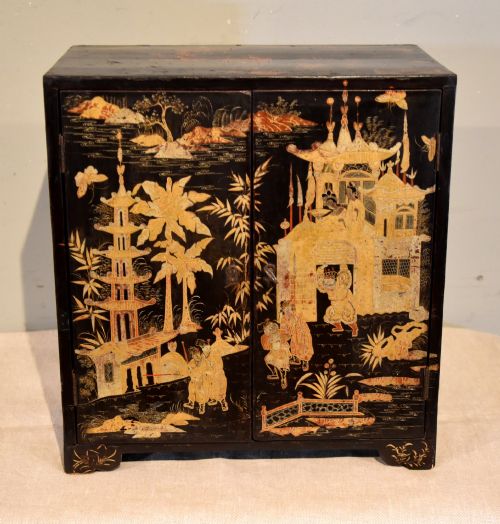
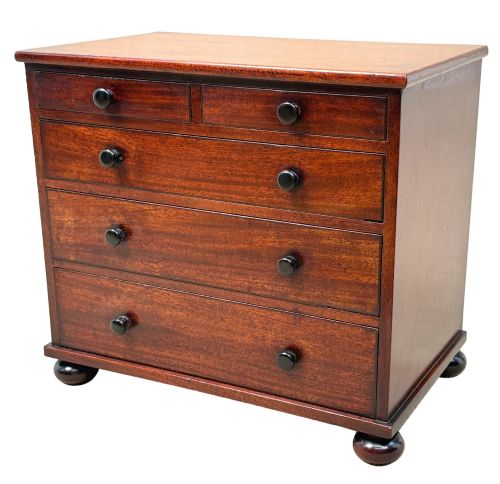
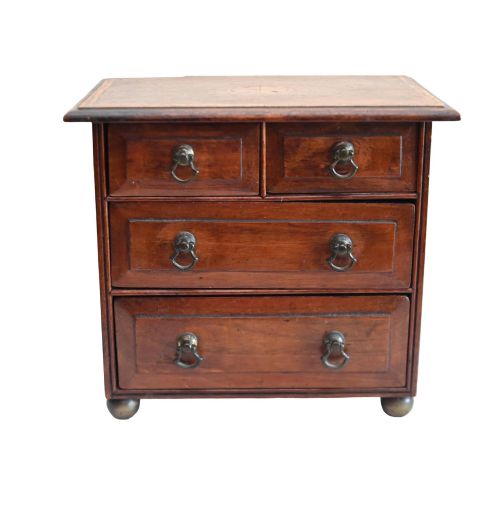
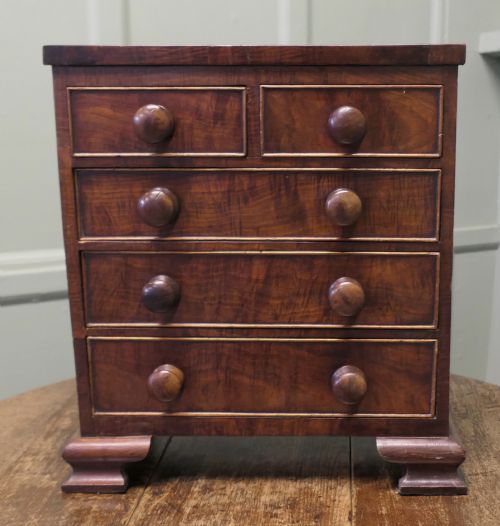






Mini Desk Cabinet
A mini desk cabinet offers small-scale storage crafted with the carpentry of full-sized furniture.
Mini Desk Cabinet
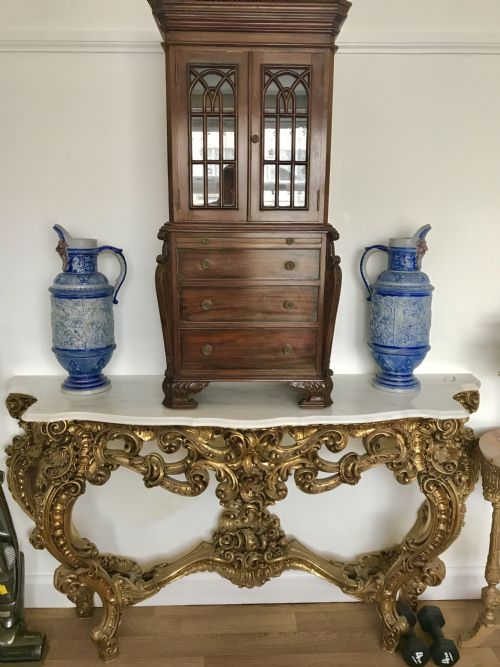
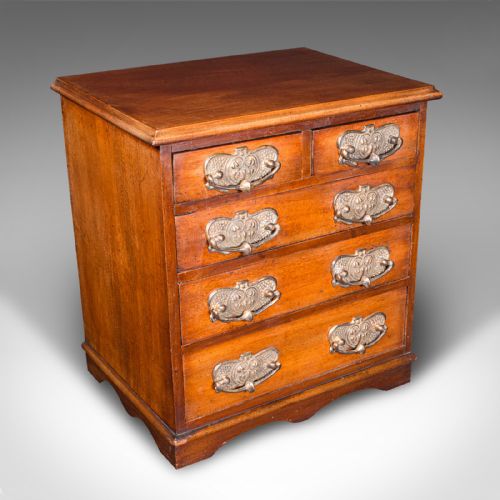
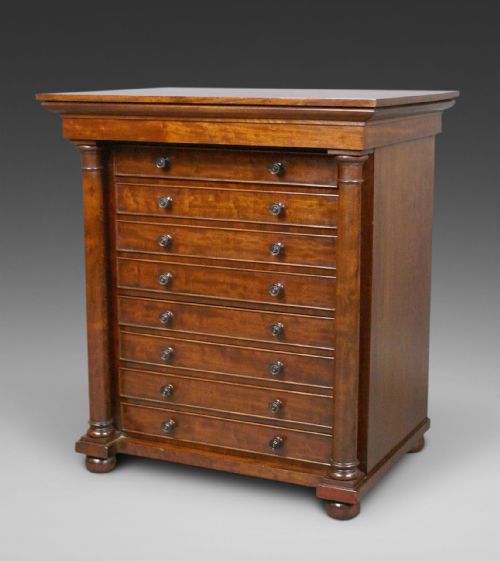
A mini desk cabinet covers miniature chests of drawers, table cabinets, bureau bookcases, and specimen cases built to sit upon a desk or tabletop. These small pieces replicate the forms of larger furniture, including Georgian and Victorian chests, secretaire cabinets, and bankers' drawers.
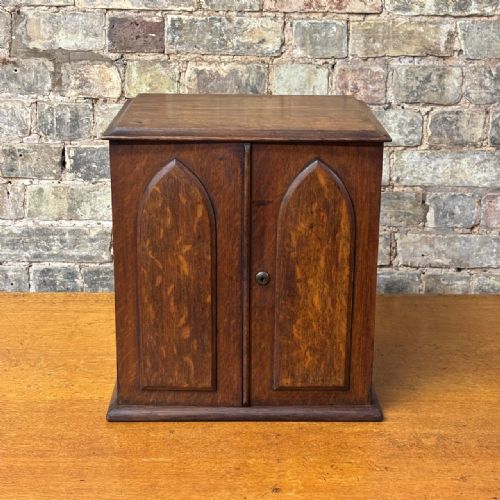
The selections span the eighteenth, nineteenth, and early twentieth centuries, alongside specific revivals like William and Mary and Gothic styles. You will find small chests, tabletop cabinets with panel doors, and reduced-scale bookcases designed for display or desktop organisation.
How they were made
Cabinetmakers constructed these miniature pieces using solid timbers such as mahogany and oak, frequently incorporating boxwood stringing or brass drop handles. Surfaces received traditional finishes including French polish, while structural joinery mirrored that of full-scale furniture.
Carved details appear on specific styles, such as Gothic Revival panels or Edwardian soft wood mouldings. Glass doors and copper fittings also feature on specialised collectors' cabinets and desktop specimen cases.
Mini Desk Cabinet Retail Price Guide 2026
Typical asking prices for mini desk cabinet among the pieces listed under this phrase on Sellingantiques today, from the lower quarter to the upper quarter. They describe what is for sale here now, not the wider market.
What varies in quality
Quality rests upon the fidelity of the miniature scale and the crispness of the cabinetwork, distinguishing fine apprentice pieces from simpler utility boxes. Fine examples display precise dovetailing, matched timber grains, and original brass hardware.
Proportion and execution define the better specimens, where miniature drawers run smoothly and decorative elements like carved panels or classical pediments retain sharp definition.
The Mini Desk Cabinet Glossary
- Apprentice piece
- A small-scale item of furniture created by a craftsman to demonstrate mastery of a trade. These pieces often replicate full-size furniture types in exact detail.
- Specimen case
- A small cabinet or chest fitted with multiple shallow drawers intended for holding natural history samples or small collectibles. They frequently feature glass panels or tightly fitted dust-proof drawers.
- Bureau bookcase
- A writing cabinet featuring a sloping fall-front desk combined with an upper shelving section. Miniature versions replicate this complex dual-purpose form for the tabletop.
- French polish
- A shellac finish applied in numerous thin layers using a rubbing pad to produce a high-gloss surface. This technique highlights the grain of timbers like mahogany.
Mini Desk Cabinet: Frequently Asked Questions
What is a mini desk cabinet used for?
These small cabinets serve to store trinkets, letters, and small collections upon a tabletop. Their compact dimensions allow them to function as desktop organisers.
Historically, they provided secure storage for precious items or served as demonstration pieces for craftsmen. Today, they remain popular for practical desktop use and decorative display.
How do I date a mini desk cabinet?
Dating relies on identifying the prevailing timber choices, hardware styles, and construction methods of particular periods. Eighteenth-century pieces typically show different joinery techniques compared to Edwardian or Victorian examples.
Stylistic revivals also provide clues, as nineteenth-century pieces often emulate earlier Georgian or William and Mary designs. Examining the interior linings and drawer construction helps confirm the era.
Are apprentice pieces different from other miniature furniture?
Apprentice pieces represent formal submissions by trainees seeking mastery status within a guild. These items demand exceptional skill to replicate full-scale furniture accurately at a reduced size.
Other miniatures were produced as salesman samples or decorative novelties for the domestic market. Both categories share similar small proportions but differ in their original purpose.
How do I care for a mahogany table cabinet?
Keep the wood away from direct sunlight and heat sources to prevent the timber from splitting or warping. Dust the surface regularly with a soft, dry cloth.
Avoid using silicone-based polishes that can damage traditional finishes like French polish. Maintaining a stable room humidity preserves both the wood and the brass fittings.