

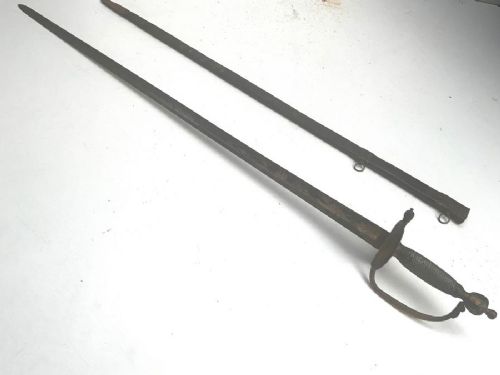
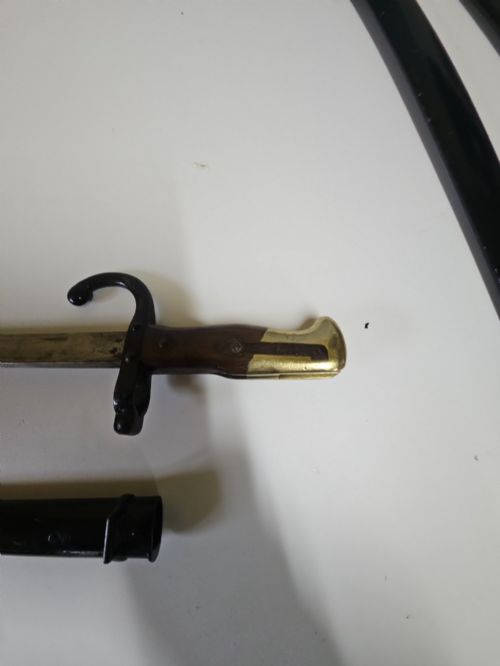


Military Sidearm
A military sidearm represents the personal firearm or edged weapon carried by troops in service, combining robust utility with period craftsmanship.
Military Sidearm
A military sidearm encompasses antique firearms, swords, edged weapons, bayonets, daggers, and dirks originating primarily from the Georgian and Victorian periods. These pieces include flintlock and percussion pistols alongside spadroons and naval daggers designed for active service use.
The selections span British, American, French, and Belgian issues, reflecting the varied ordnance utilised during the nineteenth century. Buyers frequently encounter flintlock service pistols, percussion cavalry arms, and martial revolvers originating from distinct military campaigns.
How they were made
Makers utilised forged steel and iron for barrels, mechanisms, and blades, ensuring durability under harsh field conditions. Wood stocks, particularly walnut and other hardwoods, provided sturdy grips shaped to fit the hand.
Brass furniture and leather components added structural reinforcement and protection against wear. Metal parts often received blue and gilt finishes on officer models, contrasting with the utilitarian bright steel of standard service arms.
Military Sidearm Retail Price Guide 2026
Typical asking prices for military sidearm among the pieces listed under this phrase on Sellingantiques today, from the lower quarter to the upper quarter. They describe what is for sale here now, not the wider market.
Some nineteenth-century pistols thoughtfully included a foldaway bayonet, ensuring an argument could be settled promptly after the powder ran out.
What varies in quality
The standard of execution depends heavily on whether an arm was produced as a private purchase officer piece or a mass-contract martial issue. Officer sidearms typically display finer engraving, better metal finishing, and superior wood selection.
Preservation of original surface finishes and matching serial numbers greatly influence the standing of an individual piece. Untouched condition with clear proof marks and functional mechanisms distinguishes superior survivals from heavily worn examples.
The Military Sidearm Glossary
- Flintlock
- An ignition mechanism utilising a flint struck against a steel frizzen to create sparks that ignite priming powder. This system dominated military firearms before the development of percussion caps.
- Percussion cap
- A small metal cup containing fulminate of mercury placed on a nipple, struck by the hammer to fire the charge. It replaced the flintlock system during the nineteenth century for greater reliability in damp weather.
- Smoothbore
- A barrel lacking internal rifling, firing spherical lead balls over shorter distances. Most early service pistols and muskets featured smooth bores.
- Spadroon
- A light, straight-bladed cutting and thrusting sword favoured by infantry and naval officers. It combines aspects of a smallsword and a sabre.
- Martial issue
- Equipment produced specifically for official government military contracts rather than private commercial purchase. These arms usually bear military inspection stamps and acceptance marks.
Military Sidearm: Frequently Asked Questions
What is a military sidearm?
A military sidearm refers to the personal weapon, such as a pistol, revolver, sword, or dagger, carried by armed forces personnel for close-range defence.
These pieces range from flintlock sea service pistols to percussion revolvers issued during the nineteenth century.
How do I identify the period of a sidearm?
Dating relies on examining the lock mechanism, such as flintlock versus percussion, alongside any visible proof marks or reigning monarch ciphers.
Stylistic details in the brass furniture and wood stock shaping also point directly to Georgian or Victorian manufacture.
Were these weapons used in combat?
Many sidearms saw active service during major conflicts including the Napoleonic Wars and the American Civil War.
Martial issue marks and regiment stamps often indicate official distribution to troops serving in the field.
How should I care for antique steel and wood?
Preservation requires storing pieces in a stable, dry environment to prevent moisture damage to the iron and steel components.
Applying light museum-grade wax or oil protects the metal surfaces and maintains the condition of the original hardwood stocks.