
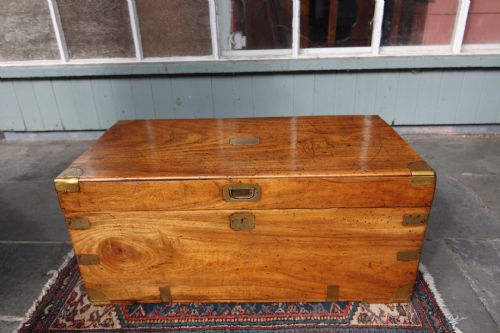
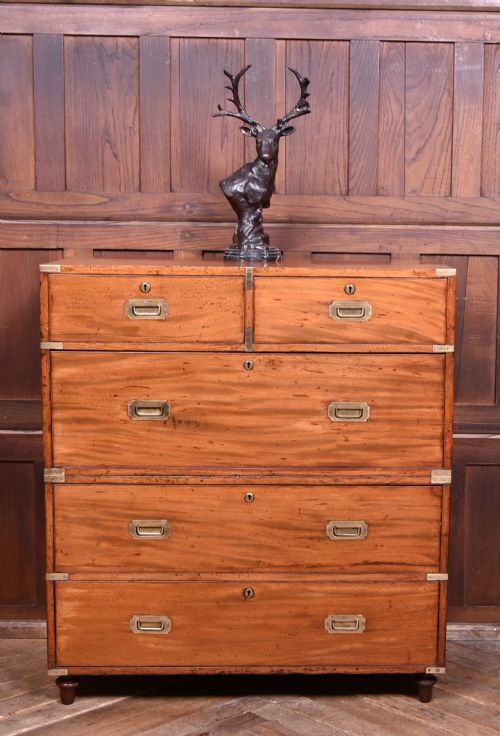
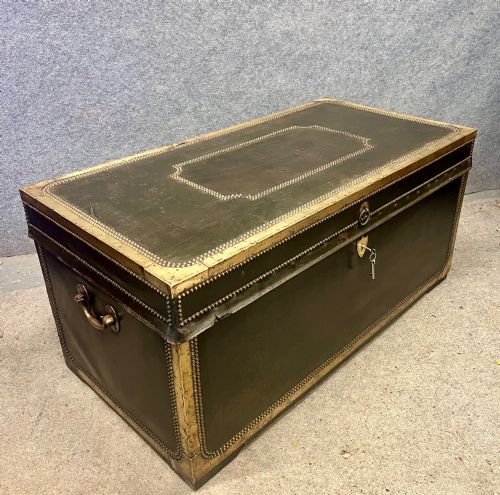
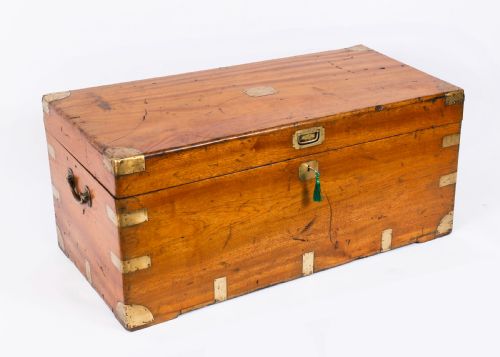


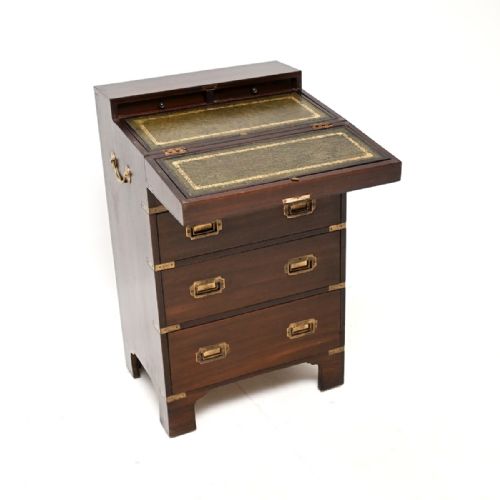

Military Officer Campaign Chest
A military officer campaign chest is a portable, two-part piece built for travel, offering sturdy timber and brass reinforcement for those who need enduring storage.
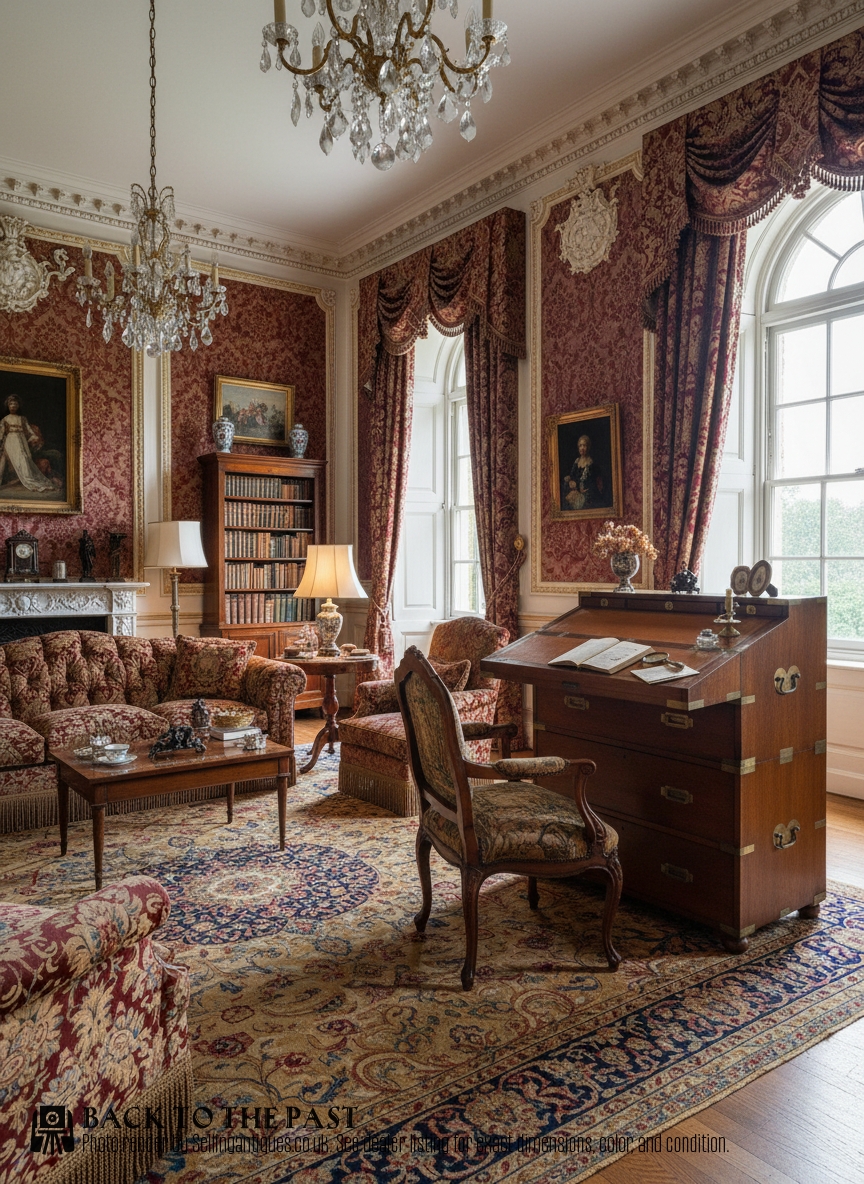
Military Officer Campaign Chest
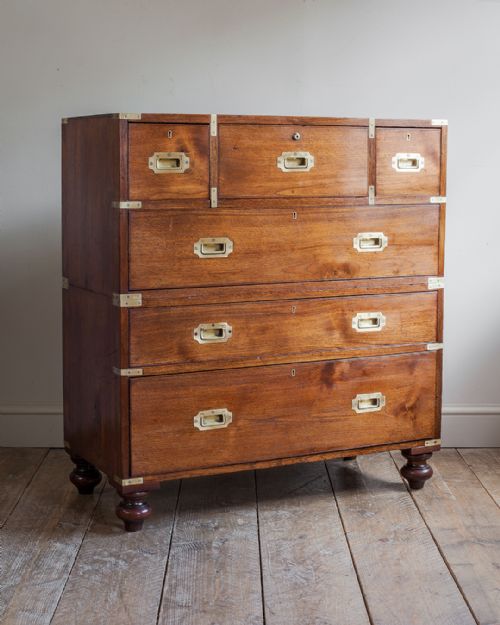
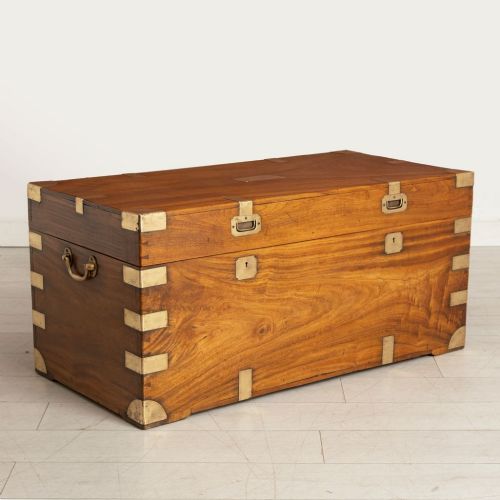
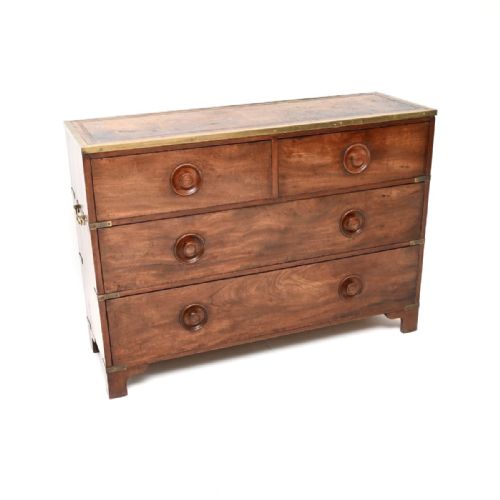
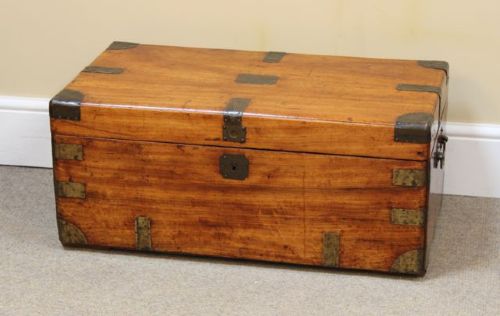
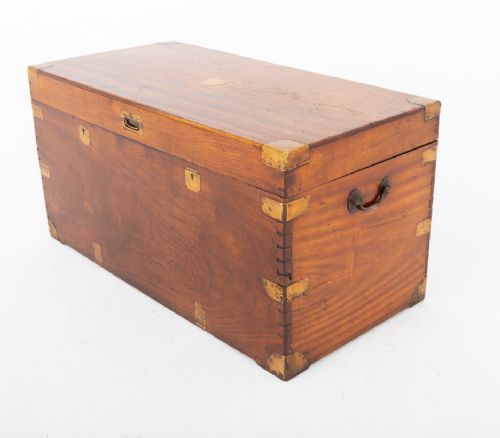
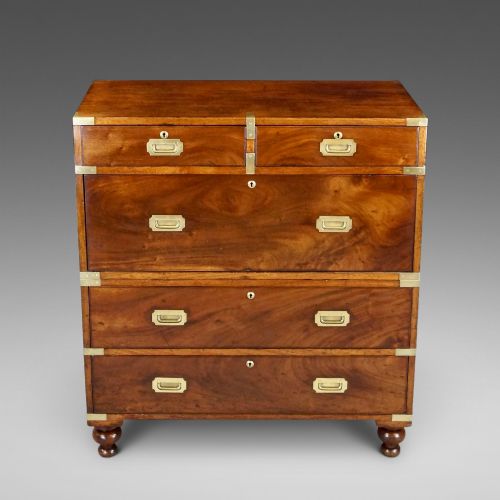
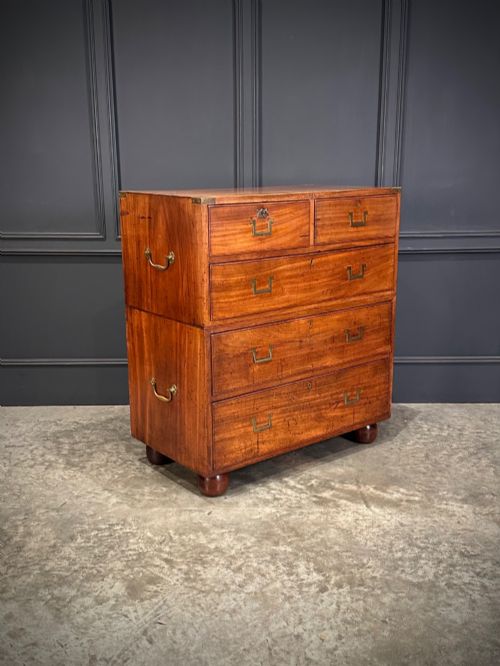
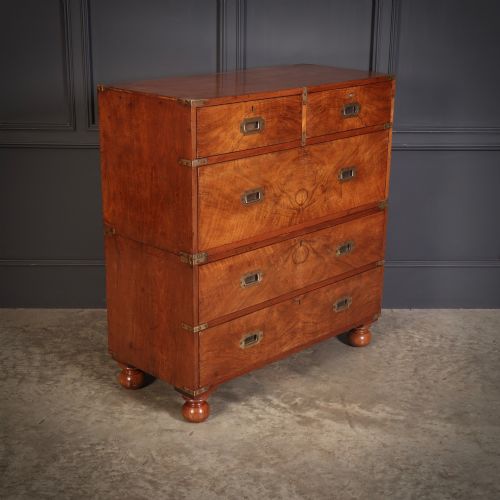
A military officer campaign chest is designed to dismantle into two or more stacking sections for straightforward transport during military deployment or colonial travel. These chests are primarily encountered in forms such as chests of drawers, secretaire chests, and trunks dating from the Regency and Victorian periods.
The prevailing examples on this page are constructed from dense timbers like mahogany, teak, and camphor wood, often reinforced with brass corners and strapwork. Many incorporate recessed brass handles and flush drawer pulls to prevent snagging during transit.
Beyond standard drawer configurations, variations include bureau chests, dressing chests with writing slopes, and desktop storage variants. These pieces reflect the functional demands of officers stationed overseas who required secure storage for personal documents and attire.
Materials and construction
Constructed predominantly from durable hardwoods such as mahogany, teak, and camphor wood, these chests were built to withstand the rigours of long-distance travel and changing climates. Camphor wood was frequently utilised for its insect-repelling properties, protecting contents from pests in tropical postings.
Brass fittings, including corner brackets, binding strips, and flush handles, were screwed into the timber to reinforce the structural joints and protect vulnerable edges from impact. These metal elements were typically countersunk into the wood to maintain a smooth exterior profile.
The standard architecture relies on a sturdy two-part carcase joined by internal pins or hooks, allowing the upper and lower sections to separate easily. Drawers are built with tight tolerances, often featuring secret compartments or fold-down writing surfaces in secretaire variations.
Listings feature woods including mahogany, camphor wood, teak, and burr walnut, alongside brass and leather elements.
Variations in quality
Quality in a military officer campaign chest rests on the selection of timber and the precision of its brass hardware. Superior examples display dense, well-figured grains in woods like burr walnut or select mahogany, matched with heavy cast brass rather than thin plate.
The integration of the hardware dictates the standard of craftsmanship, with top-tier pieces showing perfectly flush brass fittings and tight, unwarped drawer joints. Finer workshops ensured that even concealed elements, such as internal dust boards and secondary timbers, received the same careful attention as the exterior facades.
Maker provenance also separates standard output from exceptional pieces, with signed examples bearing the stamps of established firms commanding greater interest. The complexity of the interior layout, such as fitted writing drawers or integrated secretaire compartments, further distinguishes higher-grade work.
S. W. Silver & Co·Ross & Co·Army & Navy·Arthur Foley & Son
The Military Officer Campaign Chest Glossary
- Secretaire chest
- A chest of drawers featuring a central fitted fall-front writing drawer that conceals small compartments and pigeonholes. This hybrid form allowed officers to manage correspondence and paperwork in the field.
- Brass bound
- The application of brass straps, corners, and plates across the exterior edges and surfaces of a chest. This technique protected the timber from heavy handling and structural strain during transit.
- Two-part chest
- A piece constructed as two separate stacking cabinet sections that lock together for travel. This division reduced the weight and bulk of individual loads.
- Flush handle
- A recessed metal handle set into the face of a drawer or door so it does not protrude. This design prevented snags when packing or moving trunks in tight spaces.
- Camphor wood
- An aromatic hardwood native to Asia, prized for its distinct scent and resistance to insects. It was widely used for campaign trunks and chests destined for colonial service.
Military Officer Campaign Chest: Frequently Asked Questions
Why do these chests separate into two parts?
The two-part construction allowed officers and transport crews to divide heavy loads into manageable pieces for packing on mules, wagons, or ships.
Each section locks securely onto the other using internal brass pins or corner brackets once reassembled at a destination.
How should I care for camphor wood?
Camphor wood benefits from minimal polishing and occasional gentle dusting to preserve the natural aromatic oils within the timber.
Keep the wood away from direct heat sources and strong sunlight to prevent the surface from drying out or splitting.
What is a secretaire drawer?
A secretaire drawer is a pull-out drawer with a hinged front that folds down to reveal a writing surface and small pigeonholes.
This provided officers with a compact desk space for writing letters and managing official documents while on campaign.
How do I identify a Victorian piece?
Victorian examples generally feature darker mahogany or teak timbers, standardised brass hardware, and machine-cut dovetails depending on the decade of manufacture.
Many also carry maker stamps on the drawer tops or brass hardware edges from firms operating during the nineteenth century.