
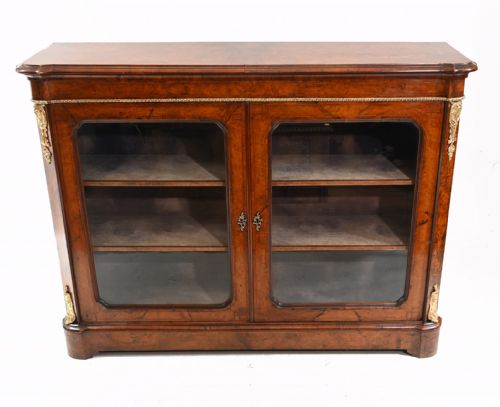


Mid Victorian Walnut Sideboard
A mid victorian walnut sideboard brings rich burr timber and refined nineteenth-century craft into a room, offering both display space and deep storage.
Mid Victorian Walnut Sideboard
A mid victorian walnut sideboard encompasses varied forms including credenzas, pier cabinets, and buffets originating from the nineteenth century. These items typically date from around 1850 through to 1860, emerging during the Victorian and mid-Victorian periods. Buyers encounter serpentine fronts, mirror backs, and display cabinets designed to anchor a formal interior.
The credenza dominates this selection, often featuring figured burr walnut veneers paired with glass doors and internal shelving. Alongside credenzas, specific examples include marble-topped variants and fitted writing drawers. Each object reflects the heavy Victorian demand for sophisticated domestic furniture that combines utility with decorative presence.
How they were made
Cabinetmakers utilised walnut and burr walnut veneers over secondary timbers, selecting pieces with high visual movement for exterior surfaces. Ormolu mounts in cast brass provided gilded decorative accents along the borders, columns, and feet. Intricate marquetry inlay added contrasting linear detail, frequently incorporating lighter satinwood elements.
Interiors often incorporated fitted components such as secretaire drawers and adjustable shelving behind glazed or solid doors. Heavy white marble tops appeared on specific credenzas, providing a durable and cool horizontal surface. Glass panels created display space for porcelain and silver, while mirrored backs amplified light within the room.
Current listings demonstrate a concentration of mid-nineteenth-century credenzas utilising burr walnut veneers, ormolu mounts, and white marble tops.
What varies in quality
The distinction between standard and superior pieces rests upon the selection of timber and the precision of decorative execution. Finely figured burr walnut with symmetrical grain patterns marks out the upper tier of production. Dense ormolu casting and crisp hand-carved serpentine mouldings indicate a higher grade of workshop output.
Internal construction details, such as solid mahogany drawer linings and intact original marble slabs, separate superior examples from more utilitarian items. The complexity of the inlay work and the presence of specialised internal fittings like secretaire drawers elevate the standing of an individual sideboard.
The Mid Victorian Walnut Sideboard Glossary
- Credenza
- A low cabinet, frequently enclosed by glass doors and flanked by curved display cupboards, popular in the mid-nineteenth century. These units often stand on plinth bases and feature extensive ormolu mounts.
- Burr Walnut
- A distinct wood cut from the gnarled growths of walnut trees, yielding complex swirling grain patterns. Cabinetmakers prized this material for veneering primary display surfaces.
- Ormolu
- Gilded bronze or brass applied as decorative mounts and trims on nineteenth-century furniture. The technique creates a bright metallic contrast against dark wood veneers.
- Serpentine Front
- A curved furniture front characterised by a convex centre flanked by concave ends. This contour requires skilled carpentry to shape timber and veneer accurately.
- Secretaire Drawer
- A pull-out drawer fitted with a drop-front writing surface and small internal compartments. It conceals a compact desk within the body of a sideboard or credenza.
Mid Victorian Walnut Sideboard: Frequently Asked Questions
What is a mid victorian walnut sideboard?
A mid victorian walnut sideboard is a formal nineteenth-century storage and display piece constructed from walnut and burr walnut veneers. These items date primarily from the 1850s and 1860s, encompassing credenzas, pier cabinets, and buffets.
Such furniture often incorporates glass doors, mirror backs, marble tops, and cast ormolu mounts. They served as prominent reception room pieces designed to exhibit household status and fine porcelain.
How do I identify a credenza?
A credenza is a low freestanding cabinet featuring a central glazed door flanked by curved side cupboards. They sit close to the floor on plinth bases rather than elevated legs.
Mid-nineteenth-century examples frequently showcase elaborate burr walnut veneers and gilt metal mounts. Many versions also include shaped marble tops and mirrored backs.
Where were these pieces used?
These items stood primarily in nineteenth-century dining rooms, drawing rooms, and formal reception spaces. They functioned as serving surfaces and display areas for valuable tableware.
In modern interiors, they continue to serve similar display and storage functions against main walls. Their decorative fronts make them natural focal points in living areas.
What is burr walnut?
Burr walnut is decorative wood harvested from the wart-like growths on walnut trees. It displays dense, swirling grain configurations that create striking patterns when sliced into thin veneers.
Cabinetmakers applied these veneers to the primary doors and fascias of high-status Victorian furniture. The material catches ambient light and provides rich visual texture.