





Mid Victorian Walnut Desk
A mid victorian walnut desk brings rich timber figures and practical writing surfaces straight into a study.
Mid Victorian Walnut Desk
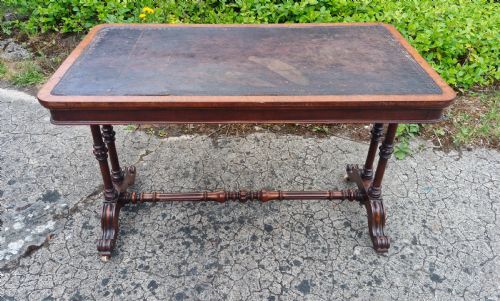
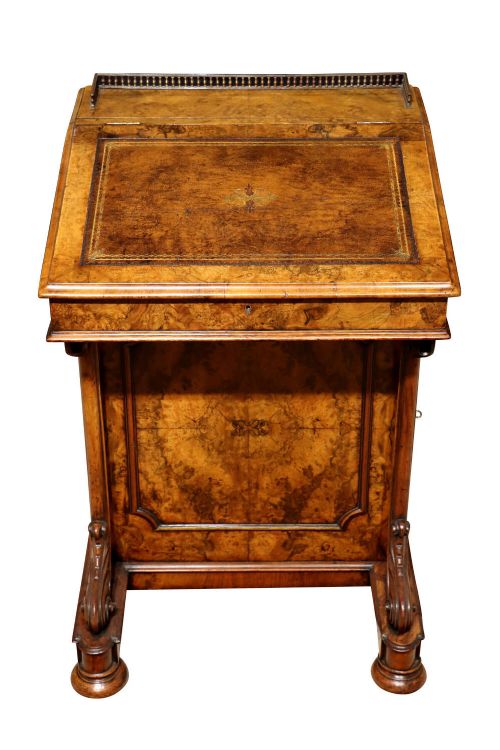
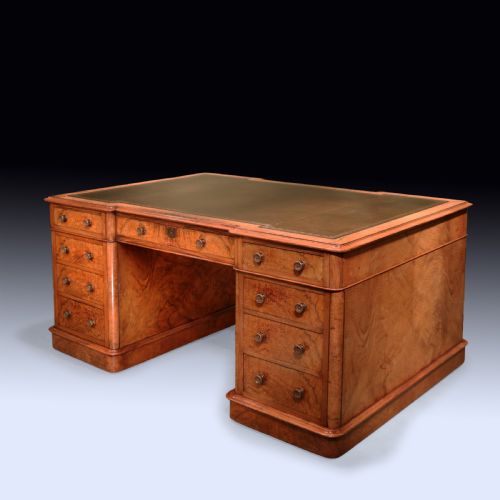
The selections range from freestanding library tables and partners desks to intricate piano-top davenports fitted with satinwood interiors. Walnut remains the defining wood, often chosen in burr or figured varieties for its lively grain patterns.
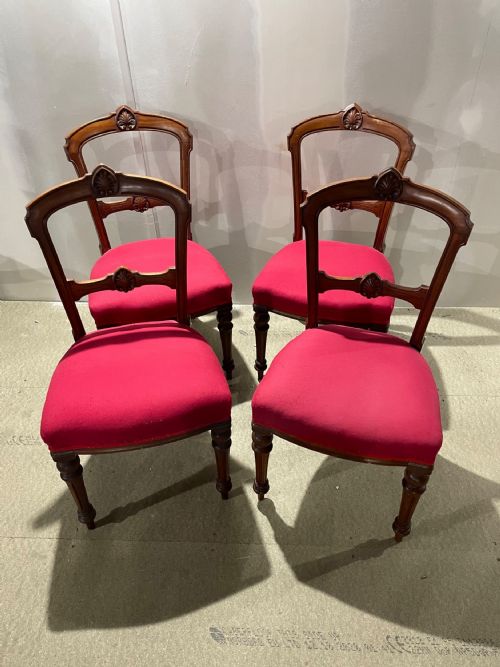
Alongside major writing desks, related pieces like lap writing slopes, card tables, and occasional seating appear in the material record. These forms demonstrate the period's versatility in domestic and library furnishing.
How they were made
Cabinet makers selected burr and figured walnut veneers, applying them over solid secondary timbers to create striking patterned surfaces on desk lids and pedestals. These wooden bodies were frequently enhanced with brass hardware, ormolu mounts, and ceramic details.
Writing surfaces incorporated inset panels of leather or velvet, often tooled with gilt borders to provide a smooth plane for correspondence. Interiors deployed contrasting light woods like satinwood for small drawers and pigeonholes.
Structural joinery supported complex mechanisms, particularly in davenports and piano-front desks where sliding lids or pop-up compartments concealed stationery.
The recorded construction dates span from 1850 through 1870, capturing the core of the nineteenth-century Victorian era.
What varies in quality
The selection of the walnut veneer dictates much of the visual appeal, with tightly figured burr timber marking the upper tier of production. Exhibition quality pieces show exceptional match-boarding and careful grain alignment across complex curves.
Internal secondary fittings reveal the maker's hand, where solid satinwood drawer linings and refined pigeonhole layouts separate standard items from superior commissions. The quality of ormolu mounts and brass fittings also defines the grade of the desk.
Proportion and functional integrity matter greatly, as desks designed for freestanding placement require finished backs and balanced pedestals rather than utilitarian construction.
The Mid Victorian Walnut Desk Glossary
- Burr Walnut
- A specialised wood cut from the abnormal growth of a walnut tree, yielding swirling, knotty grain patterns prized for decorative veneer. Cabinet makers used it extensively on prominent exterior surfaces.
- Davenport Desk
- A compact writing box desk featuring a sloping leather-inset lid above a bank of side drawers. It gained popularity during the nineteenth century for personal correspondence.
- Pedestal Desk
- A heavy writing table supported by two columns of drawers beneath the work surface. These pieces often included double-sided configurations for shared office use.
- Ormolu
- Gilded bronze ornamentation applied to furniture for decorative accent. It appeared frequently on mid-nineteenth-century library tables and writing desks.
- Satinwood
- A pale, lustrous exotic timber utilised for interior drawers and contrasting stringing. It provided a bright visual counterpoint to dark walnut exteriors.
Mid Victorian Walnut Desk: Frequently Asked Questions
How do I identify burr walnut?
Burr walnut displays dense, swirling clusters of knots and eyes rather than straight grain lines. It comes from excrescences on the tree trunk and creates a highly decorative surface pattern.
This timber was sliced thin and laid over stable foundational woods on primary display areas.
Were partners desks common?
Partners desks were built with drawers and cupboards on both long sides, allowing two people to work face-to-face. They served in large libraries, banks, and stately homes.
These freestanding pieces are finished on all sides to maintain a consistent appearance from any angle.
What is a bureau plat?
A bureau plat is a flat-topped writing table styled with cabriole or tapered legs, often featuring gilt-bronze mounts and a leather writing surface. The term derives from French furniture design.
Mid-nineteenth-century makers adapted these continental forms using native walnut timbers.
How do I care for leather desk tops?
Leather writing inserts require gentle cleaning and occasional conditioning to prevent drying and cracking. Avoiding direct sunlight helps preserve the gilt tooling along the borders.
Proper maintenance keeps the original writing surface supple and intact.