


Mid Century Sporting Art
Mid century sporting art captures athletic motion and equestrian energy through paintings, drawings and posters spanning the 1920s to the 1960s.
Mid Century Sporting Art
Mid century sporting art brings together paintings, drawings and posters that record horse racing, showjumping, motor racing, boxing and hounds in motion. These works capture the kinetic energy of sport through the distinct stylistic lenses of the twentieth century.
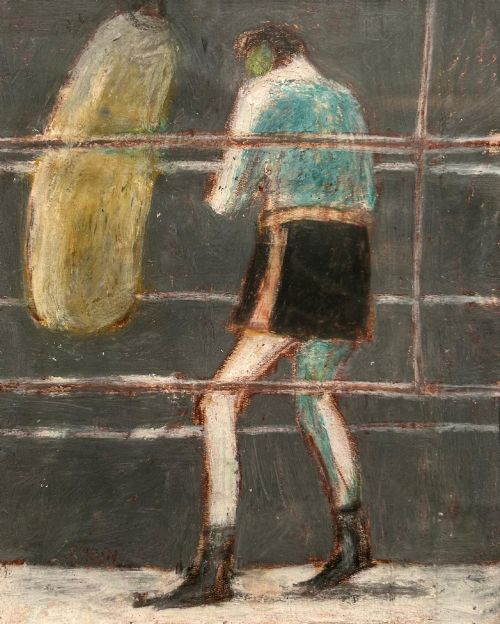
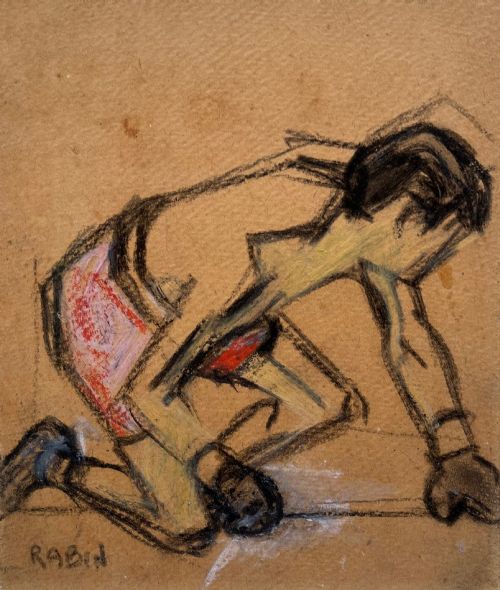
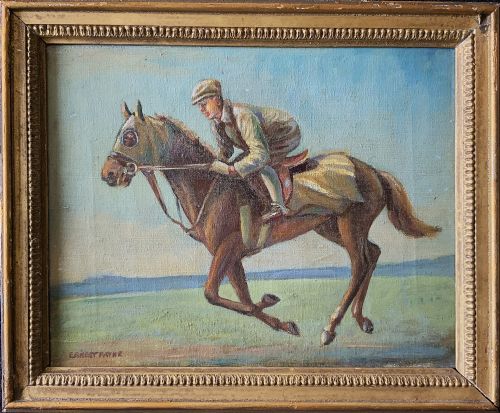
The pieces on this page lean heavily towards equestrian subjects, including racehorses, jockeys and rodeo riders, alongside depictions of motor sport, snooker and field sports. Framed oils, pastels, gouache and pencil drawings dominate the selection.
Originating predominantly from the 1930s through to the 1960s, these artworks showcase the hand of named British artists and international figures working in modernist, realist and naive traditions.
Materials and techniques
Artists working in this field applied oil paint, gouache and pastel directly onto canvas, paper and coloured paper to achieve varied surface textures and tones. Many of these works employ rapid, confident strokes to convey the speed of a racehorse or a racing car.
Pencil and chalk appear frequently in preparatory drawings and character studies of hounds and jockeys, capturing anatomical precision through line. Marquetry panels offer an alternative method, utilising inlaid wood veneers to build up the image of a leaping salmon.
Framing is integral to the survival of these pieces, utilising wood surrounds and glass glazing to protect delicate pastel, gouache and paper works from environmental damage.
Dogs make frequent appearances, ranging from pencil-sketched American foxhounds to large oil portraits of cocker spaniels.
Factors that distinguish quality
Quality rests upon the artist's ability to render anatomical movement and tension convincingly within the subject matter, whether a lunging boxer or a galloping horse. Works by established practitioners demonstrate a superior grasp of perspective and dynamic composition compared to simpler naive pieces.
The choice of medium alters the visual impact, with textured oil paintings offering depth and presence, while works on paper demand precise draftsmanship to succeed. The handling of light and shadow distinguishes a standard decorative record from a compelling artistic interpretation of sport.
James Stroudley·Samuel Rabin·Ernest Payne·John Rattenbury Skeaping·Gertrude Halsband·Michael Lyne·Tom Carr·Molly Maurice Latham·Dion Pears
The Mid Century Sporting Art Glossary
- Gouache
- An opaque water-based paint that dries to a matte finish, often combined with watercolour in mid-century works on paper to create solid blocks of vibrant colour.
- Pastel
- A dry drawing medium composed of powdered pigment and a binder, frequently applied to coloured paper in sporting art to render soft textures and atmospheric lighting.
- Marquetry
- The art of applying small pieces of wood veneer to a structure to form decorative patterns and pictorial scenes, seen here depicting wildlife.
- Triptych
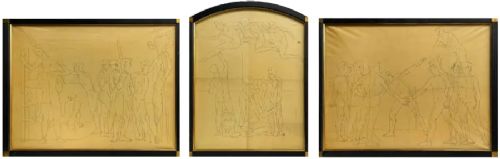
- A work of art divided into three sections or panels, allowing an artist to present a narrative sequence or parallel action across the frame.
- Naive art
- A style of visual art created by a person who lacks formal professional training, often characterised by a childlike simplicity in perspective and proportion.
Mid Century Sporting Art: Frequently Asked Questions
What subjects appear in mid century sporting art?
The selection covers horse racing, showjumping, rodeo riding, motor sports, boxing, snooker and foxhounds in pursuit.
Artists captured these dynamic scenes using various media, reflecting the athletic pursuits popular during the mid-twentieth century.
How should I hang works on paper?
Works executed on paper, pastel or gouache require protective framing under glass to shield the delicate pigments from direct sunlight and environmental moisture.
Positioning these pieces away from intense, direct light sources preserves the vibrancy of the original drawing materials.
What distinguishes an oil painting from a pastel?
Oil paintings utilise pigment suspended in drying oils on canvas or board, offering rich textures and deep colour layering. Pastels rely on dry pigment sticks applied to paper, yielding a softer, more immediate surface texture.
Both mediums were utilised concurrently by artists aiming to capture movement, depending on whether they sought bold impasto or delicate linear precision.
Are these pieces original artworks?
The inventory consists predominantly of original paintings, hand-signed drawings, gouaches and period posters created or published between the 1920s and 1960s.
Each piece reflects the individual hand and technique of the artist or the specific production methods of mid-century print shops.