




Framed Equestrian Illustration
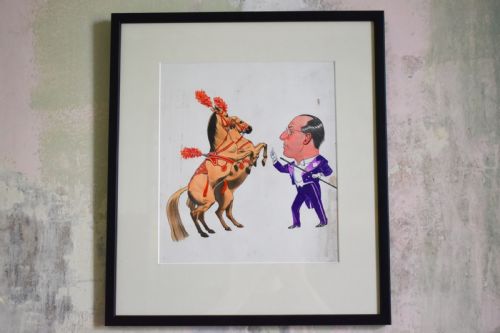
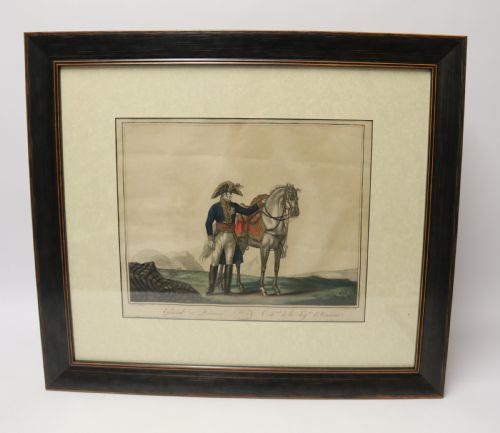
A framed equestrian illustration captures the energy of horses and hounds through ink, watercolour, and chalk preserved behind glass.
Framed Equestrian Illustration
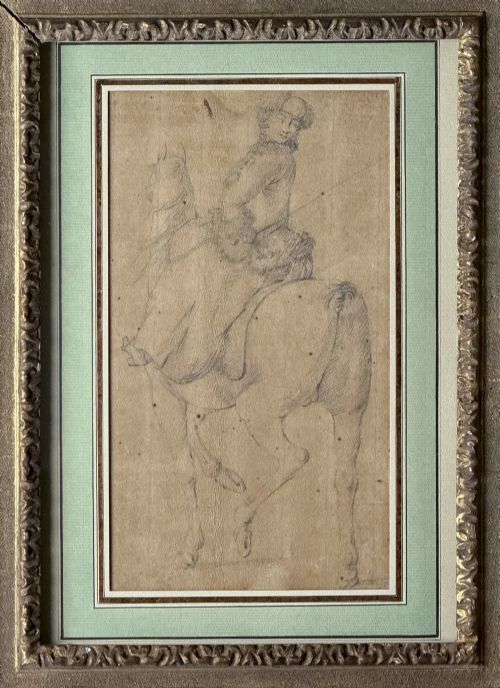
A framed equestrian illustration brings historical sporting scenes and horse studies into domestic interiors, spanning centuries of British and European art. These works range from early eighteenth-century northern European school drawings to twentieth-century military and hunting subjects.
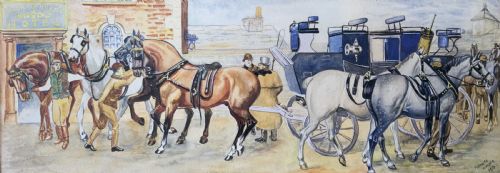
The pieces on this page appear in various forms, including original watercolours, ink drawings, chalk sketches, and hand-coloured prints. Oak frames and glass protect these delicate paper works, which often depict coaching scenes, trotting horses, and racing subjects.
Materials and Technique
Artists executed these works on paper using watercolours, ink, chalk, and charcoal, occasionally heightening the drawings with bodycolour. The resulting images demonstrate traditional draftsmanship applied to animal anatomy and rural pursuits.
Makers housed these fragile illustrations behind glass within wooden frames, predominantly oak and walnut, to shield the paper from environmental damage. This combination of paper supports and protective framing ensures the survival of detailed brushwork and pencil lines.
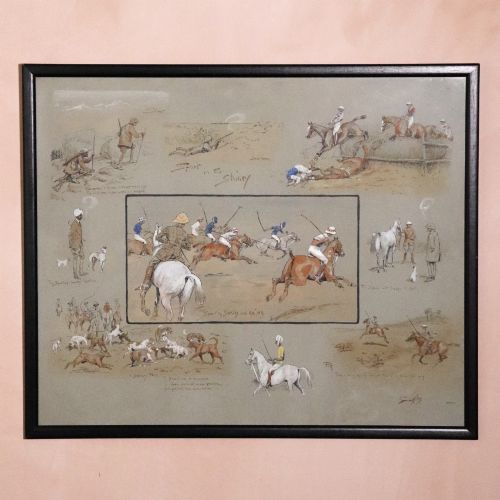
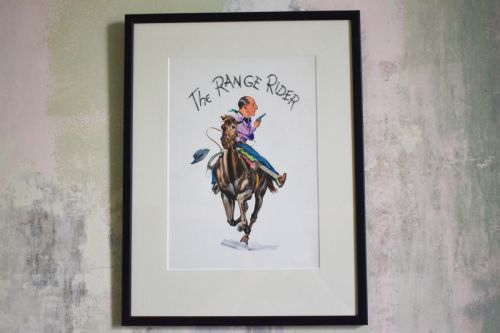
The selection includes Edwardian sporting art, Victorian prints, and early twentieth-century illustrations framed in oak.
Assessing Quality
Quality rests upon the sureness of the draftsmanship and the vitality of the animal depiction, where a practiced hand captures movement and muscle structure accurately. Finished studies by named artists or distinct schools display superior observation compared to generic decorative output.
The condition of the paper and the integrity of the framing contribute significantly to the standing of a piece. Well-preserved watercolours and ink drawings retain their original pigment strength without excessive fading or paper discolouration.
Snaffles·Cecil Charles Windsor Aldin·Michael Lyne·Helena Maguire
The Framed Equestrian Illustration Glossary
- Watercolour
- A paint consisting of a pigment suspended in a water-soluble vehicle. It provides translucent washes of colour on paper supports.
- Chalk
- A dry drawing medium made from earthy minerals, used to create soft lines and tonal shading. Artists often combine chalk with pencil or ink for equestrian studies.
- Framed Print
- An impression transferred from an engraved or lithographic plate, placed behind glass for display. These include hand-coloured historical examples.
- Oak Frame
- A heavy wooden surround constructed from oak timber. It provides structural support and protection for works on paper.
Framed Equestrian Illustration: Frequently Asked Questions
What subjects do these illustrations show?
These works depict horses, hounds, coaching scenes, and military subjects. The imagery reflects historical sporting pursuits and animal studies.
Many pieces capture specific moments in hunting, racing, and military campaigns. The focus remains on equestrian anatomy and rural life.
How should I hang these framed pieces?
Keep framed paper works away from direct sunlight to prevent the watercolours and inks from fading. Stable room temperatures protect the paper and wooden frames from warping.
Ensure wall fixings match the weight of the wood and glass. Hang them at eye level in dry living spaces.
Are these works original art?
The selection includes both unique hand-drawn watercolours and original period prints. Signatures and hand-applied pigments distinguish unique compositions from mass-produced reproductions.
Examination of the paper surface reveals brushstrokes or chalk textures unique to individual artists. Prints from historical series also hold collector interest.
How do I identify the period?
Stylistic details, framing materials, and artist signatures help determine the era of execution. Eighteenth-century northern European works differ noticeably from Edwardian or mid-century illustrations.
Paper characteristics and framing techniques often provide reliable clues to the date of creation. Subject matter styles also shift visibly between the Victorian era and the 1930s.