







Mid Century Modernist Jewellery
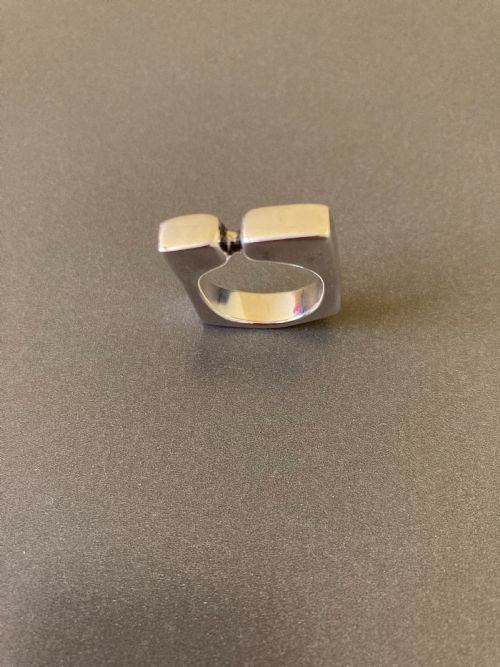
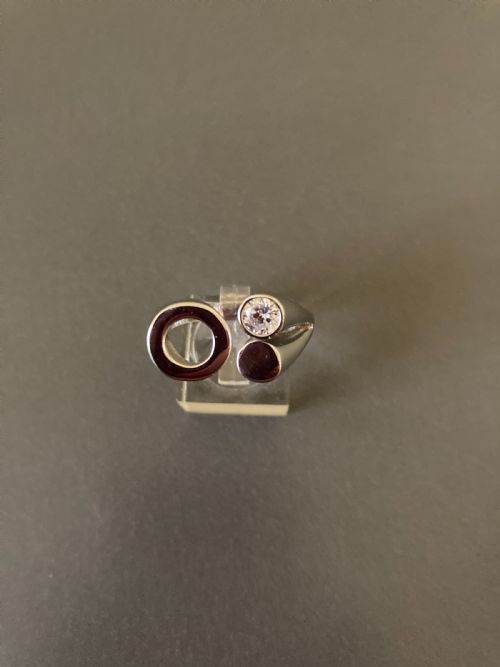
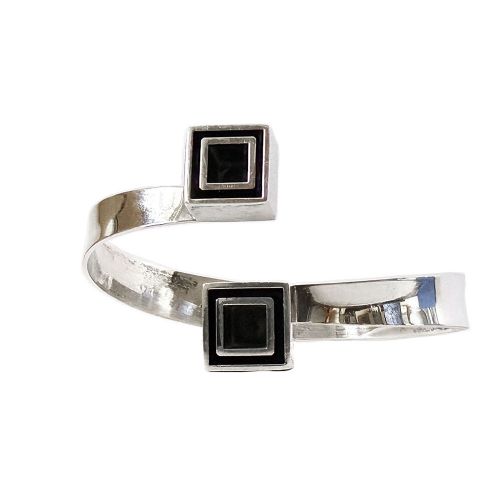
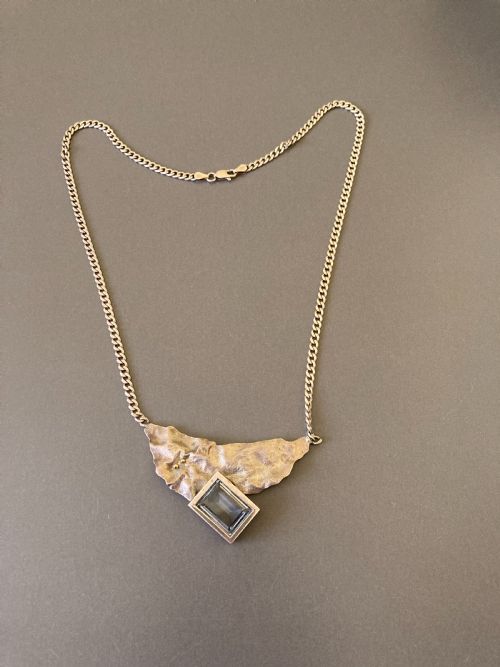
Mid century modernist jewellery pieces combine striking geometric forms with bold metals and gemstones, offering an authentic slice of mid-century design.
Mid Century Modernist Jewellery
Mid century modernist jewellery encompasses striking necklaces, rings, brooches, pendants, and bracelets created during the mid-twentieth century. Pieces on this page trace an aesthetic trajectory across the 1940s, 1950s, and 1960s, extending into later decades.
Scandinavian workshops feature prominently, alongside German, Mexican, Japanese, and Australian examples. Buyers encounter everything from sculptural silver bar brooches to elaborate gold and gemstone rings.
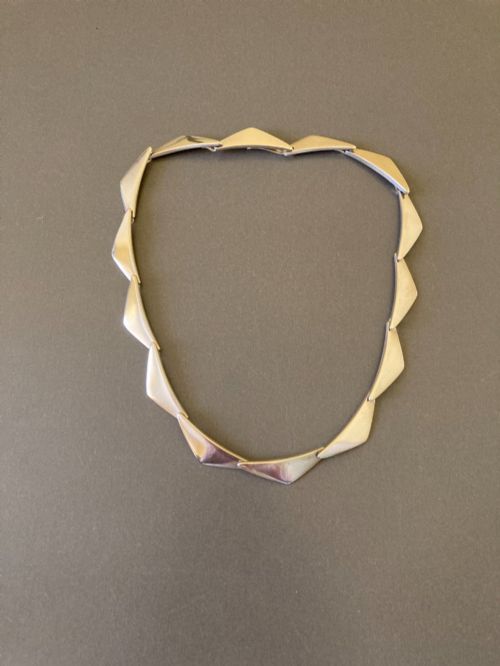
The dominant forms lean toward abstract geometry, clean lines, and architectural structures. These wearable items capture the forward-looking spirit of mid-century design through distinct regional interpretations.
Materials and methods of construction
Makers utilised sterling silver, silver, and gold variants such as 18ct gold, 14ct yellow gold, and 9ct gold. Gold gilt and silver plating also appear across various pendants and necklaces.
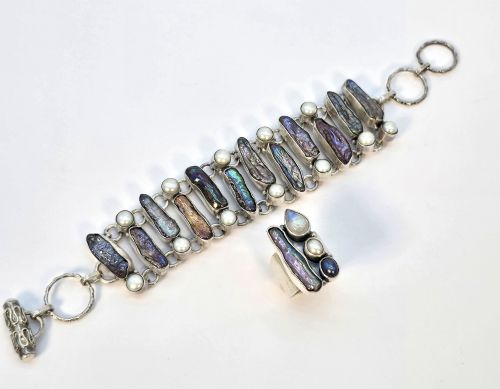
Vibrant colour enters the designs through vitreous enamel work, alongside natural stones including turquoise, amethyst, biwa pearl, blue topaz, opal, coral, rose quartz, rubies, diamonds, and zirconia.
Metalsmiths employed casting, soldering, and wire-forming techniques to construct abstract lattices, torque collars, and square terminals. Enamel was fused to metal surfaces to create rich colour blocks.
Some mid-century rings hide secret rubies within their abstract gold lattices, rewarding anyone who peers closely at the interior.
Distinctions in quality
Quality rests on the precision of the metalwork and the originality of the structural design. Master goldsmiths and silversmiths achieved cleaner junctions, more balanced proportions, and sharper sculptural profiles.
The choice and setting of materials further define the tier of a piece. Secure, flush stone settings and deeply saturated enamels separate standard workshop output from exceptional examples.
Aksel Holmsen·Georg Jensen·G. Hoppe·Randers Silver·Alton·Beto·Andrew Grima·Charles de Temple·David-Andersen
The Mid Century Modernist Jewellery Glossary
- Brooch
- An ornamental piece of jewellery fastened with a hinged pin and catch on the back. These items often showcase prominent enamel work or central gemstones.
- Pendant
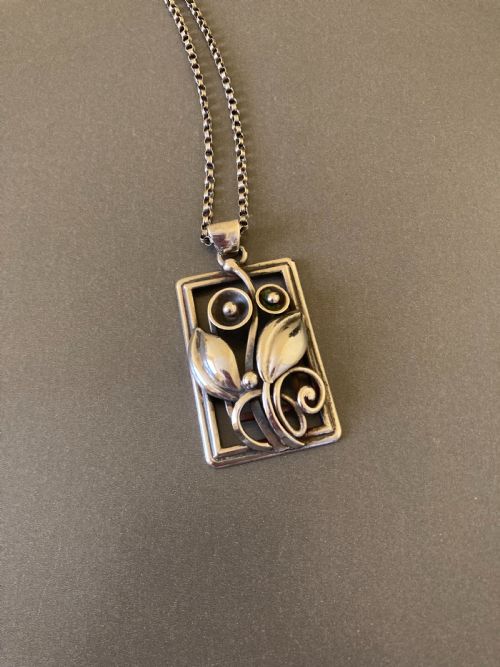
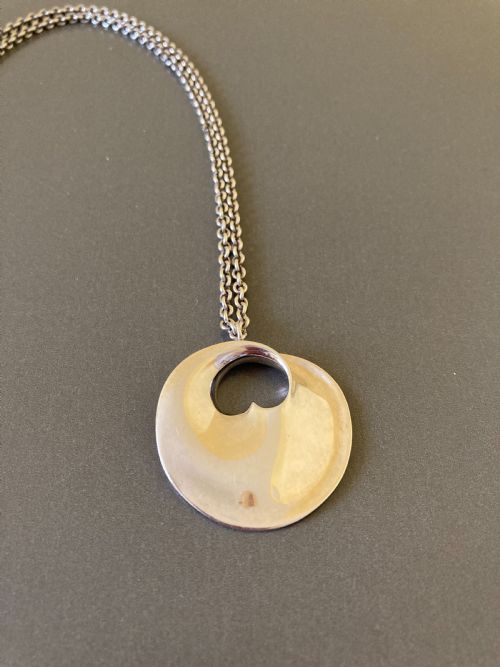
- A loose-hanging piece of jewellery attached to a necklace by a small loop. They frequently feature abstract silver shapes or suspended opal and turquoise stones.
- Torque
- A rigid, circular neck ring that is open at the front. These pieces typically wrap around the throat with fixed terminals.
- Enamel
- A glass-like substance melted onto metal at high temperatures to provide vibrant colour. It appears frequently in Norwegian and Scandinavian designs.
- Biwa pearl
- An elongated freshwater cultured pearl originating from Lake Biwa in Japan. These organic pearls supply asymmetrical texture to mid-century bracelets and rings.
Mid Century Modernist Jewellery: Frequently Asked Questions
What defines mid century modernist jewellery?
These pieces are characterised by abstract forms, clean geometric lines, and a departure from traditional floral motifs. Makers embraced sculptural shapes in silver and gold, often incorporating bold gemstones or vibrant enamel.
Items span necklaces, rings, brooches, and pendants originating from countries including Denmark, Norway, Germany, and Mexico during the mid-twentieth century.
How do I wear a torque necklace?
A torque is a rigid collar that rests directly against the collarbone, typically featuring an open front or striking central pendant. They sit best against solid-coloured fabrics that allow the sculptural metalwork to stand out without visual distraction.
Because these rigid bands maintain their circular shape, slip them gently on and off from the side of the neck rather than bending the metal.
How can I tell Danish designs apart?
Danish mid-century pieces generally rely on unadorned sterling silver, prioritising clean organic curves and tactile metal finishes over heavy gemstone settings. Look for minimalist silhouettes, abstract lattices, and architectural pendant drops.
Many examples from this region incorporate maker marks and silver purity stamps directly onto the reverse of the metalwork.
How do I care for enamel jewellery?
Enamel is essentially coloured glass fused to a metal base, requiring gentle handling to prevent scratching or chipping. Avoid exposing these items to harsh cleaning chemicals, ultrasonic baths, or sudden temperature changes.
Clean enamelled brooches and pendants simply by wiping them with a soft, damp cloth and drying them thoroughly before storage.