



Vintage Modernist Silver Cuff
These vintage modernist silver cuff pieces bring clean architectural lines and striking metalwork straight to the wrist.
Vintage Modernist Silver Cuff
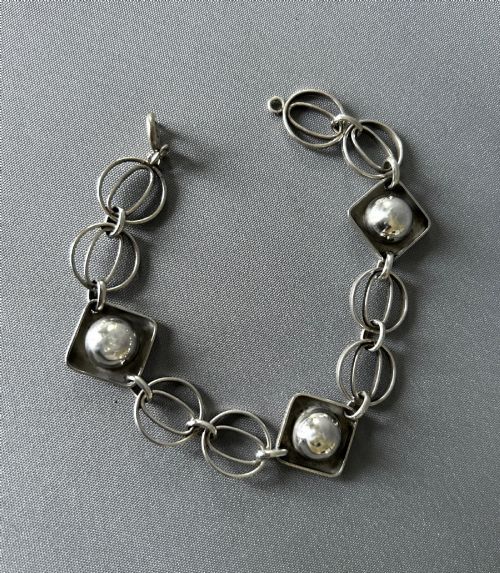
When you search for vintage modernist silver cuff items, you encounter striking mid-century and Art Deco designs spanning several decades. The selection includes heavy bangles, linked bracelets, and smaller items like cufflinks, each showcasing the geometric ethos of the period.
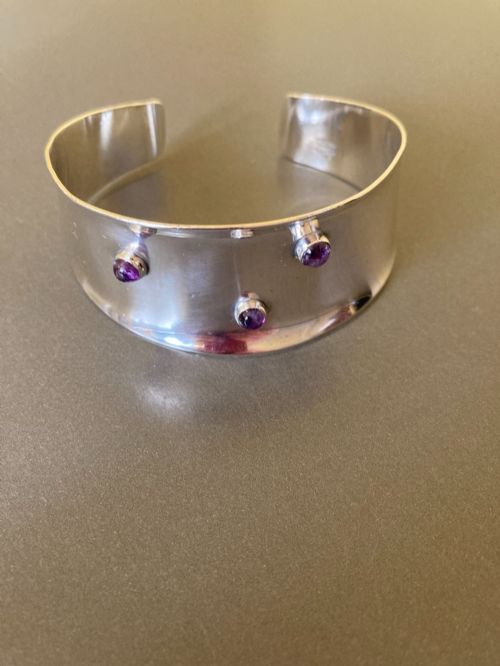
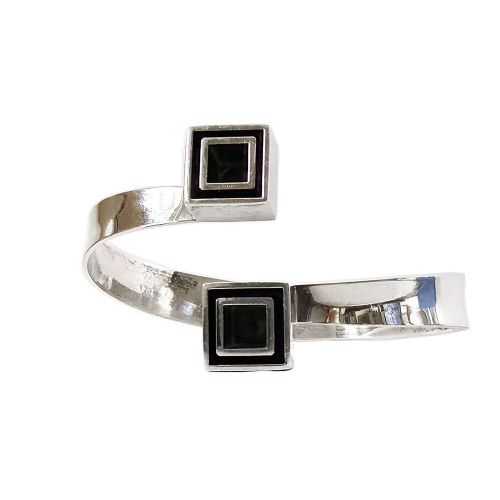
Most examples you meet on this page originate from the 1930s, 1950s, or 1960s, reflecting Scandinavian and European modernist movements. You find forms ranging from simple bands with square terminals to pieces set with cabochon stones or colourful enamel.
Makers such as N E From and Alton represent the fine silversmithing traditions found within these listings. Alongside solid silver and sterling silver creations, you also encounter silver-tone metal and chrome plated metal interpretations.
How they were made
Silversmiths shaped solid silver and sterling silver into bold geometric forms, often incorporating hinged mechanisms or solid wrap-around bands. Techniques relied heavily on clean metal fabrication, smooth polishing, and precise bezel settings to hold feature stones.
Coloured enamel accents and polished cabochon gems like amethyst and amber provide sharp contrast against the bright metal surface. Makers also utilised silver-tone metal and chrome plated metal for particular mid-century production methods.
Vintage Modernist Silver Cuff Retail Price Guide 2026
Typical asking prices for vintage modernist silver cuff among the pieces listed under this phrase on Sellingantiques today, from the lower quarter to the upper quarter. They describe what is for sale here now, not the wider market.
What varies in quality
The distinction between average and exceptional pieces lies in the crispness of the metal folding and the weight of the silver used. Superior items display clean junction lines and secure stone settings that sit flush against the metal.
The presence of clear maker marks, such as those by N E From or Alton, elevates an item's documentary interest. Enamel preservation and the depth of the polish also dictate how successfully a piece retains its original visual impact.
N E From·Alton
The Vintage Modernist Silver Cuff Glossary
- Cabochon
- A gemstone shaped with a smooth, convex upper surface rather than faceted edges. This style highlights the natural colour and inclusions of stones like amethyst and amber.
- Terminal
- The finished end point of an open bangle or cuff. Modernist designs often feature geometric, square, or stylised terminal shapes.
- Sterling silver
- An alloy consisting of pure silver combined with other metals to increase durability. It forms the primary material basis for most quality items in this field.
- Enamel
- A durable coloured substance applied to metal surfaces through high-heat fusing. It creates smooth, glossy fields of colour within modernist geometric designs.
- Mid-century modernist
- A design movement spanning the middle decades of the twentieth century. It prioritises function, clean lines, and abstract geometric forms.
Vintage Modernist Silver Cuff: Frequently Asked Questions
What periods do these pieces date from?
The listings span the 1930s Art Deco era through to the mid-century modernist designs of the 1950s and 1960s.
Each decade brings distinct stylistic traits, moving from geometric enamel work to bold Scandinavian stone-set bangles.
How do I identify a maker?
Makers often stamped their names or initials directly onto the reverse side of the metal band alongside silver purity marks.
Prominent Scandinavian and European silversmiths frequently used distinct monogram signatures.
What materials are commonly used?
Solid silver and sterling silver form the structural core of the finest items in this category.
Secondary materials include polished cabochon amethyst, amber, colourful enamel, and chrome plated metal.
How should I care for vintage silver?
Store pieces in a dry environment away from direct sunlight to protect any embedded stones or enamel work.
Gentle cleaning with a soft cloth preserves the natural patina without removing delicate surface details.