




Mid Century Enamel Jewellery
Mid century enamel jewellery brings together bright metalwork and colourful glass surfaces, mostly from the nineteen-fifties and sixties.
Mid Century Enamel Jewellery
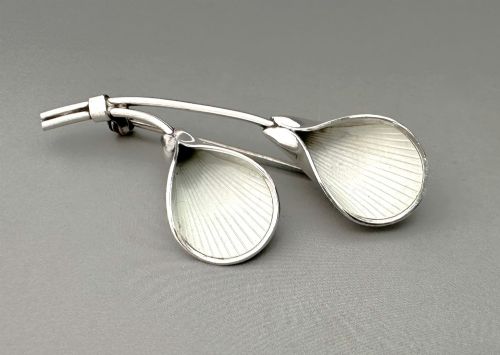
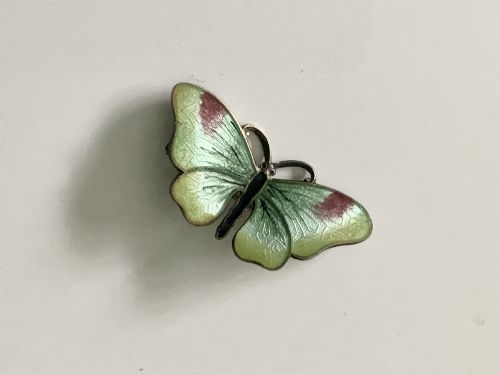
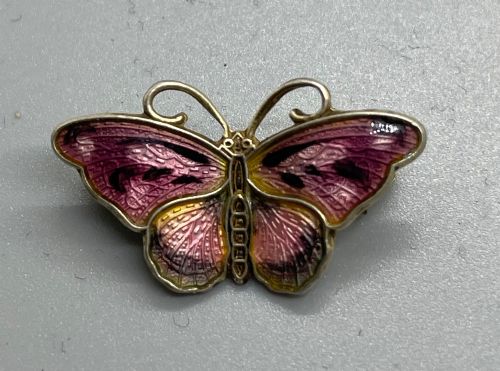
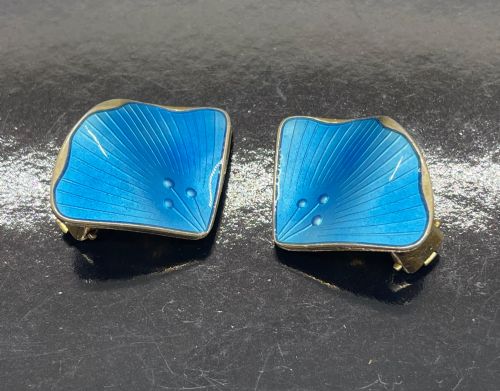
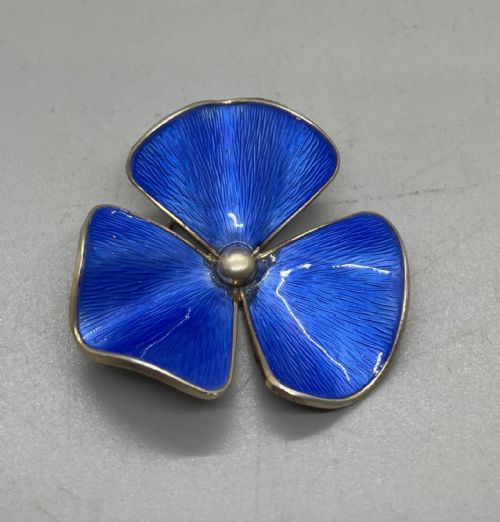
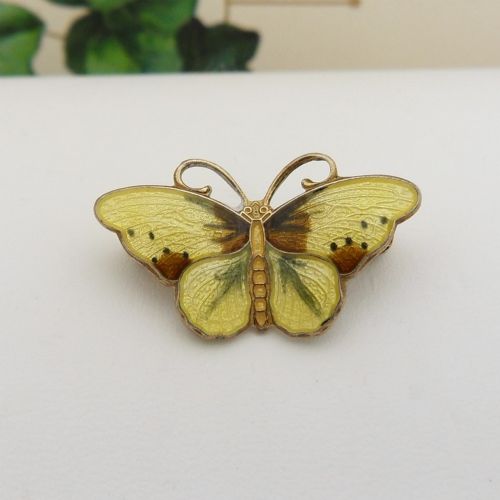
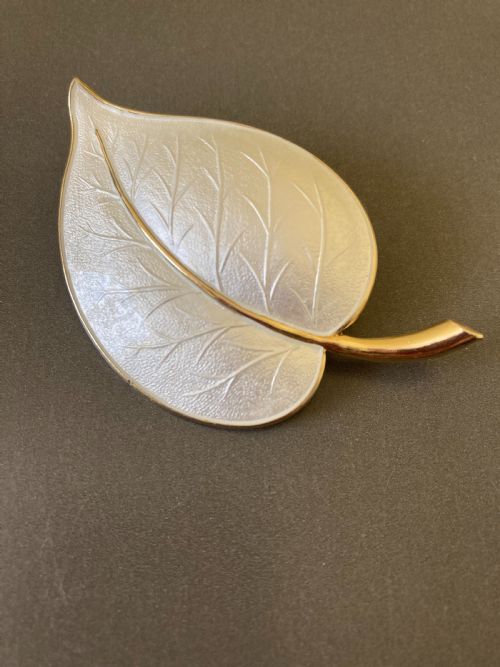
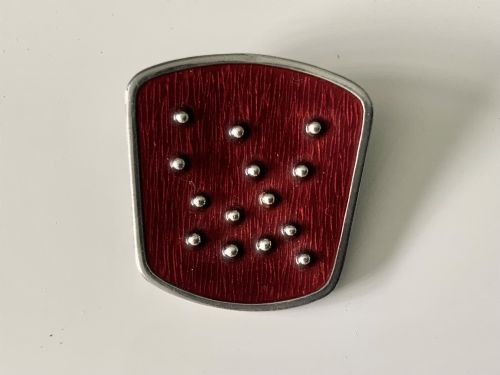
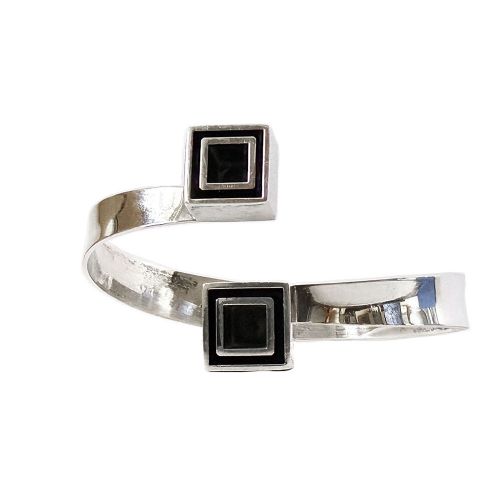
Mid century enamel jewellery encompasses brooches, necklaces, earrings, bracelets and rings produced primarily during the nineteen-fifties and nineteen-sixties. Buyers searching for mid century enamel jewellery will find a strong representation of Scandinavian modern design, particularly from Norway and Denmark. These pieces reflect the prominent design movements of the mid-century period alongside transitional styles drawing on earlier decades.
How they were made
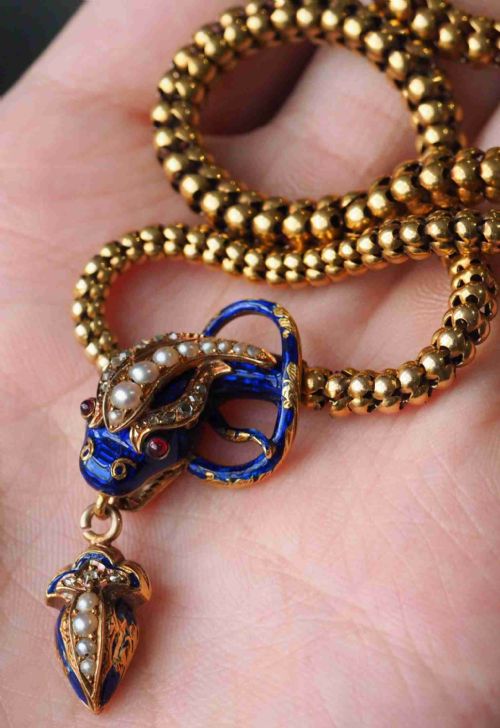
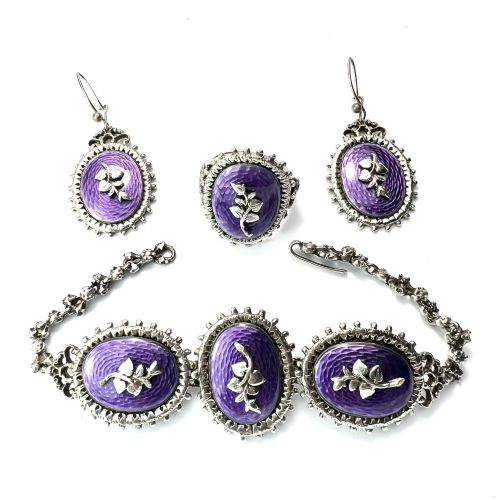
The construction relies heavily on silver and silver gilt bases shaped into brooches, earrings, necklaces, and bracelets. Enamel is applied to the metal surfaces, often utilising guilloche techniques that reveal underlying engraved patterns beneath translucent coloured glass. Filigree wirework also appears, creating delicate linear compartments and floral petals within the metal framework.
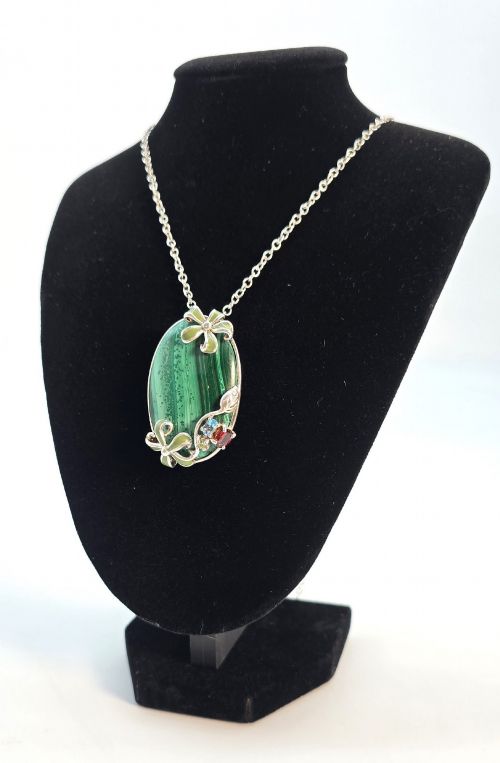
Makers integrated vitreous enamel directly into silver and gold settings, sometimes pairing the coloured glass with diamonds, malachite, or gold vermeil. The fusion of metal and glass requires careful firing to achieve the smooth, glossy surfaces seen across the brooches and pendants.
Materials range from simple silver and enamel to gold gilt, silver vermeil, diamonds, and malachite across various forms.
What varies in quality
The distinction between standard production and finer work rests on the intricacy of the metalwork and the depth of the enamel. Pieces employing guilloche engraving or fine filigree wire demand greater skill from the silversmith than plain metal settings. The precision of the enamel application and the richness of the colour gradients separate simpler items from the best workshop output.
Attribution to known designers or established Scandinavian makers elevates the standing of a piece. The presence of silver gilt or heavier gold content alongside well-preserved vitreous enamel indicates higher manufacturing standards during the mid-century period.
Aksel Holmsen·A H Darby & Son·Hroar Prydz·Harold Arthur Lazarus·David-Andersen
The Mid Century Enamel Jewellery Glossary
- Guilloche
- A decorative technique where a mechanical lathe engraves a precise, intricate pattern into metal beneath translucent enamel. This method creates a shimmering background that catches the light through the coloured glass.
- Vitreous enamel
- A material made by fusing powdered glass to a substrate through firing, resulting in a smooth and durable glass coating. It provides the vivid colours characteristic of these mid-century pieces.
- Silver gilt
- Sterling silver that has been coated with a thin layer of gold, often giving the metal a warm tone. This finish is frequently paired with brightly coloured enamel in Scandinavian designs.
- Filigree
- Delicate jewellery metalwork made with fine wire, often twisted into lace-like patterns and soldered together. It appears frequently in floral and butterfly brooches from this era.
- Torque
- A rigid circular neck ring that opens or lacks a clasp, worn snugly around the neck. Examples in this category incorporate enamel elements as a central pendant feature.
Mid Century Enamel Jewellery: Frequently Asked Questions
How do I care for my enamel jewellery?
Store pieces individually in soft pouches to prevent the enamel surfaces from scratching against other metal items. Clean them gently with a soft cloth and avoid harsh chemical dips or ultrasonic cleaners that can damage the glass and metal.
Keep the jewellery away from prolonged exposure to direct sunlight and moisture to preserve the vibrant colours of the vitreous enamel over time.
How can I identify a Scandinavian piece?
Look for maker marks and silver purity stamps associated with Norwegian and Danish workshops on the reverse of the brooches or earrings. The distinct use of bright guilloche enamel combined with naturalistic floral or butterfly motifs also points toward Scandinavian production.
Many pieces from this region feature specific minimalist or organic forms characteristic of the mid-century modern design movement.
What is silver gilt?
Silver gilt is solid sterling silver that has undergone a process to coat its surface in a thin layer of gold. This treatment combines the structural durability of silver with the rich visual warmth of gold.
In mid-century pieces, this finish provides a striking contrast against red, blue, or green enamel.
How were these brooches worn?
Mid-century brooches were commonly pinned to lapels, collars, cardigans, or scarves to add a focused splash of colour to daily attire. Bar brooches and butterfly designs offered versatile fastening options for fastening garments or securing sashes.
Many collectors today continue to wear them as functional clothing accessories or display them as miniature works of art.