


Mid Century Brass Coffee Table
A mid century brass coffee table brings reflective warmth and architectural presence to a sitting room, balancing metallic structure with glass or marble tops.
Mid Century Brass Coffee Table
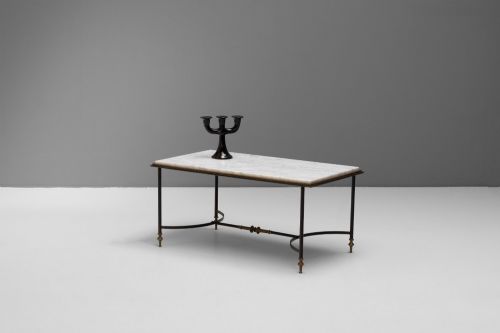
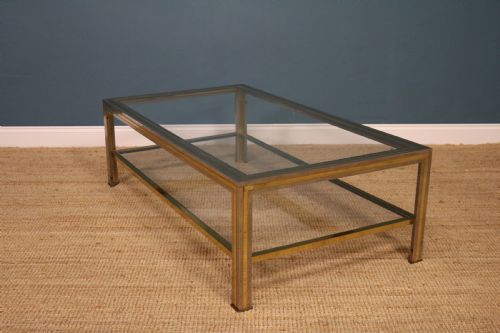
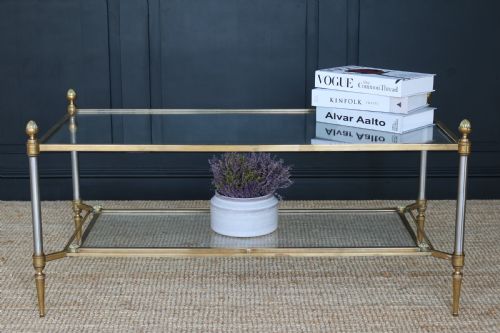
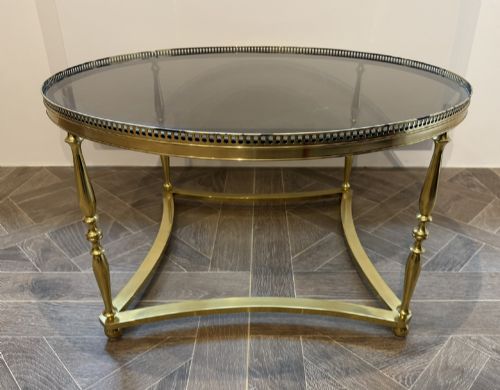
When you search for a mid century brass coffee table, you encounter low surfaces designed for entertaining and display, spanning decades from the early twentieth century through the nineteen-sixties alongside earlier revival designs. The forms on this page range from occasional tables and side pieces to dedicated coffee tables and centre tables.
The aesthetic leans heavily toward mid-century modern idioms, French neoclassical interpretations, and Hollywood regency glamour. You find Parisian high quality pieces, items styled in the taste of Romeo Rega, and specific creations associated with notable makers.
Materials extend beyond standard metalwork to incorporate smoked glass, clear glass, marble inserts, lacquer, and inlaid wood. This variety means each table serves as both a functional surface and a focal point within a room.
Materials and construction
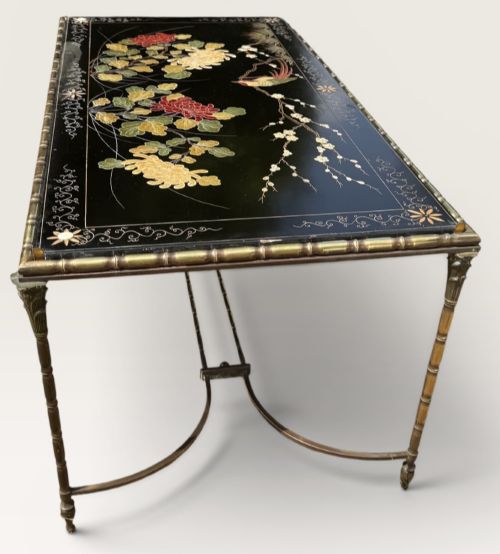
The primary structural metal is brass, frequently paired with chrome, bronze, or iron to create contrasting finishes and robust frames. Tables incorporate sheet metal, tubular forms, or cast decorative elements shaped into faux bamboo and classical motifs.
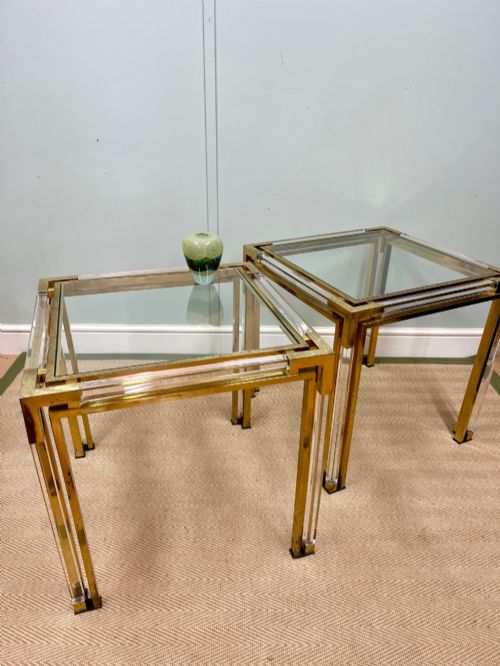
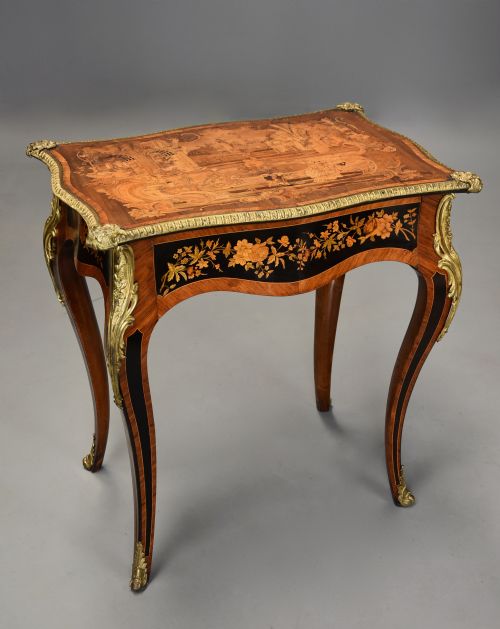
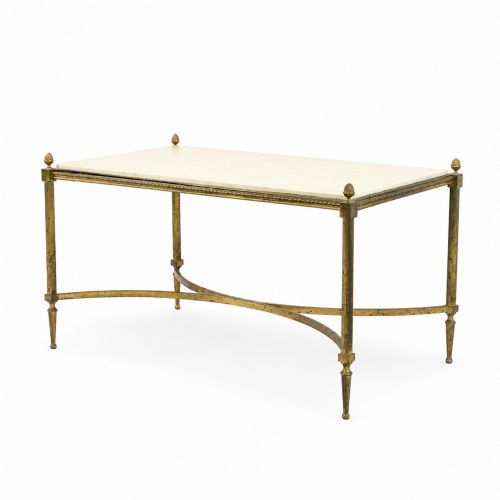
Tops combine transparent or smoked glass panels that reveal the framework underneath with heavy slabs of fitted marble. Wood elements appear in marquetry and kingwood inlays on specific French revival centre tables.
Construction relies on precise metal joining, secure glass seating, and traditional joinery for the timber components found in period French examples.
Listings feature brass combined with smoked glass, marble, chrome, iron, and lacquer across multiple stylistic revivals.
Evaluating the craftsmanship
Quality reveals itself in the weight and rigidity of the metal frame, the precision of the mitred corners, and the richness of the brass patina. Lesser examples utilise lighter tubing and simple mechanical joins, whereas superior pieces exhibit hand-finished casting and substantial bronze or brass construction.
The integrity of the top surface separates categories of manufacture, from thick bevelled glass and solid quarried marble to standard plate glass. Inlaid wooden centre tables depend upon the crispness of the marquetry and the preservation of the kingwood veneers.
Attribution and provenance elevate certain designs, particularly when associated with recognised Parisian houses and documented twentieth-century designers whose output commanded higher standards of execution.
Maison Jansen·Maison Bagues·Maison Ramsay·Peter Ghyczy
The Mid Century Brass Coffee Table Glossary
- Brass
- An alloy of copper and zinc prized for its bright golden appearance and malleability. It forms the primary structural and decorative metal for these tables.
- Smoked glass
- Tinted glass popular in twentieth-century design that reduces glare and offers a moody, translucent surface. It adds depth to the overall composition of the table.
- Marquetry
- The art of applying decorative pieces of veneer to a structure to form intricate designs. This technique appears on period French centre tables listed here.
- Faux bamboo
- A decorative motif where metal or wood is carved and finished to imitate natural bamboo stalks. It is a hallmark of nineteenth-century and regency-inspired eclectic taste.
- Centre table
- A freestanding piece designed to be viewed from all sides rather than pushed against a wall. These often feature detailed inlay work and substantial proportions.
Mid Century Brass Coffee Table: Frequently Asked Questions
What is a mid century brass coffee table?
A mid century brass coffee table is a low functional surface featuring a metallic brass frame combined with materials like glass, marble, or wood. These tables draw on modernist, neoclassical, and Hollywood regency styles.
They serve as central gathering points in living spaces, offering both practical surface area and decorative metallic shine.
How do I style a brass coffee table?
Pair the reflective metal finish with contrasting textures such as books, ceramics, or textiles to soften the metallic look. The transparency of glass tops or the solidity of marble inserts help anchor the surrounding seating arrangement.
Allow the frame and legs to remain visible to showcase the design details and period characteristics of the piece.
Are these tables sturdy enough for daily use?
Solid brass construction and heavy marble or glass tops provide substantial weight and stability for everyday living. Regular placement of items does not compromise the structural integrity of well-made frames.
Care should be taken with glass edges and unsealed metal surfaces to maintain their condition over time.
How do I tell different periods apart?
Early twentieth-century and regency revival pieces often display intricate casting, faux bamboo details, or formal French marquetry. Mid-century modern examples from the nineteen-fifties and sixties favor cleaner geometric lines, smoked glass, and associations with specific designer aesthetics.
Examining the joining techniques and material combinations helps pinpoint the era of manufacture.