






Mid Century Botanical Picture
A mid century botanical picture brings flora onto the wall through oil, watercolour, and mixed media.
Mid Century Botanical Picture
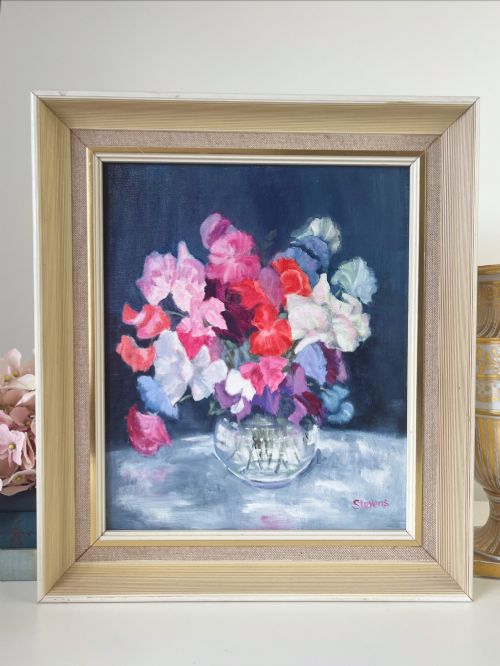
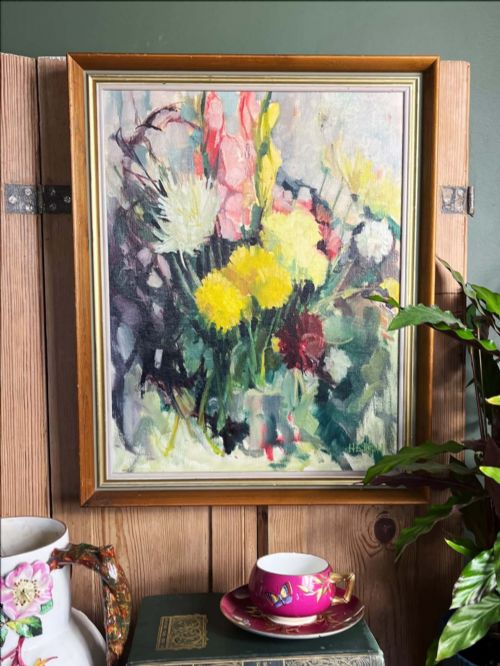
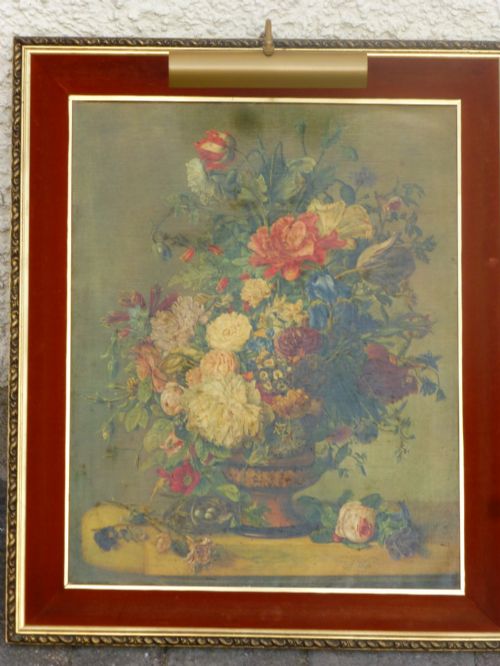
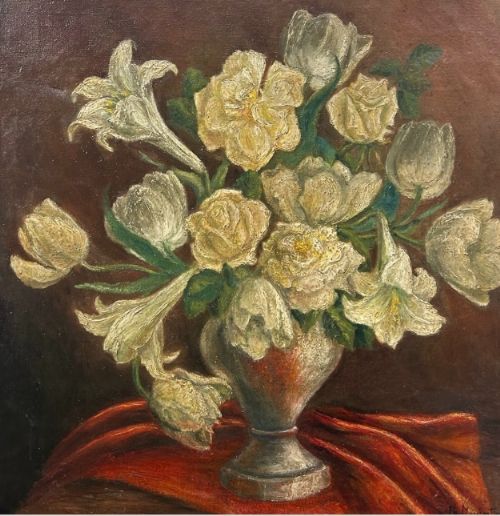
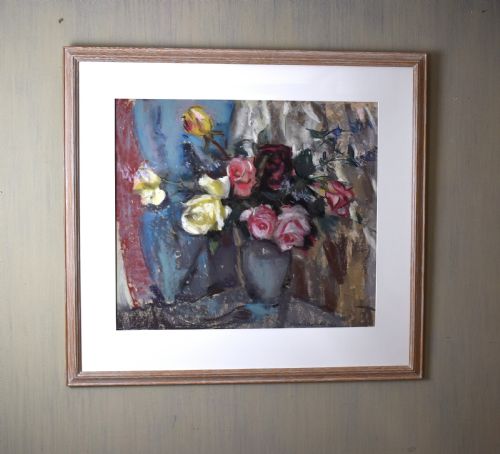
A mid century botanical picture spans original paintings, oil paintings, and watercolour paintings created across the decades from the 1940s through to the 1960s.
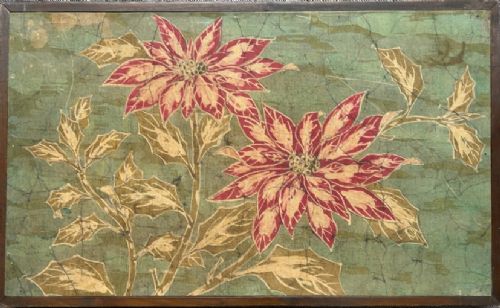
Buyers encounter wall art depicting floral studies, still life arrangements of roses, lilies, and gladioli, and textile art panels like batik poinsettias.
These works emerge through varied British and European traditions, ranging from traditional still life to mid-century impressionism and modern British styles.
Materials and Construction
Artists painted these botanical subjects onto stretched canvas, wooden board, paper, and heavy gouache surfaces using oil paint, watercolours, tempera, pastel, and mixed media.
Many works incorporate framed presentations utilising wood, glass, and gilt detailing to house the paper and canvas compositions securely.
Techniques range from direct brushwork and impasto oil application to delicate watercolour washes and textile batik methods.
Floral subjects on this page range from formal arrangements in jugs to fiery red cockscomb flowers and potted poinsettias.
Assessing Quality and Execution
Quality rests in the handling of the medium, where confident brushwork in oil or precise control in watercolour defines the stronger examples.
The integration of the botanical subject within its frame and support - whether canvas, board, or paper - shapes the visual weight of the piece.
Provenance and attribution to documented artists or named painters elevate individual works above anonymous decorative panels.
Anton Weiss·James Tower·Amile Coppieters·Robin MacKertich·Stuart Armfield·Margaret Laing·Phyllis I Hibbert·Lena M Alexander
The Mid Century Botanical Picture Glossary
- Oil paint
- A slow-drying paint made with pigmented particles suspended in a drying oil, typically linseed. This medium allows for rich colour depth and textured impasto surfaces.
- Watercolour
- A paint consisting of water-soluble pigments on paper supports. It yields transparent washes and delicate botanical detail.
- Tempera
- A permanent, fast-drying painting medium consisting of coloured pigment mixed with a water-soluble binder medium, often egg yolk. It produces a flat, matte finish.
- Batik
- A wax-resist dyeing technique applied to whole cloth, producing patterned textile art panels with distinctive linear crackle effects.
Mid Century Botanical Picture: Frequently Asked Questions
What periods do these paintings come from?
The works originate primarily from the mid-twentieth century, specifically spanning the 1940s, 1950s, and 1960s.
This era embraces wartime watercolours as well as post-war impressionist and modern British compositions.
What materials were used for these botanical works?
Artists employed oil paint, watercolour, pastel, gouache, tempera, and mixed media on canvas, board, and paper supports.
Frames frequently incorporate wood, glass, and gilt elements to protect and display the artwork.
How do I hang a botanical painting?
These framed works suit domestic wall art placement in living spaces, hallways, or studies where lighting can enhance the colours.
Ensure secure wall fixings matched to the weight of the wooden frame and glass.
How are different painting styles distinguished?
Styles range from traditional still life and Dutch golden age influences to mid-century impressionism and modern British abstraction.
Brushwork technique, colour palette, and handling of the floral subject help identify the specific artistic approach.