




Yellow Vase Botanical Painting
These yellow vase botanical painting pieces bring together vibrant floral studies and ceramic forms across periods from the sixteenth century to the mid twentieth century.
Yellow Vase Botanical Painting
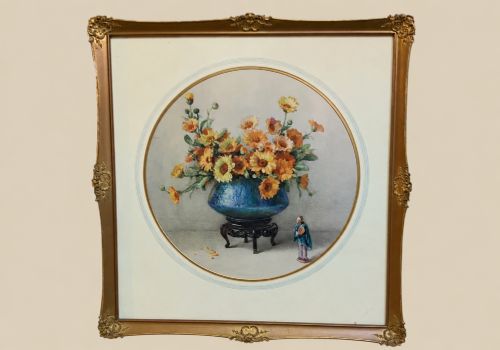
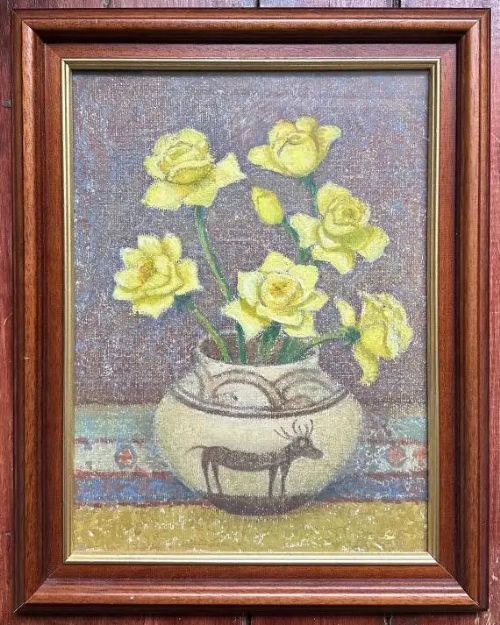
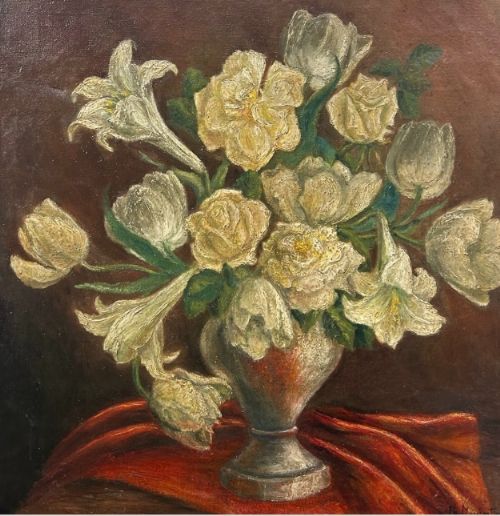
A yellow vase botanical painting presents a still life study where floral subjects in yellow hues are arranged within pottery or glass vessels. These works appear across several periods, most commonly taking the form of oil paintings, watercolour paintings, and occasionally physical ceramic vases.
The selections span the nineteenth century, the Victorian era, and various mid twentieth century movements including Post-Impressionism and Impressionism. Artists capture flowers such as roses, chrysanthemums, and marigolds alongside Chinese objects, fruit, or silver vessels.
Buyers encounter both canvas and paper supports, with compositions ranging from delicate Victorian watercolours to vigorous mid-century oil paintings on board. Each piece records a distinct approach to capturing floral forms and botanical detail.
Assessing quality and execution
The strength of a composition rests on the handling of light across the yellow petals and the rendered depth of the surrounding vessel. Works that capture distinct tonal variations within the flowers stand apart from simpler depictions.
Material support and medium condition dictate the longevity and visual impact of each piece. Oil paintings on canvas or board retain a heavy impasto and rich pigment, while watercolours rely on paper preservation and pigment stability.
Listings span from the sixteenth century to the 1960s, encompassing canvas, paper, wood, oil paint, watercolour paint, gilt, and Burmese glass.
Emma Fordyce MacRae·Henrietta Creswell·Doulton Lambeth·Robin MacKertich·Freda Marston·Rowland Henry Hill·Phyllis I Hibbert·Thomas Webb·Bertoldo Taubert·Louisa Mary Bancroft
The Yellow Vase Botanical Painting Glossary
- Botanical painting
- The precise depiction of plant forms, flowers, and foliage. This genre prioritises accurate observation and structural detail.
- Impressionism
- A nineteenth and twentieth century painting style focused on the visual impression of the moment. Artists utilise visible brush strokes and shifting light rather than strict academic finish.
- Faience
- Tin-glazed earthenware produced in Europe, noted for its opaque coloured glaze and decorative surface painting. Pieces often display intricate patterns or patent glazes.
- Burmese glass
- Heat-sensitive art glass shading from pale yellow to pink. Thomas Webb produced notable examples of this material.
Yellow Vase Botanical Painting: Frequently Asked Questions
How do I date a painted floral still life?
Dating relies on the substrate, framing, artist signatures, and stylistic markers such as Victorian detail or mid-century impressionist brushwork. Period framing and canvas stamps often provide additional chronological evidence.
Comparison with documented works by named artists helps narrow the decade of creation.
What is the difference between oil and watercolour botanical works?
Oil paintings utilise pigment suspended in drying oil on canvas or board, offering heavy texture and deep saturation. Watercolours employ water-soluble pigments on paper, resulting in a lighter and more transparent finish.
Both mediums appear frequently in floral still life compositions across the recorded periods.
Where were Burmese glass vases made?
Burmese glass was developed and manufactured by prominent glasshouses such as Thomas Webb in England during the late nineteenth century. The distinctive shaded appearance results from precise chemical additions to the glass batch during melting.
These decorative vessels often accompany painted floral studies in collections.
How should I care for antique oil paintings?
Keep oil paintings away from direct sunlight and fluctuating humidity to prevent canvas slackening and paint cracking. Dust the surface gently with a soft, dry brush without applying pressure.
Professional conservation is recommended for any structural repairs or deep cleaning.