
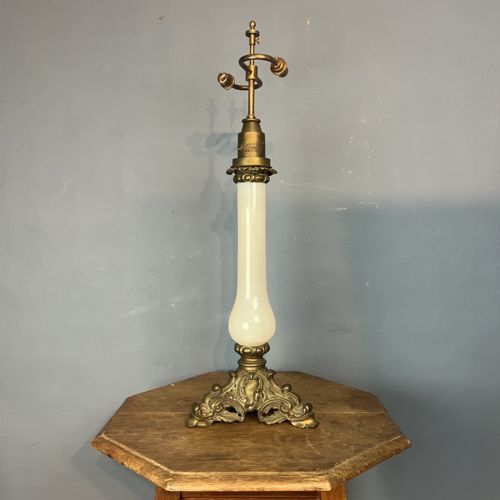
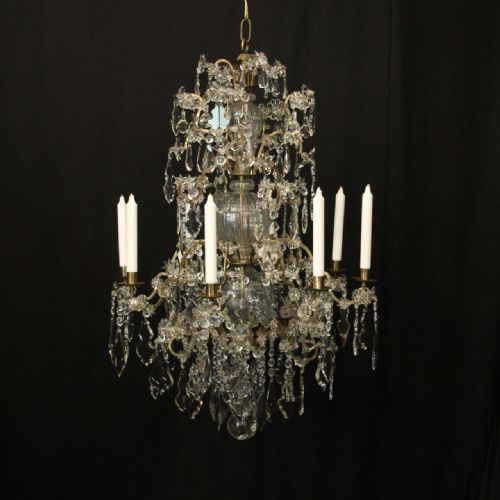


Mid 19th Century Light
These mid 19th century light pieces span brass, bronze and glass, bringing period illumination and presence into a room.
Mid 19th Century Light
When searching for a mid 19th century light, a buyer encounters a diverse range of illuminating objects spanning the decades between eighteen-forty and eighteen-eighty. The selection commonly comprises chandeliers, wall lights, ceiling fittings, lanterns, and lamps designed for table use.
The objects derive from English, French, and Swedish workshops, often carrying the stylistic influence of the Victorian era, French Régence, Empire, and Second Empire aesthetics. Chandeliers and candelabra dominate the offerings, frequently incorporating multiple branches for candles or early forms of lamp fuel.
Alongside dedicated lighting, the record encompasses related domestic items sharing the same mid-century period, including candlesticks, occasional furniture, and decorative bronze torchères.
Materials and Construction
The fabrication of these pieces relies heavily on cast and chased metalwork, utilising brass, bronze, gilt bronze, and gilt metal to form structural frames and decorative mounts. Many components demonstrate precision casting, combined with hand-finishing and patination to achieve varied surface textures.
Distinctions in Quality
Quality in these pieces is determined by the crispness of the metal casting and the depth of the gilding or patination. Finer examples display sharp relief on bronze mounts and carefully hand-cut facets on crystal and glass components.
The integrity of the construction and the presence of original components, such as matched glass lustres and stamped maker marks, separate standard production items from workshop pieces of exceptional merit.
François Christophe Armand Toussaint·Mc Garys Patent·Augustus Allen of Thrapston
The Mid 19th Century Light Glossary
- Candelabra
- A branched decorative candlestick designed to hold multiple candles at once. These fixtures often feature central stems surrounded by scrolling arms.
- Ormolu
- A technique of applying finely ground high-carat gold to an object of bronze. It creates a rich, golden surface finish characteristic of French decorative objects.
- Opaline
- A type of semi-opaque glass popular during the nineteenth century. It ranges from white to soft pastel colours and diffuses light evenly.
- Lustre
- A glass pendant or drop hung from a chandelier or candelabrum to reflect light. Lustres are often cut with facets to enhance their sparkle.
- Torchère
- A tall ornamental stand or floor-standing light fixture. In period pieces, these frequently take the form of figural bronze sculptures holding light clusters.
Mid 19th Century Light: Frequently Asked Questions
How do I clean a glass and brass chandelier?
Maintenance requires gentle dusting with a soft cloth and careful washing of glass components using warm water and mild soap. Metal parts should be cleaned without abrasive compounds to preserve the original surface.
Taking down removable crystals allows for thorough cleaning without risking the structural integrity of the brass or bronze frame. Ensuring the fixture remains disconnected from power during the process is essential.
Are these lights wired for modern electricity?
Many surviving fixtures originate from an era of candles or early burning oils, meaning conversion to modern electrical standards is common. Buyers should inspect individual listings to determine whether wiring has been updated.
Professional rewiring allows historical chandeliers and lamps to function safely within contemporary interiors. Consultation with a qualified electrician ensures compliance with local safety regulations.
How do I distinguish French and English styles?
French pieces from this period frequently display Régence, Empire, or Second Empire influences with elaborate gilt bronze, ormolu, and cast figural elements. The decorative vocabulary leans towards ornate symmetry and classical motifs.
English equivalents often favour more restrained forms using brass, cut glass, and simpler silhouettes. Regional variations in casting techniques and material combinations help identify the likely origin of each object.
Can I use standard candles in these candelabra?
Period candelabra were manufactured for historical candle diameters, which often differ slightly from modern standard sizes. Slight trimming or the use of candle fittings may be necessary for a secure fit.
Checking the socket dimensions before purchasing helps ensure that modern candles will sit correctly in the antique branches without tilting.