


Metal Urns on Pedestals
Metal urns on pedestals are classical vessels designed to elevate garden landscapes and grand interiors through enduring form.
Metal Urns on Pedestals
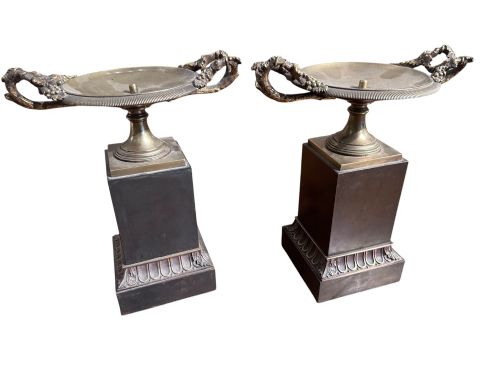
When you search for metal urns on pedestals, you encounter robust cast iron garden pieces alongside refined bronze and marble indoor tazzas. The selection spans the Georgian, Regency, and Victorian eras, drawing heavily on Neoclassical and Grand Tour aesthetics.
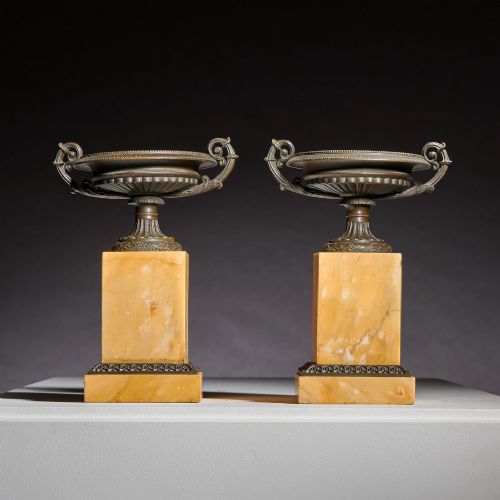
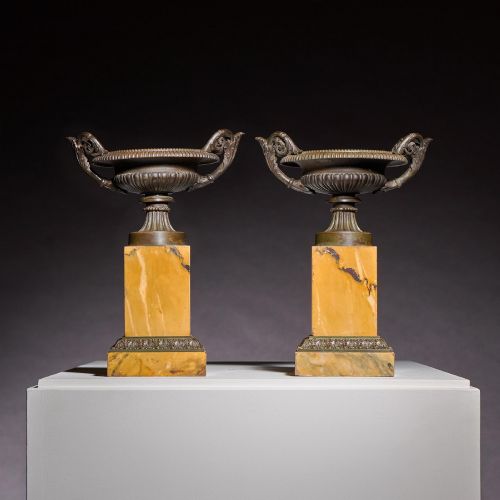
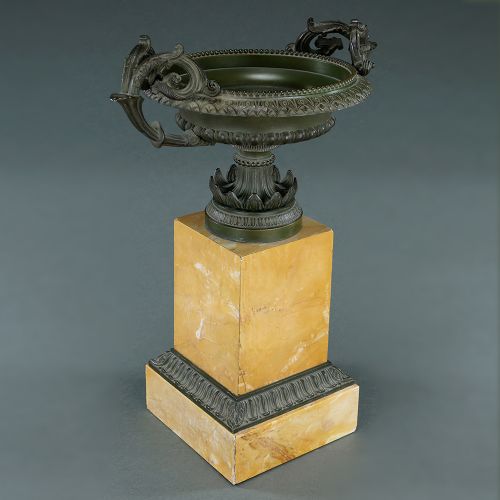
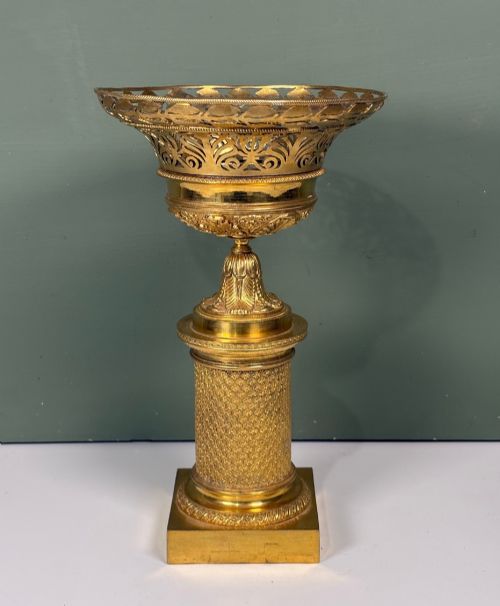
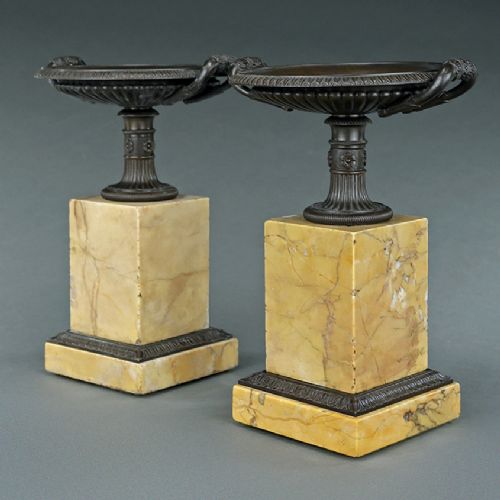
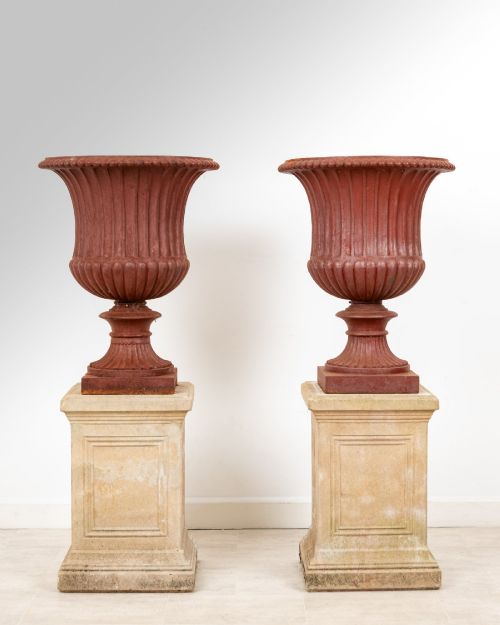
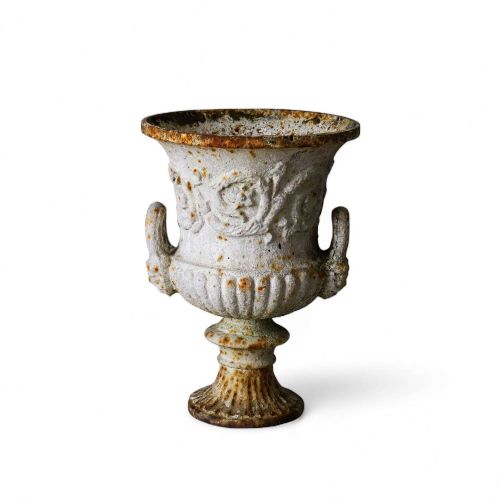
You are most likely to meet heavy cast iron campana urns designed for outdoor plinths, often bearing the weathered patination of the nineteenth century. Alternatively, smaller domestic interiors yield French bronze and ormolu tazzas paired with Siena marble.
Forms range from garden jardinières and planters to classical cassolettes and lidded decorative vessels. These objects reflect a persistent European fascination with antique classical proportions across the eighteenth and nineteenth centuries.
Materials and Construction
Foundry work dominates these pieces, utilising cast iron for heavy garden vessels and bronze or brass for interior decorative objects. Iron elements frequently receive protective paint finishes, while bronze works often combine with gilded ormolu mounts.
Stone integration remains central to the construction, particularly the use of polished Siena marble for bases and columns supporting metal bowls. Assemblages balance heavy metal casting with dense natural stone plinths to ensure stability.
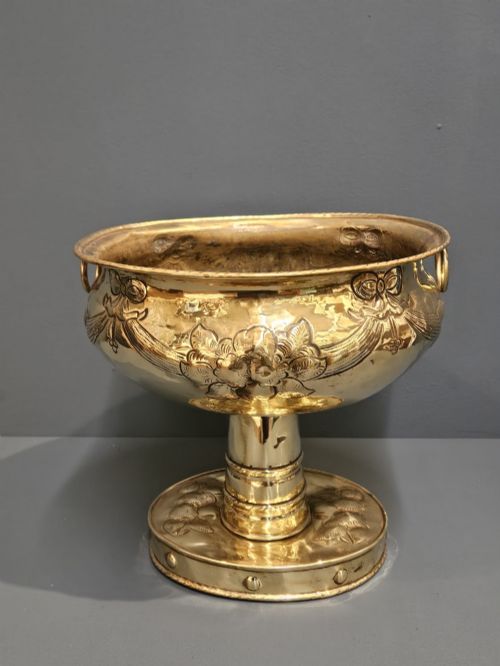
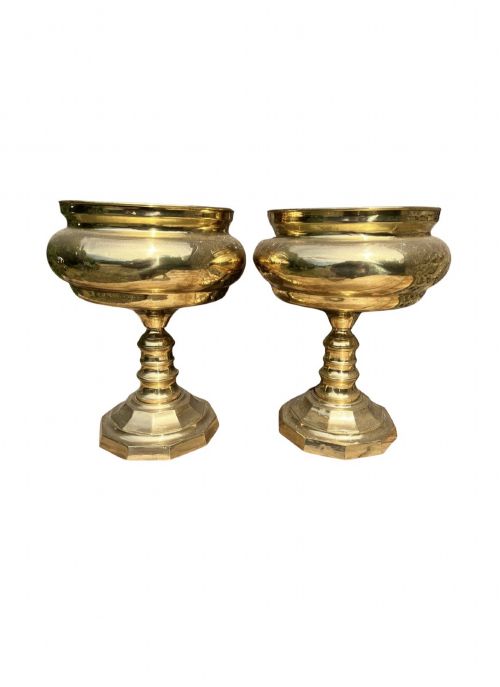
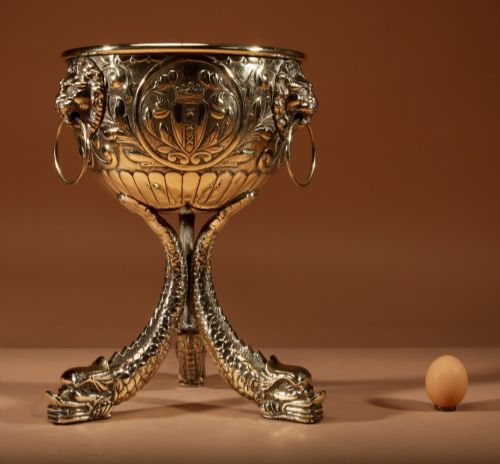
Surface treatments vary from polished brass and chased ormolu to embossed dinanderie and oxidized cast iron. Makers employed traditional casting, turning, and joinery methods to unite metal bodies with stone pedestals.
Metal Urns on Pedestals Retail Price Guide 2026
Typical asking prices for metal urns on pedestals among the pieces listed under this phrase on Sellingantiques today, from the lower quarter to the upper quarter. They describe what is for sale here now, not the wider market.
Listings feature nineteenth-century cast iron garden urns alongside bronze and Siena marble tazzas from the Regency and Victorian periods.
Distinctions in Quality
The refinement of the casting separates standard production from exceptional examples, visible in the crispness of acanthus leaf details and classical friezes. Superior pieces display meticulous hand-chasing on bronze and ormolu surfaces.
Material selection dictates baseline quality, moving from utilitarian painted cast iron to richly figured Siena marble paired with heavy patinated bronze. The integration between the metal vessel and its stone pedestal demands precise engineering.
Provenance and stylistic fidelity influence the standing of an object, particularly within Grand Tour pieces modelled on classical antiquities. Workshop execution and the integrity of the original mounts determine the longevity of the piece.
Andrew Handyside·Benetfink And Co
The Metal Urns on Pedestals Glossary
- Campana
- A bell-shaped classical urn profile widely used for garden and interior planters. This form originates from ancient Roman pottery and metalwork.
- Tazza
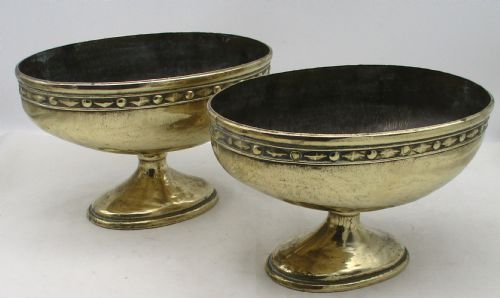
- A shallow saucer-like ornamental vessel elevated on a stem and foot or pedestal. These pieces frequently appear in bronze and marble for cabinet display.
- Ormolu
- Gilded bronze decorative mounts applied to furniture and ornamental objects. The technique involves creating an amalgam of mercury and gold.
- Cassolette
- A dual-purpose vessel functioning as a perfume burner or vase with a reversible lid. Examples often emerge in neoclassical bronze and marble designs.
- Dinanderie
- Medieval and later brass or bronze ware produced in the Meuse Valley region. The term describes hammered and embossed alloy vessels.
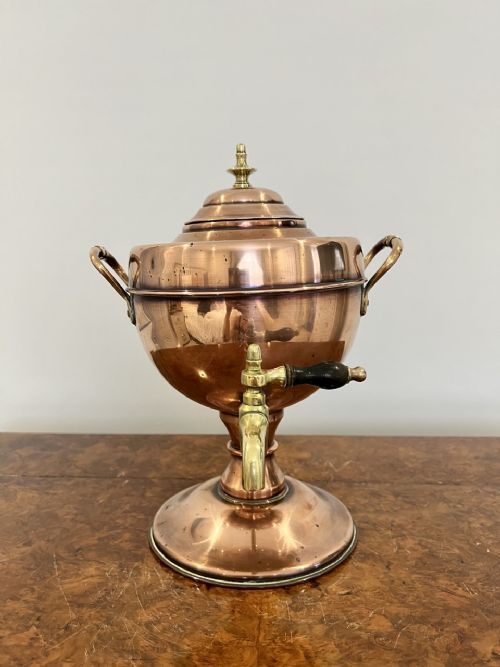
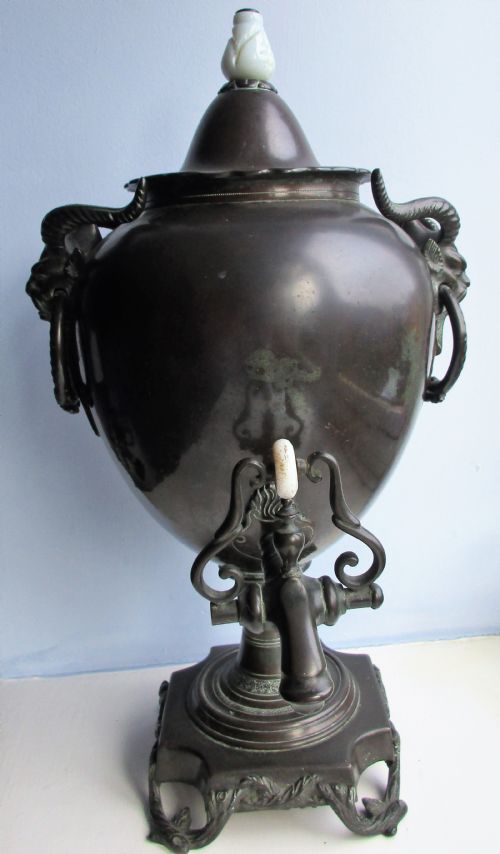
- Samovar
- A heated metal container traditionally used to boil water for tea. These items are often rendered in brass or plated metals with spigots.
Metal Urns on Pedestals: Frequently Asked Questions
What is a campana urn?
A campana urn is a bell-shaped vessel with an everted rim, designed in antiquity and revived during the neoclassical period for garden and interior decoration.
These pieces typically sit upon integrated plinths or separate pedestals, functioning as planters or purely decorative objects.
Where were bronze tazzas displayed?
Grand Tour bronze tazzas were primarily displayed in libraries, drawing rooms, and cabinets of nineteenth-century collectors. They served as tangible connections to classical antiquity acquired during European travels.
Indoor examples frequently paired cast bronze with polished Siena marble bases to highlight the rich materials.
How do I care for cast iron garden urns?
Cast iron garden urns require basic maintenance to prevent weather corrosion, typically involving stable placement on stone or gravel to avoid moisture retention.
Applying appropriate protective paint coatings helps preserve the metal surface against seasonal elements.
How do I distinguish Regency from Victorian metalwork?
Regency metalwork generally adheres strictly to disciplined neoclassical proportions, utilising clean bronze and ormolu assemblies. Victorian pieces often introduce heavier ornamentation and eclectic revivals like Gothic styles.
Examining the casting quality and mounting techniques helps clarify the period of manufacture.